Weekly Information about Bright Comets (2026 Jan. 3: South)
|
Japanese version Home page |
Updated on January 2, 2026 |
|||
|
||||
|
Best time and the azimuth, altitude (A,h) are at lat. 35 deg in the Southern Hemisphere. Azimuth indicates 0 for south, 90 for west, 180 for north, 270 for east. |

|

|
Now it is 9.5 mag (Dec. 29, Michael Jager). It will fade out rapidly after this. In the Northern Hemisphere, it stays observable in good condition. In the Southern Hemisphere, it will be getting higher gradually. Date(TT) R.A. (2000) Decl. Delta r Elong. m1 Best Time(A, h) Jan. 3 12 58.09 14 1.1 0.593 1.186 94 8.2 3:05 (230, 25) Jan. 10 13 27.07 12 37.0 0.595 1.184 93 8.3 3:13 (230, 27) |
 C/2024 E1 ( Wierzchos )
|
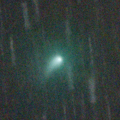
It was originally expected to brighten up to 5 mag in January. But actually, the brightness evolution is slower than originally expected. It will be 8 mag at best. Now it is 9.6 mag (Dec. 10, Mike Olason). It brightens up to 7.5 mag, but it will turn to fade out rapidly after that. Now it is not observable. It will appear soon in the Southern Hemisphere, or in February in the Northern Hemisphere. Nagy Barnabas reported it is visible at 8 mag on Dec. 24 in the SOHO spacecraft LASCO images. Date(TT) R.A. (2000) Decl. Delta r Elong. m1 Best Time(A, h) Jan. 3 19 12.21 -27 39.7 1.661 0.692 6 8.9 21:03 ( 44,-11) Jan. 10 19 43.20 -32 42.9 1.548 0.617 11 8.4 21:01 ( 41, -7) |
C/2025 T1 ( ATLAS )

|
It brightened up to 9.0 mag from late November to early December (Nov. 22, Thomas Lehmann). Now it is 10.6 mag (Dec. 29, Yoshimi Nagai). It will fade out rapidly after this. In the Northern Hemisphere, it will be unobservable soon. In the Southern Hemisphere, it is not observable now, but it will appear in March. Date(TT) R.A. (2000) Decl. Delta r Elong. m1 Best Time(A, h) Jan. 3 20 41.19 -2 3.2 1.915 1.221 33 10.8 21:03 ( 78,-13) Jan. 10 20 52.45 -5 2.9 2.063 1.272 27 11.3 21:01 ( 73,-15) |
C/2025 A6 ( Lemmon )
|
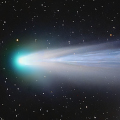
It brightened up to 3.7 mag in late October (Oct. 26, Juan Jose Gonzalez). Fading rapidly. In the Northern Hemisphere, it is not observable now, but it will appear in April. In the Southern Hemisphere, it will be getting higher gradually. Date(TT) R.A. (2000) Decl. Delta r Elong. m1 Best Time(A, h) Jan. 3 17 11.68 -40 0.2 2.065 1.276 27 11.7 3:05 (313, 9) Jan. 10 17 10.72 -42 20.2 2.086 1.390 34 12.2 3:13 (311, 16) |
88P/Howell

|
Brightening gradually. It stays extremely low. But it will become high in spring in the Southern Hemisphere, or in summer in the Northern Hemisphere. Date(TT) R.A. (2000) Decl. Delta r Elong. m1 Best Time(A, h) Jan. 3 16 59.27 -22 52.6 2.401 1.580 26 12.0 3:05 (298, 1) Jan. 10 17 22.94 -23 32.6 2.343 1.544 27 11.7 3:13 (297, 3) |
240P/NEAT
|
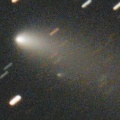
Now it is 12.1 mag (Dec. 16, Osamu Miyazaki). Fading gradually. In the Northern Hemisphere, it stays observable in good condition. In the Southern Hemisphere, it will be getting lower gradually. The component B also brightened rapidly. Now it is bright as 14.1 mag (Dec. 20, ATLAS Chile). Date(TT) R.A. (2000) Decl. Delta r Elong. m1 Best Time(A, h) Jan. 3 3 18.51 16 38.8 1.360 2.125 129 11.9 21:03 (169, 37) Jan. 10 3 19.02 18 24.1 1.428 2.128 122 12.0 21:01 (162, 34) |
3I/2025 N1 ( ATLAS )

|
Third interstellar object in history following 1I/'Oumuamua and 2I/Borisov. The eccentricity is extremely big as 6. It approached to Sun down to 1.38 a.u. in late October. It brightened up to 8.9 mag in November (Nov. 12, Toshiyuki Takahashi). Now it is 11.5 mag (Dec. 29, Osamu Miyazaki). Fading rapidly. It will be fainter than 18 mag in March. It stays observable in good condition. Date(TT) R.A. (2000) Decl. Delta r Elong. m1 Best Time(A, h) Jan. 3 9 35.54 12 36.6 1.900 2.729 140 12.3 2:48 (180, 43) Jan. 10 9 3.80 14 42.8 2.026 2.947 155 12.9 1:49 (180, 40) |
235P/LINEAR

|
It became brighter than expected. Now it is 13.3 mag (Dec. 22, Ken-ichi Kadota). It stays 13 mag for a while. In the Northern Hemisphere, it stays observable in good condition. In the Southern Hemisphere, it will be getting higher gradually. Date(TT) R.A. (2000) Decl. Delta r Elong. m1 Best Time(A, h) Jan. 3 14 39.96 -16 2.1 2.285 1.980 59 13.2 3:05 (273, 24) Jan. 10 14 55.46 -16 43.9 2.225 1.983 63 13.1 3:13 (271, 29) |
210P/Christensen

|
It brightened up to 9.5 mag in late November (Nov. 28, Michael Jager, Gerald Rhemann, E. Prosperi). Now it is 13.0 mag (Dec. 29, Michael Jager). Fading rapidly. It will be fainter than 18 mag in March. In the Northern Hemisphere, it stays observable in good condition. In the Southern Hemisphere, it will be getting higher gradually. Date(TT) R.A. (2000) Decl. Delta r Elong. m1 Best Time(A, h) Jan. 3 15 9.74 -8 31.1 1.098 0.972 55 13.5 3:05 (271, 14) Jan. 10 15 20.55 -8 32.7 1.150 1.074 59 14.2 3:13 (267, 19) |
C/2022 N2 ( PanSTARRS )

|
Now it is 13.0 mag (Dec. 16, Osamu Miyazaki). Fading slowly. In the Northern Hemisphere, it stays observable in good condition. It locates somewhat low in the Southern Hemisphere. Date(TT) R.A. (2000) Decl. Delta r Elong. m1 Best Time(A, h) Jan. 3 3 12.06 24 35.0 3.361 4.060 129 13.7 21:03 (169, 29) Jan. 10 3 13.10 24 27.0 3.463 4.081 122 13.8 21:01 (163, 28) |
29P/Schwassmann-Wachmann 1
|
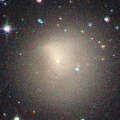
It brightened in outburst on Dec. 5. Now it is 12.6 mag (Dec. 30, Toru Yusa). It stays observable in good condition. Date(TT) R.A. (2000) Decl. Delta r Elong. m1 Best Time(A, h) Jan. 3 11 34.46 -3 23.0 5.953 6.306 106 13.9 3:05 (222, 51) Jan. 10 11 34.32 -3 32.9 5.846 6.307 113 13.8 3:13 (209, 55) |
C/2025 R2 ( SWAN )
|
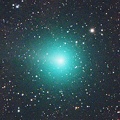
It brightened up to 5.2 mag in October (Oct. 11, Virgilio Gonano). Now it is 13.3 mag (Dec. 22, Ken-ichi Kadota). Fading rapidly. It will be fainter than 18 mag in March. In the Northern Hemisphere, it stays observable in good condition. It locates somewhat low in the Southern Hemisphere. Date(TT) R.A. (2000) Decl. Delta r Elong. m1 Best Time(A, h) Jan. 3 1 2.86 12 9.9 1.806 2.158 96 14.3 21:03 (132, 28) Jan. 10 1 12.73 12 55.2 1.993 2.257 92 14.7 21:01 (129, 25) |
C/2022 QE78 ( ATLAS )
|
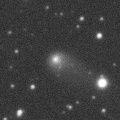
Now it is 14.7 mag (Dec. 26, Kunihiro Shima). It stays 15 mag for a while. In the Northern Hemisphere, it stays observable in good condition. It locates somewhat low in the Southern Hemisphere. Date(TT) R.A. (2000) Decl. Delta r Elong. m1 Best Time(A, h) Jan. 3 9 25.32 24 36.4 4.702 5.539 145 14.3 2:37 (180, 31) Jan. 10 9 23.71 25 23.1 4.656 5.546 152 14.3 2:08 (180, 30) |
C/2025 L1 ( ATLAS )

|
It is expected to brighten up to 13.5 mag and to be observable in good condition in 2026 spring. It stays 14 mag for a while. It will be getting higher gradually. Date(TT) R.A. (2000) Decl. Delta r Elong. m1 Best Time(A, h) Jan. 3 15 46.43 -36 54.3 2.275 1.684 42 14.5 3:05 (301, 21) Jan. 10 15 51.66 -34 48.6 2.174 1.680 47 14.4 3:13 (296, 26) |
C/2024 J3 ( ATLAS )

|
It will brighten up to 13 mag in 2026. Now it is 14.6 mag (Dec. 19, Kunihiro Shima). It stays 14 mag for a while. Now it is not observable. It will appear soon in the Northern Hemisphere, or in February in the Southern Hemisphere. Date(TT) R.A. (2000) Decl. Delta r Elong. m1 Best Time(A, h) Jan. 3 19 16.37 -4 5.1 5.688 4.773 19 14.8 21:03 ( 61,-29) Jan. 10 19 21.60 -3 15.8 5.660 4.739 18 14.7 3:13 (301,-32) |
78P/Gehrels 2

|
It will brighten up to 12 mag in 2026 summer. Now it is 16.0 mag (Dec. 8, Taras Prystavski). Brightening slowly. It will be unobservable soon in the Southern Hemisphere, or in February in the Northern Hemisphere. Date(TT) R.A. (2000) Decl. Delta r Elong. m1 Best Time(A, h) Jan. 3 21 40.93 -9 50.0 3.069 2.430 42 14.8 21:03 ( 80, 3) Jan. 10 21 53.16 -8 58.2 3.097 2.401 38 14.7 21:01 ( 79, 0) |
C/2024 T5 ( ATLAS )

|
Now it is 14.5 mag (Dec. 16, Ken-ichi Kadota). It stays 14 mag for a while. In the Northern Hemisphere, it will be unobservable in March. In the Southern Hemisphere, it stays observable in good condition. It is expected to brighten up to 11 mag in winter between 2026 and 2027. Date(TT) R.A. (2000) Decl. Delta r Elong. m1 Best Time(A, h) Jan. 3 2 35.84 -40 43.0 5.501 5.635 92 14.8 21:03 ( 65, 73) Jan. 10 2 35.39 -39 33.5 5.527 5.595 88 14.7 21:01 ( 70, 69) |
C/2021 G2 ( ATLAS )

|
Now it is 14.4 mag (Oct. 11, Hiroshi Abe). It stays 15 mag for a while. In the Northern Hemisphere, it will be getting higher gradually. In the Southern Hemisphere, it is not observable now, but it will be observable soon. Date(TT) R.A. (2000) Decl. Delta r Elong. m1 Best Time(A, h) Jan. 3 16 51.49 0 18.5 6.916 6.166 37 14.8 3:05 (278,-12) Jan. 10 16 56.58 0 43.1 6.886 6.196 42 14.8 3:13 (273, -6) |
C/2014 UN271 ( Bernardinelli-Bernstein )
|
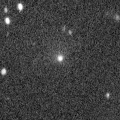
Very large comet. It is expected to brighten up to 13 mag in 2031. Now it is 15.1 mag (Dec. 9, Taras Prystavski). It stays 15 mag for a while. In the Northern Hemisphere, it is not observable now. In the Southern Hemisphere, it stays observable in good condition. In the Northern Hemisphere, it is not observable until 2030. Date(TT) R.A. (2000) Decl. Delta r Elong. m1 Best Time(A, h) Jan. 3 4 58.06 -74 47.1 14.520 14.392 80 14.9 22:04 ( 0, 50) Jan. 10 4 53.87 -74 36.4 14.501 14.370 80 14.9 21:32 ( 0, 50) |
40P/Vaisala 1
|
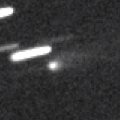
It became brighter than expected. Now it is 15.1 mag (Dec. 18, Mitsunori Tsumura). It stays 16 mag for a while. In the Northern Hemisphere, it stays observable in good condition. In the Southern Hemisphere, it will be getting higher gradually. Date(TT) R.A. (2000) Decl. Delta r Elong. m1 Best Time(A, h) Jan. 3 15 23.84 -9 5.6 2.339 1.897 51 15.1 3:05 (273, 11) Jan. 10 15 40.16 -9 45.4 2.306 1.918 54 15.1 3:13 (271, 16) |
C/2025 K1 ( ATLAS )
|
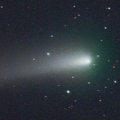
It brightened up to 9.3 mag in November (Nov. 2, Virgilio Gonano). The nucleus was split into four components. Now it is 14.8 mag (Dec. 27, Kunihiro Shima). Fading rapidly. It will be fainter than 18 mag in February. In the Northern Hemisphere, it stays observable in good condition. In the Southern Hemisphere, it will be unobservable in February. Date(TT) R.A. (2000) Decl. Delta r Elong. m1 Best Time(A, h) Jan. 3 0 57.26 37 18.8 1.372 1.876 104 15.1 21:03 (146, 7) Jan. 10 0 59.01 35 16.8 1.600 1.987 97 15.7 21:01 (141, 6) |
C/2023 R1 ( PanSTARRS )

|
Now it is 15.3 mag (Dec. 19, Kunihiro Shima). It stays 15 mag for a while. Now it is not observable. It will appear soon in the Northern Hemisphere, or in February in the Southern Hemisphere. Date(TT) R.A. (2000) Decl. Delta r Elong. m1 Best Time(A, h) Jan. 3 19 21.58 -1 59.3 4.578 3.685 21 15.3 21:03 ( 64,-29) Jan. 10 19 23.75 -2 20.7 4.581 3.670 19 15.3 3:13 (301,-33) |
C/2022 R6 ( PanSTARRS )

|
Now it is 16.1 mag (Dec. 27, Ken-ichi Kadota). It stays 16 mag for a while. It stays observable in good condition. Date(TT) R.A. (2000) Decl. Delta r Elong. m1 Best Time(A, h) Jan. 3 8 53.31 -11 14.4 5.891 6.623 134 16.1 2:05 (180, 66) Jan. 10 8 51.12 -10 49.4 5.838 6.629 140 16.0 1:35 (180, 66) |
C/2025 Q3 ( ATLAS )

|
Now it is 15.5 mag (Dec. 20, Toru Yusa). Fading slowly. In the Northern Hemisphere, it will be getting lower gradually after this, and it will be unobservable in March. In the Southern Hemisphere, it stays observable in good condition. Date(TT) R.A. (2000) Decl. Delta r Elong. m1 Best Time(A, h) Jan. 3 2 5.35 -7 13.8 1.757 2.205 103 16.2 21:03 (131, 53) Jan. 10 2 3.17 -9 51.1 1.861 2.183 95 16.3 21:01 (120, 50) |
C/2022 E2 ( ATLAS )
|
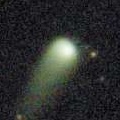
It was observed at 12-13 mag for a long time in 2024. Now it is 16.1 mag (Dec. 22, ATLAS-HKO, Haleakala). It stays 17 mag for a while. In the Northern Hemisphere, it will be getting lower gradually. But it will be getting higher again after March. In the Southern Hemisphere, it is not observable now, but it will appear in April. Date(TT) R.A. (2000) Decl. Delta r Elong. m1 Best Time(A, h) Jan. 3 22 30.55 31 43.4 5.664 5.498 75 16.2 21:03 (121,-11) Jan. 10 22 32.62 30 54.0 5.805 5.540 69 16.3 21:01 (118,-15) |
C/2025 R3 ( PanSTARRS )

|
It is expected to brighten up to 7 mag in April. Now it is 16.5 mag (Dec. 21, Alfons Diepvens). It will brighten rapidly after this. In the Northern Hemisphere, it will be getting lower gradually after this, and it will be unobservable in February. But it will be observable again in March. In the Southern Hemisphere, it is not observable now. At the high light, it is observable in the low sky before the perihelion passage in the Northern Hemisphere, or after the perihelion in the Southern Hemisphere. Date(TT) R.A. (2000) Decl. Delta r Elong. m1 Best Time(A, h) Jan. 3 22 13.11 20 16.8 2.308 2.093 65 16.5 21:03 (109, -8) Jan. 10 22 12.23 19 22.7 2.321 1.989 58 16.3 21:01 (105,-13) |
C/2024 R4 ( PanSTARRS )
|
It brightened rapidly. It is expected to brighten up to 13.5 mag from 2027 to 2028. Now it is 16.2 mag (Dec. 21, Alfons Diepvens). It stays 16 mag for a while. In the Northern Hemisphere, it will be getting lower gradually. But it will be getting higher again after February. In the Southern Hemisphere, it is not observable now, but it will appear in April. Date(TT) R.A. (2000) Decl. Delta r Elong. m1 Best Time(A, h) Jan. 3 21 33.76 21 8.4 7.261 6.805 58 16.3 21:03 (105,-16) Jan. 10 21 35.85 21 20.1 7.297 6.766 54 16.3 21:01 (102,-21) |
C/2025 J1 ( Borisov )

|
Now it is 16.3 mag (Dec. 22, Jean-Claude Merlin). It stays 17 mag for a while. In the Northern Hemisphere, it stays observable in good condition. In the Southern Hemisphere, it is not observable now. Date(TT) R.A. (2000) Decl. Delta r Elong. m1 Best Time(A, h) Jan. 3 7 34.73 79 24.9 3.232 3.860 123 16.4 0:52 (180,-24) Jan. 10 6 41.06 78 14.2 3.204 3.837 123 16.4 23:20 (180,-23) |
145P/Shoemaker-Levy 5

|
Now it is 16.2 mag (Dec. 19, Kunihiro Shima). It stays 17 mag for a while. In the Northern Hemisphere, it will be getting lower gradually. In the Southern Hemisphere, it will be unobservable in March. Date(TT) R.A. (2000) Decl. Delta r Elong. m1 Best Time(A, h) Jan. 3 23 40.16 -2 47.6 1.966 1.908 72 16.5 21:03 (104, 23) Jan. 10 23 52.87 -0 44.9 2.023 1.901 68 16.4 21:01 (104, 19) |
493P/2024 Q2 ( LONEOS )

|
Now it is 16.2 mag (Dec. 17, Yukihiro Sugiyama). It stays 17 mag for a while. In the Northern Hemisphere, it stays observable in good condition. In the Southern Hemisphere, it will be unobservable in April. Date(TT) R.A. (2000) Decl. Delta r Elong. m1 Best Time(A, h) Jan. 3 4 28.17 52 53.6 3.024 3.824 139 16.5 21:37 (180, 2) Jan. 10 4 24.97 52 22.3 3.070 3.823 134 16.5 21:06 (180, 3) |
164P/Christensen
|
Now it is 16.8 mag (Dec. 4, Ken-ichi Kadota). Fading slowly. It will be fainter than 18 mag in April. In the Northern Hemisphere, it stays observable in good condition. It locates somewhat low in the Southern Hemisphere. Date(TT) R.A. (2000) Decl. Delta r Elong. m1 Best Time(A, h) Jan. 3 11 26.81 22 52.2 1.975 2.582 117 16.5 3:05 (204, 28) Jan. 10 11 27.58 23 52.4 1.939 2.623 124 16.5 3:13 (195, 30) |
261P/Larson
|
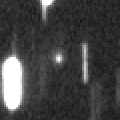
Now it is 16.4 mag (Dec. 23, Catalina Sky Survey). Fading slowly. It will be fainter than 18 mag in April. It will be unobservable in February in the Southern Hemisphere, or in March in the Northern Hemisphere. Date(TT) R.A. (2000) Decl. Delta r Elong. m1 Best Time(A, h) Jan. 3 22 28.95 -4 23.2 2.407 2.015 55 16.6 21:03 ( 92, 10) Jan. 10 22 43.55 -2 57.6 2.468 2.017 52 16.6 21:01 ( 91, 7) |
C/2024 A1 ( ATLAS )

|
Now it is 16.2 mag (Dec. 26, Kunihiro Shima). Fading slowly. In the Northern Hemisphere, it stays observable in good condition. In the Southern Hemisphere, it will never be observable after this. Date(TT) R.A. (2000) Decl. Delta r Elong. m1 Best Time(A, h) Jan. 3 8 16.35 56 33.0 3.432 4.258 143 16.6 1:29 (180, -1) Jan. 10 8 3.67 58 24.9 3.458 4.284 142 16.6 0:49 (180, -3) |
43P/Wolf-Harrington

|
Now it is 16.5 mag (Dec. 22, Kunihiro Shima). Fading slowly. It stays observable in good condition. Date(TT) R.A. (2000) Decl. Delta r Elong. m1 Best Time(A, h) Jan. 3 11 13.67 -7 29.4 2.177 2.671 109 16.7 3:05 (218, 57) Jan. 10 11 15.38 -8 9.5 2.113 2.691 115 16.7 3:13 (204, 61) |
195P/Hill
|
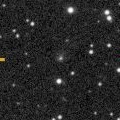
Now it is 16.9 mag (Nov. 22, Kunihiro Shima). It stays 17 mag for a while. It locates somewhat low in the Northern Hemisphere. In the Southern Hemisphere, it stays observable in good condition. Date(TT) R.A. (2000) Decl. Delta r Elong. m1 Best Time(A, h) Jan. 3 9 56.66 -31 46.7 4.062 4.493 109 16.8 3:05 (190, 87) Jan. 10 9 54.83 -32 32.6 3.999 4.498 114 16.7 2:38 (180, 88) |
C/2023 C2 ( ATLAS )

|
It brightened up to 12.7 mag in 2024 summer (Aug. 7, 2024, Thomas Lehmann). Now it is 16.6 mag (Dec. 22, ATLAS-MLO, Mauna Loa). Fading slowly. It will be fainter than 18 mag in April. In the Northern Hemisphere, it will be getting lower gradually. In the Southern Hemisphere, it will never be observable after this. Date(TT) R.A. (2000) Decl. Delta r Elong. m1 Best Time(A, h) Jan. 3 22 54.42 48 24.1 4.746 4.835 89 16.7 21:03 (138,-17) Jan. 10 23 1.80 48 8.3 4.870 4.890 85 16.8 21:01 (136,-19) |
C/2023 F3 ( ATLAS )

|
Now it is 16.7 mag (Dec. 17, ATLAS Chile). It stays 17 mag for a while. It stays observable in good condition. Date(TT) R.A. (2000) Decl. Delta r Elong. m1 Best Time(A, h) Jan. 3 10 42.35 -24 48.6 5.402 5.764 106 16.8 3:05 (229, 75) Jan. 10 10 36.60 -24 38.6 5.317 5.786 113 16.8 3:13 (190, 80) |
C/2023 H5 ( Lemmon )

|
Now it is 16.5 mag (Dec. 22, Ken-ichi Kadota). It stays 17 mag for a while. In the Northern Hemisphere, it stays observable in good condition. In the Southern Hemisphere, it will never be observable after this. Date(TT) R.A. (2000) Decl. Delta r Elong. m1 Best Time(A, h) Jan. 3 18 30.31 62 19.4 4.553 4.579 85 16.8 3:05 (213,-48) Jan. 10 18 50.47 62 5.3 4.589 4.598 84 16.8 3:13 (214,-47) |
C/2023 X2 ( Lemmon )

|
Now it is 17.0 mag (Nov. 29, Ken-ichi Kadota). It stays 17 mag for a while. In the Northern Hemisphere, it stays observable in good condition. In the Southern Hemisphere, it will never be observable after this. Date(TT) R.A. (2000) Decl. Delta r Elong. m1 Best Time(A, h) Jan. 3 18 45.06 83 36.0 4.722 5.089 106 16.8 3:05 (186,-39) Jan. 10 19 14.55 82 56.2 4.746 5.089 104 16.9 3:13 (187,-39) |
93P/Lovas 1
|
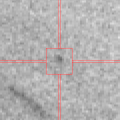
Now it is 17.2 mag (Dec. 19, Kunihiro Shima). Brightening slowly. It will be unobservable soon in the Southern Hemisphere, or in March in the Northern Hemisphere. It will brighten up to 15.5 mag in spring. But it is not observable around the perihelion passage. Date(TT) R.A. (2000) Decl. Delta r Elong. m1 Best Time(A, h) Jan. 3 22 17.06 -7 47.0 2.545 2.074 51 17.0 21:03 ( 87, 9) Jan. 10 22 29.48 -6 11.7 2.568 2.036 47 16.9 21:01 ( 87, 5) |
C/2024 G6 ( ATLAS )

|
Now it is 17.0 mag (July 25, Ken-ichi Kadota). It stays 17 mag for a while. In the Northern Hemisphere, it will be getting higher gradually. In the Southern Hemisphere, it will be unobservable soon. But it will be observable again in January. Date(TT) R.A. (2000) Decl. Delta r Elong. m1 Best Time(A, h) Jan. 3 16 27.73 -6 46.6 7.178 6.438 38 17.0 3:05 (280, -3) Jan. 10 16 30.09 -6 14.3 7.096 6.436 44 16.9 3:13 (275, 3) |
C/2023 RS61 ( PanSTARRS )
|
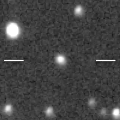
Although it is around 20 mag usually, now it is bright in outburst. Now it is 17.6 mag (Dec. 11, ATLAS-HKO, Haleakala). It stays 17 mag for a while. In the Northern Hemisphere, it stays observable in good condition. In the Southern Hemisphere, it will be unobservable in March. Date(TT) R.A. (2000) Decl. Delta r Elong. m1 Best Time(A, h) Jan. 3 2 42.74 36 50.4 8.175 8.774 124 17.0 21:03 (165, 16) Jan. 10 2 42.22 36 36.2 8.257 8.765 118 17.0 21:01 (160, 15) |
(306173) 2010 NK83

|
Peculiar asteroid moving along a cometary orbit. Now it is 17.3 mag (Dec. 3, Taras Prystavski). Fading gradually. It will be fainter than 18 mag in February. In the Northern Hemisphere, it stays observable in good condition. It locates somewhat low in the Southern Hemisphere. Date(TT) R.A. (2000) Decl. Delta r Elong. m1 Best Time(A, h) Jan. 3 8 0.43 23 20.1 1.604 2.566 164 17.1 1:12 (180, 32) Jan. 10 7 56.29 24 11.8 1.604 2.582 172 17.0 0:41 (180, 31) |
47P/Ashbrook-Jackson
|
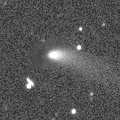
Now it is 16.5 mag (Dec. 6, Purple Mountain Observatory, XuYi Station). Fading slowly. It will be fainter than 18 mag in April. It will be unobservable in February in the Southern Hemisphere, or in March in the Northern Hemisphere. Date(TT) R.A. (2000) Decl. Delta r Elong. m1 Best Time(A, h) Jan. 3 23 24.18 -0 41.5 3.028 2.834 69 17.0 21:03 (103, 19) Jan. 10 23 32.36 0 27.3 3.121 2.840 64 17.1 21:01 (101, 14) |
123P/West-Hartley
|
|
It will brighten up to 15 mag from autumn to winter in 2026. Now it is 17.4 mag (Dec. 20, K. Hills). It stays 17 mag for a while. In the Northern Hemisphere, it stays observable in good condition. It locates somewhat low in the Southern Hemisphere. Date(TT) R.A. (2000) Decl. Delta r Elong. m1 Best Time(A, h) Jan. 3 3 21.62 27 18.3 2.127 2.881 132 17.2 21:03 (172, 27) Jan. 10 3 19.52 27 23.0 2.174 2.851 124 17.1 21:01 (165, 26) |
C/2019 E3 ( ATLAS )
|
Very far object. Now it is 16.6 mag (Oct. 19, ATLAS Chile). It stays 17 mag for a while. In the Northern Hemisphere, it will be unobservable soon. In the Southern Hemisphere, it will be getting lower gradually. But it will be getting higher again after March. Date(TT) R.A. (2000) Decl. Delta r Elong. m1 Best Time(A, h) Jan. 3 0 4.79 -50 48.5 11.495 11.114 64 17.3 21:03 ( 51, 46) Jan. 10 0 5.12 -50 5.2 11.575 11.128 60 17.3 21:01 ( 51, 42) |
217P/LINEAR

|
It brightened up to 12.1 mag in early summer (June 10, Taras Prystavski). Now it is 16.7 mag (Dec. 17, Purple Mountain Observatory, XuYi Station). Fading gradually. It will be fainter than 18 mag in February. It stays observable in good condition. Date(TT) R.A. (2000) Decl. Delta r Elong. m1 Best Time(A, h) Jan. 3 9 3.64 15 53.8 1.838 2.725 148 17.4 2:15 (180, 39) Jan. 10 8 57.03 16 48.3 1.845 2.779 157 17.5 1:41 (180, 38) |
218P/LINEAR
|
|
It will brighten up to 16 mag in spring. Now it is 18.8 mag (Dec. 21, Catalina Sky Survey). Brightening slowly. It locates somewhat low in the Northern Hemisphere. Date(TT) R.A. (2000) Decl. Delta r Elong. m1 Best Time(A, h) Jan. 3 14 31.63 -14 39.1 1.506 1.358 62 17.7 3:05 (271, 25) Jan. 10 14 59.54 -16 30.9 1.443 1.313 62 17.4 3:13 (271, 28) |
302P/Lemmon-PanSTARRS
|
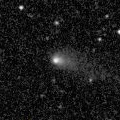
It brightened very rapidly, and it became brighter than expected. Now it is 17.2 mag (Dec. 14, ATLAS Chile). Fading slowly. It will be fainter than 18 mag in February. In the Northern Hemisphere, it will be getting lower gradually. It locates somewhat low in the Southern Hemisphere. Date(TT) R.A. (2000) Decl. Delta r Elong. m1 Best Time(A, h) Jan. 3 0 32.73 -3 1.1 3.507 3.544 84 17.4 21:03 (113, 33) Jan. 10 0 37.64 -2 19.5 3.620 3.555 78 17.5 21:01 (110, 29) |
C/2017 K2 ( PanSTARRS )
|
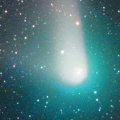
It brightened up to 8 mag from 2022 summer to 2023 spring. Now it is 17.1 mag (Dec. 16, Ken-ichi Kadota). It stays 18 mag for a while. In the Northern Hemisphere, it stays observable in good condition. It locates somewhat low in the Southern Hemisphere. Date(TT) R.A. (2000) Decl. Delta r Elong. m1 Best Time(A, h) Jan. 3 5 46.53 30 52.1 9.362 10.307 163 17.5 22:55 (180, 24) Jan. 10 5 43.30 30 57.0 9.450 10.355 155 17.6 22:24 (180, 24) |
C/2024 G2 ( ATLAS )

|
Now it is 17.8 mag (Nov. 14, W. Hasubick). It stays 18 mag for a while. It stays observable in good condition. Date(TT) R.A. (2000) Decl. Delta r Elong. m1 Best Time(A, h) Jan. 3 12 11.02 -9 44.4 5.370 5.555 95 17.6 3:05 (240, 50) Jan. 10 12 9.30 -9 3.0 5.257 5.569 103 17.6 3:13 (228, 56) |
C/2019 U5 ( PanSTARRS )
|
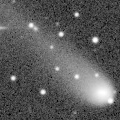
Now it is 17.2 mag (Nov. 26, Andrew Pearce). It stays 18 mag for a while. It stays extremely low in the Northern Hemisphere. In the Southern Hemisphere, it stays observable in good condition. Date(TT) R.A. (2000) Decl. Delta r Elong. m1 Best Time(A, h) Jan. 3 4 44.77 -47 1.7 8.569 8.864 104 17.7 21:52 ( 0, 78) Jan. 10 4 39.59 -46 32.8 8.651 8.907 102 17.8 21:19 ( 0, 79) |
276P/Vorobjov

|
Now it is 17.7 mag (Nov. 25, ATLAS-MLO, Mauna Loa). Fading slowly. It will be fainter than 18 mag in February. It stays observable in good condition. Date(TT) R.A. (2000) Decl. Delta r Elong. m1 Best Time(A, h) Jan. 3 6 49.26 4 41.5 3.312 4.257 161 17.8 0:01 (180, 50) Jan. 10 6 45.15 4 44.5 3.330 4.269 160 17.8 23:25 (180, 50) |
P/2023 S1 ( PanSTARRS )

|
It brightened up to 13.7 mag in last winter (Jan. 4, 2025, W. Pei). It stays 18 mag for a while. It locates somewhat low in the Northern Hemisphere. In the Southern Hemisphere, it stays observable in good condition. Date(TT) R.A. (2000) Decl. Delta r Elong. m1 Best Time(A, h) Jan. 3 14 42.98 -23 53.8 3.587 3.160 56 17.8 3:05 (281, 27) Jan. 10 14 51.13 -24 44.3 3.521 3.180 61 17.8 3:13 (279, 33) |
C/2024 X2 ( ATLAS )

|
Now it is 17.7 mag (Dec. 22, Ken-ichi Kadota). Fading slowly. It will be fainter than 18 mag in February. It stays observable in good condition. Date(TT) R.A. (2000) Decl. Delta r Elong. m1 Best Time(A, h) Jan. 3 8 49.69 3 36.8 3.132 3.984 145 17.8 2:02 (180, 52) Jan. 10 8 41.00 5 26.1 3.094 4.007 155 17.8 1:25 (180, 50) |
(468861) 2013 LU28
|
Peculiar asteroid moving along a cometary orbit. It brightened up to 17 mag from 2024 to 2025. Now it is 17.8 mag (Oct. 5, ATLAS-HKO, Haleakala). It stays 18 mag for a while. It stays observable in good condition. Date(TT) R.A. (2000) Decl. Delta r Elong. m1 Best Time(A, h) Jan. 3 6 18.22 21 50.3 8.327 9.302 171 17.9 23:26 (180, 33) Jan. 10 6 13.75 21 34.3 8.367 9.315 163 18.0 22:54 (180, 33) |
48P/Johnson
|
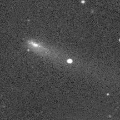
Now it is 17.8 mag (Dec. 27, Kunihiro Shima). Fading gradually. In the Northern Hemisphere, it stays observable in good condition. In the Southern Hemisphere, it will be getting lower gradually. Date(TT) R.A. (2000) Decl. Delta r Elong. m1 Best Time(A, h) Jan. 3 3 6.72 5 18.5 2.313 2.963 122 18.0 21:03 (162, 48) Jan. 10 3 7.13 6 2.3 2.426 2.993 116 18.2 21:01 (154, 45) |
489P/Denning
|
|
It had been lost for 113 years. It passed the perihelion on Dec. 4. It brightened up to 18 mag in outburst in 2007. Brightening slowly. It stays observable in good condition. Date(TT) R.A. (2000) Decl. Delta r Elong. m1 Best Time(A, h) Jan. 3 12 33.10 1 5.5 1.173 1.596 95 21.9 3:05 (234, 38) Jan. 10 12 45.68 -0 21.7 1.139 1.614 98 21.8 3:13 (230, 43) |