Weekly Information about Bright Comets (2026 May 16: North)
|
Japanese version Home page |
Updated on May 23, 2026 |
|||
|
||||
|
Best time and the azimuth, altitude (A,h) are at lat. 35 deg in the Northern Hemisphere. Azimuth indicates 0 for south, 90 for west, 180 for north, 270 for east. |

|
|
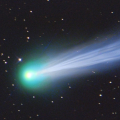
It brightened up to 4.0 mag in late April (Apr. 30, Chris Wyatt). It brightened up to 1.3 mag due to the forward scattering in the SOHO LASCO images (Apr. 25, Mikolaj Kaszczyk). Now it is 6.6 mag (May 17, Mike Olason). Fading rapidly. In the Northern Hemisphere, it is not observable now, but it will appear in September. It locates somewhat low in the Southern Hemisphere. But it will become high in autumn. Date(TT) R.A. (2000) Decl. Delta r Elong. m1 Best Time(A, h) May 16 5 57.27 -8 59.3 1.003 0.784 45 7.5 20:35 ( 84, -8) May 23 6 18.06 -9 55.8 1.237 0.903 45 8.5 20:43 ( 86,-11) |
 88P/Howell
|
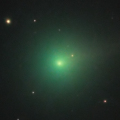
Now it is 10.9 mag (May 15, Ken Harikae). Fading gradually. It locates somewhat low in the Northern Hemisphere. But it will become high in summer. In the Southern Hemisphere, it stays observable in good condition. Date(TT) R.A. (2000) Decl. Delta r Elong. m1 Best Time(A, h) May 16 0 26.20 -0 47.9 1.950 1.499 49 10.2 3:17 (274, 5) May 23 0 43.54 1 1.5 1.947 1.532 51 10.3 3:10 (273, 6) |
10P/Tempel 2
|
It is expected to brighten up to 8 mag in summer. Now it is 13.6 mag (May 17, Katsumi Yoshimoto). Brightening rapidly. It stays observable in good condition. Date(TT) R.A. (2000) Decl. Delta r Elong. m1 Best Time(A, h) May 16 19 40.55 -8 15.8 0.887 1.632 118 11.8 3:17 (342, 45) May 23 19 53.70 -8 7.7 0.813 1.598 121 11.3 3:10 (345, 46) |
78P/Gehrels 2

|
It will brighten up to 12 mag in summer. It stays 12 mag for a while. In the Northern Hemisphere, it is not observable now, but it will appear in June. In the Southern Hemisphere, it will be unobservable soon. But it will be observable again in May. Date(TT) R.A. (2000) Decl. Delta r Elong. m1 Best Time(A, h) May 16 2 13.94 13 45.6 2.962 2.032 18 12.7 3:17 (247, -8) May 23 2 30.42 14 54.0 2.931 2.023 21 12.6 3:10 (246, -7) |
141P/Machholz 2

|
The condition is very bad in this apparition. It is not observable at all. It will fade out rapidly after this. It will be fainter than 18 mag in July. It will never be observable after this. Date(TT) R.A. (2000) Decl. Delta r Elong. m1 Best Time(A, h) May 16 4 7.17 19 30.7 1.874 0.889 8 12.8 20:35 (124,-11) May 23 4 42.86 19 42.4 1.917 0.940 10 12.9 20:43 (124,-11) |
C/2024 J3 ( ATLAS )

|
Now it is 14.1 mag (May 19, Toru Yusa). It stays 13 mag for a while. In the Northern Hemisphere, it stays observable in good condition. It locates somewhat low in the Southern Hemisphere. Date(TT) R.A. (2000) Decl. Delta r Elong. m1 Best Time(A, h) May 16 20 22.67 24 2.3 3.975 4.215 96 13.4 3:17 (292, 67) May 23 20 20.91 26 11.7 3.879 4.191 100 13.4 3:10 (296, 73) |
C/2023 R1 ( PanSTARRS )

|
Now it is 13.0 mag (May 19, Osamu Miyazaki). It stays 14 mag for a while. It stays observable in good condition. Date(TT) R.A. (2000) Decl. Delta r Elong. m1 Best Time(A, h) May 16 18 38.09 -4 49.5 2.826 3.582 131 13.5 3:06 ( 0, 50) May 23 18 24.00 -5 17.6 2.741 3.588 141 13.4 2:24 ( 0, 50) |
C/2025 A6 ( Lemmon )
|
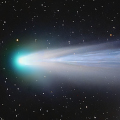
It brightened up to 3.7 mag in late October (Oct. 26, Juan Jose Gonzalez). Now it is 16.0 mag (May 19, Andrew Pearce). It will fade out rapidly after this. In the Northern Hemisphere, it will be unobservable in June. In the Southern Hemisphere, it stays observable in good condition. Date(TT) R.A. (2000) Decl. Delta r Elong. m1 Best Time(A, h) May 16 10 52.00 -44 43.7 2.561 3.160 117 13.5 20:35 ( 14, 8) May 23 10 48.51 -42 7.1 2.717 3.246 112 13.8 20:43 ( 22, 8) |
29P/Schwassmann-Wachmann 1
|
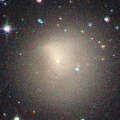
Now it is 13.0 mag (May 17, Yoshiaki Yamaguchi). It will be getting lower gradually after this, and it will be unobservable in August in the Northern Hemisphere, or in September in the Southern Hemisphere. Date(TT) R.A. (2000) Decl. Delta r Elong. m1 Best Time(A, h) May 16 10 59.02 -0 53.9 5.876 6.315 111 13.8 20:35 ( 29, 50) May 23 10 59.39 -0 51.9 5.981 6.315 104 13.9 20:43 ( 41, 46) |
C/2024 T5 ( ATLAS )
|
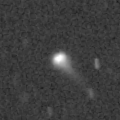
Now it is 13.9 mag (Mar. 12, ATLAS South Africa). Brightening slowly. In the Northern Hemisphere, it is not observable now, but it will appear in August. It locates somewhat low in the Southern Hemisphere. But it will become high in summer. It is expected to brighten up to 11 mag in next winter. Date(TT) R.A. (2000) Decl. Delta r Elong. m1 Best Time(A, h) May 16 3 54.87 -18 20.0 5.664 4.904 37 13.9 20:35 ( 94,-38) May 23 4 1.81 -17 32.5 5.626 4.868 38 13.9 20:43 ( 99,-43) |
235P/LINEAR
|
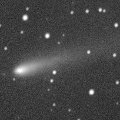
It became brighter than expected. Now it is 14.3 mag (May 19, Toru Yusa). It will fade out rapidly after this. It will be fainter than 18 mag in August. It stays observable in good condition. Date(TT) R.A. (2000) Decl. Delta r Elong. m1 Best Time(A, h) May 16 17 9.55 -10 20.5 1.318 2.272 154 14.1 1:37 ( 0, 45) May 23 17 4.72 -9 38.4 1.318 2.297 160 14.2 1:05 ( 0, 45) |
24P/Schaumasse

|
It brightened up to 8.4 mag in January (Jan. 14, Mitsunori Tsumura). Now it is 13.7 mag (May 19, Toru Yusa). Fading rapidly. It will be fainter than 18 mag in July. It stays observable in good condition. Date(TT) R.A. (2000) Decl. Delta r Elong. m1 Best Time(A, h) May 16 14 25.04 -0 55.7 0.994 1.961 155 14.1 22:48 ( 0, 54) May 23 14 20.34 -2 3.9 1.080 2.021 149 14.6 22:16 ( 0, 53) |
C/2014 UN271 ( Bernardinelli-Bernstein )

|
Very large comet. It is expected to brighten up to 13 mag in 2031. Now it is 14.5 mag (Apr. 25, Andrew Pearce). It stays 15 mag for a while. In the Northern Hemisphere, it is not observable now. In the Southern Hemisphere, it stays observable in good condition. In the Northern Hemisphere, it is not observable until 2030. Date(TT) R.A. (2000) Decl. Delta r Elong. m1 Best Time(A, h) May 16 5 31.43 -68 31.0 13.941 13.982 90 14.7 20:35 ( 26,-36) May 23 5 37.89 -68 20.2 13.912 13.961 90 14.7 20:43 ( 27,-39) |
C/2022 QE78 ( ATLAS )
|
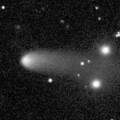
Now it is 15.2 mag (May 18, Toru Yusa). It stays 15 mag for a while. It will be unobservable in July in the Southern Hemisphere, or in August in the Northern Hemisphere. But it will be observable again in September in the Northern Hemisphere. Date(TT) R.A. (2000) Decl. Delta r Elong. m1 Best Time(A, h) May 16 9 15.10 31 44.6 5.905 5.765 77 15.0 20:35 ( 97, 53) May 23 9 19.09 31 34.5 6.021 5.781 71 15.0 20:43 (101, 47) |
C/2024 E1 ( Wierzchos )
|
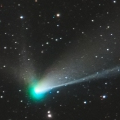
It brightened up to 6.6 mag in January (Jan. 28, Chris Wyatt). The nucleus was disintegrated in March and the comet is fading and getting diffused very rapidly. Now it is 13.5 mag (Apr. 8, Ken-ichi Kadota). Fading rapidly. It will be fainter than 18 mag in August. It will be unobservable in June. Date(TT) R.A. (2000) Decl. Delta r Elong. m1 Best Time(A, h) May 16 6 10.00 25 7.0 2.892 2.179 37 15.0 20:35 (111, 14) May 23 6 21.71 26 5.6 3.053 2.277 33 15.4 20:43 (115, 10) |
63P/Wild 1
|
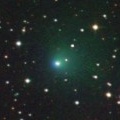
Now it is 14.7 mag (May 13, Katsumi Yoshimoto). It stays 15 mag for a while. It will be unobservable in August in the Northern Hemisphere, or in September in the Southern Hemisphere. Date(TT) R.A. (2000) Decl. Delta r Elong. m1 Best Time(A, h) May 16 8 10.73 30 1.5 2.268 2.038 63 15.3 20:35 (102, 40) May 23 8 25.50 28 13.0 2.313 2.022 60 15.1 20:43 (102, 35) |
C/2021 G2 ( ATLAS )

|
Now it is 15.3 mag (May 17, Toru Yusa). It stays 16 mag for a while. It stays observable in good condition. Date(TT) R.A. (2000) Decl. Delta r Elong. m1 Best Time(A, h) May 16 17 23.53 13 43.5 6.001 6.775 136 15.2 1:51 ( 0, 69) May 23 17 21.05 14 18.6 6.005 6.808 139 15.2 1:21 ( 0, 69) |
C/2022 N2 ( PanSTARRS )
|
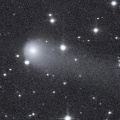
Now it is 15.8 mag (May 7, Ken-ichi Kadota). It stays 16 mag for a while. In the Northern Hemisphere, it will be unobservable soon. But it will be observable again in July. In the Southern Hemisphere, it is not observable now, but it will appear in August. Date(TT) R.A. (2000) Decl. Delta r Elong. m1 Best Time(A, h) May 16 5 5.43 26 42.7 5.479 4.568 23 15.3 20:35 (121, 3) May 23 5 14.07 26 49.0 5.549 4.601 18 15.3 20:43 (125, -1) |
C/2024 R4 ( PanSTARRS )
|
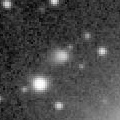
Now it is 15.5 mag (May 22, ATLAS-MLO, Mauna Loa). It stays 15 mag for a while. In the Northern Hemisphere, it stays observable in good condition. It stays extremely low in the Southern Hemisphere. Date(TT) R.A. (2000) Decl. Delta r Elong. m1 Best Time(A, h) May 16 22 14.83 36 1.0 6.358 6.089 70 15.6 3:17 (253, 49) May 23 22 14.18 37 18.9 6.242 6.052 74 15.5 3:10 (252, 53) |
93P/Lovas 1
|
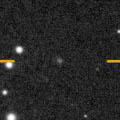
Now it is 16.0 mag (Jan. 18, Kunihiro Shima). Fading slowly. Now it is not observable. It will appear in August in the Northern Hemisphere. Date(TT) R.A. (2000) Decl. Delta r Elong. m1 Best Time(A, h) May 16 3 40.44 27 22.8 2.686 1.694 8 15.6 20:35 (134,-10) May 23 4 2.61 28 30.1 2.698 1.701 8 15.6 20:43 (137,-11) |
123P/West-Hartley

|
It will brighten up to 15 mag from autumn to winter. Now it is 16.8 mag (Apr. 16, Erik Bryssinck). It stays 16 mag for a while. In the Northern Hemisphere, it will be unobservable in June. It stays extremely low in the Southern Hemisphere. But it will become high in winter. Date(TT) R.A. (2000) Decl. Delta r Elong. m1 Best Time(A, h) May 16 5 56.89 33 18.7 3.119 2.374 35 16.0 20:35 (120, 16) May 23 6 12.69 33 20.5 3.142 2.353 32 15.9 20:43 (122, 13) |
260P/McNaught
|
|
It will brighten up to 13 mag and will be observable in good condition from summer to autumn. Now it is 16.9 mag (May 4, ATLAS South Africa). It will brighten rapidly after this. In the Northern Hemisphere, it will be getting higher gradually. In the Southern Hemisphere, it stays observable in good condition. Date(TT) R.A. (2000) Decl. Delta r Elong. m1 Best Time(A, h) May 16 23 32.51 -11 35.0 1.808 1.674 65 16.4 3:17 (291, 9) May 23 23 50.39 -8 59.6 1.729 1.636 67 16.1 3:10 (289, 11) |
C/2025 Q3 ( ATLAS )

|
It brightened rapidly up to 14.1 mag in early 2026 (Jan. 16, Kunihiro Shima). Now it is 16.2 mag (May 2, ATLAS Chile). It will fade out rapidly after this. It will be fainter than 18 mag in July. In the Northern Hemisphere, it will never be observable after this. It locates somewhat low in the Southern Hemisphere. Date(TT) R.A. (2000) Decl. Delta r Elong. m1 Best Time(A, h) May 16 4 19.19 -31 48.1 2.787 2.308 52 16.3 20:35 ( 75,-39) May 23 4 33.76 -33 23.6 2.779 2.342 54 16.5 20:43 ( 75,-44) |
C/2025 Y1 ( ATLAS )
|
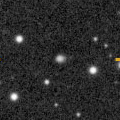
Now it is 16.3 mag (May 19, Hirohisa Sato). It stays 16 mag for a while. It stays observable in good condition. Date(TT) R.A. (2000) Decl. Delta r Elong. m1 Best Time(A, h) May 16 12 43.14 4 23.8 4.889 5.626 132 16.4 21:07 ( 0, 59) May 23 12 41.53 4 33.8 4.920 5.573 125 16.4 20:43 ( 3, 59) |
C/2024 G6 ( ATLAS )

|
Now it is 16.4 mag (May 8, D. Buczynski). It stays 17 mag for a while. It stays observable in good condition. Date(TT) R.A. (2000) Decl. Delta r Elong. m1 Best Time(A, h) May 16 15 56.41 10 56.9 5.565 6.455 149 16.4 0:24 ( 0, 66) May 23 15 50.54 11 50.2 5.582 6.460 147 16.4 23:46 ( 0, 67) |
C/2022 R6 ( PanSTARRS )
|
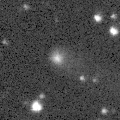
Now it is 16.6 mag (May 7, Ken-ichi Kadota). It stays 17 mag for a while. It will be getting lower gradually after this, and it will be unobservable in June in the Northern Hemisphere, or in August in the Southern Hemisphere. Date(TT) R.A. (2000) Decl. Delta r Elong. m1 Best Time(A, h) May 16 8 39.60 2 31.9 6.948 6.798 77 16.5 20:35 ( 69, 31) May 23 8 42.57 3 0.9 7.066 6.810 71 16.6 20:43 ( 75, 25) |
240P/NEAT

|
It brightened up to 11.1 mag in winter (Nov. 15, Masayoshi Yoshimi). The component B also brightened rapidly up to 13.8 mag (Ded. 8, Masayoshi Yoshimi). Now it is 17.1 mag (May 8, Alfons Diepvens). It will fade out rapidly after this. It will be fainter than 18 mag in July. It locates somewhat low in the Northern Hemisphere. In the Southern Hemisphere, it will be unobservable in June. Date(TT) R.A. (2000) Decl. Delta r Elong. m1 Best Time(A, h) May 16 6 41.72 35 54.8 3.008 2.407 45 16.7 20:35 (117, 25) May 23 6 57.75 35 54.3 3.085 2.431 42 16.9 20:43 (119, 22) |
218P/LINEAR
|
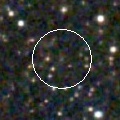
Now it is 16.3 mag (Apr. 5, ATLAS-MLO, Mauna Loa). It will fade out rapidly after this. It will be fainter than 18 mag in June. In the Northern Hemisphere, it will be getting higher gradually. In the Southern Hemisphere, it stays observable in good condition. Date(TT) R.A. (2000) Decl. Delta r Elong. m1 Best Time(A, h) May 16 22 50.77 -4 50.0 1.376 1.444 72 16.7 3:17 (292, 21) May 23 23 3.65 -3 33.4 1.374 1.495 75 17.0 3:10 (293, 23) |
P/2021 N1 ( ZTF )
|
|
First return of a new periodic comet which brightened up to 17 mag in 2021. It will approach to Earth down to 0.17 a.u. from June to July. It is expected to brighten up to 14 mag. Brightening rapidly. In the Northern Hemisphere, it will be getting higher gradually. In the Southern Hemisphere, it stays observable in good condition. Date(TT) R.A. (2000) Decl. Delta r Elong. m1 Best Time(A, h) May 16 18 40.75 -50 12.6 0.494 1.386 131 17.4 3:07 ( 0, 5) May 23 19 12.53 -51 25.4 0.417 1.325 131 16.8 3:10 ( 0, 4) |
65P/Gunn
|
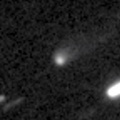
Now it is 16.9 mag (Nov. 20, Thomas Lehmann). It stays 17 mag for a while. In the Northern Hemisphere, it will be getting higher gradually. In the Southern Hemisphere, it stays observable in good condition. Date(TT) R.A. (2000) Decl. Delta r Elong. m1 Best Time(A, h) May 16 0 4.42 -8 12.8 3.763 3.329 57 17.1 3:17 (283, 5) May 23 0 11.73 -7 35.2 3.694 3.344 62 17.1 3:10 (285, 8) |
C/2025 E1 ( PanSTARRS )
|
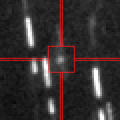
Now it is 17.0 mag (Apr. 28, ATLAS South Africa). It stays 17 mag for a while. In the Northern Hemisphere, it will never be observable after this. In the Southern Hemisphere, it stays observable in good condition. Date(TT) R.A. (2000) Decl. Delta r Elong. m1 Best Time(A, h) May 16 8 33.16 -64 42.1 3.835 4.152 101 17.2 20:35 ( 22,-19) May 23 8 32.13 -64 4.0 3.847 4.136 99 17.2 20:43 ( 25,-21) |
C/2024 G4 ( PanSTARRS )

|
Now it is 17.2 mag (Mar. 12, ATLAS South Africa). It stays 17 mag for a while. It stays observable in good condition. Date(TT) R.A. (2000) Decl. Delta r Elong. m1 Best Time(A, h) May 16 20 20.87 4 4.3 4.562 4.920 104 17.2 3:17 (321, 53) May 23 20 22.08 4 12.6 4.475 4.925 110 17.2 3:10 (328, 55) |
C/2023 X2 ( Lemmon )
|
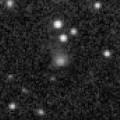
Now it is 17.5 mag (Apr. 29, Alfons Diepvens). It stays 17 mag for a while. In the Northern Hemisphere, it stays observable in good condition. In the Southern Hemisphere, it will never be observable after this. Date(TT) R.A. (2000) Decl. Delta r Elong. m1 Best Time(A, h) May 16 14 51.48 87 37.2 5.395 5.197 73 17.2 22:59 (180, 38) May 23 13 53.24 86 25.4 5.420 5.208 72 17.3 21:43 (180, 39) |
C/2022 E2 ( ATLAS )
|
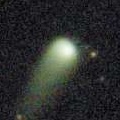
It was observed at 12-13 mag for a long time in 2024. Now it is 17.2 mag (May 17, ATLAS-HKO, Haleakala). It stays 17 mag for a while. In the Northern Hemisphere, it stays observable in good condition. It locates somewhat low in the Southern Hemisphere. Date(TT) R.A. (2000) Decl. Delta r Elong. m1 Best Time(A, h) May 16 23 14.81 30 34.7 6.789 6.317 58 17.3 3:17 (254, 35) May 23 23 14.74 30 54.3 6.746 6.361 63 17.3 3:10 (256, 40) |
C/2025 M2 ( PanSTARRS )
|
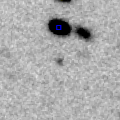
It is expected to brighten up to 12 mag from 2027 to 2028. Now it is 17.1 mag (May 17, ATLAS-MLO, Mauna Loa). Brightening slowly. It stays observable in good condition. Date(TT) R.A. (2000) Decl. Delta r Elong. m1 Best Time(A, h) May 16 21 1.58 -16 39.2 5.632 5.922 101 17.5 3:17 (323, 30) May 23 20 58.66 -16 47.5 5.459 5.870 109 17.4 3:10 (329, 32) |
C/2019 E3 ( ATLAS )
|
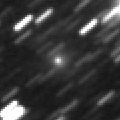
Very far object. It stays 17 mag for a while. In the Northern Hemisphere, it is not observable now, but it will appear in July. In the Southern Hemisphere, it stays observable in good condition. Date(TT) R.A. (2000) Decl. Delta r Elong. m1 Best Time(A, h) May 16 0 39.62 -42 21.7 11.650 11.392 72 17.4 3:17 (308,-21) May 23 0 40.99 -42 21.6 11.585 11.408 77 17.4 3:10 (310,-18) |
C/2023 F3 ( ATLAS )

|
Now it is 17.0 mag (Apr. 25, Andrew Pearce). It stays 18 mag for a while. In the Northern Hemisphere, it will be unobservable in June. In the Southern Hemisphere, it will be getting lower gradually. Date(TT) R.A. (2000) Decl. Delta r Elong. m1 Best Time(A, h) May 16 8 59.92 -7 45.3 6.243 6.246 85 17.4 20:35 ( 56, 28) May 23 8 59.63 -7 0.0 6.388 6.274 79 17.5 20:43 ( 64, 22) |
C/2026 A2 ( Bok )
|
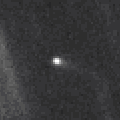
It will brighten up to 14 mag from autumn to winter. Now it is 17.1 mag (May 22, ATLAS-MLO, Mauna Loa). Brightening gradually. In the Northern Hemisphere, it stays observable in good condition. In the Southern Hemisphere, it is not observable now. Date(TT) R.A. (2000) Decl. Delta r Elong. m1 Best Time(A, h) May 16 18 31.89 68 58.5 3.123 3.219 86 17.6 2:57 (180, 56) May 23 18 29.42 71 2.4 3.086 3.160 84 17.4 2:27 (180, 54) |
C/2025 V2 ( Rankin )
|
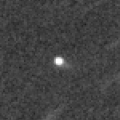
It is expected to brighten up to 12.5 mag in 2027 spring. Now it is 17.4 mag (May 10, Ken-ichi Kadota). Brightening slowly. It will be getting lower gradually after this, and it will be unobservable in August. Date(TT) R.A. (2000) Decl. Delta r Elong. m1 Best Time(A, h) May 16 9 8.75 23 21.3 4.097 4.010 77 17.6 20:35 ( 86, 49) May 23 9 12.63 23 24.8 4.140 3.949 72 17.5 20:43 ( 91, 43) |
C/2023 H5 ( Lemmon )

|
Now it is 17.5 mag (May 9, Ken-ichi Kadota). It stays 18 mag for a while. In the Northern Hemisphere, it stays observable in good condition. In the Southern Hemisphere, it will never be observable after this. Date(TT) R.A. (2000) Decl. Delta r Elong. m1 Best Time(A, h) May 16 22 14.34 64 56.0 5.329 5.041 68 17.6 3:17 (209, 48) May 23 22 15.92 65 26.3 5.334 5.070 69 17.6 3:10 (207, 49) |
195P/Hill

|
Now it is 17.4 mag (May 21, ATLAS South Africa). It stays 18 mag for a while. It stays extremely low in the Northern Hemisphere. In the Southern Hemisphere, it stays observable in good condition. Date(TT) R.A. (2000) Decl. Delta r Elong. m1 Best Time(A, h) May 16 9 29.90 -25 9.3 4.370 4.620 97 17.7 20:35 ( 38, 19) May 23 9 34.02 -24 32.2 4.459 4.629 93 17.7 20:43 ( 44, 15) |
40P/Vaisala 1

|
It became brighter than expected, brightened up to 14.3 mag (Jan. 21, Michael Jager). Now it is 16.9 mag (May 12, ATLAS-MLO, Mauna Loa). Fading gradually. It will be fainter than 18 mag in June. It stays observable in good condition. Date(TT) R.A. (2000) Decl. Delta r Elong. m1 Best Time(A, h) May 16 17 55.94 -9 1.7 1.659 2.542 143 17.7 2:23 ( 0, 46) May 23 17 51.44 -9 6.1 1.656 2.585 150 17.8 1:51 ( 0, 46) |
C/2024 A1 ( ATLAS )
|
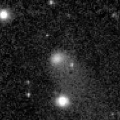
Now it is 17.5 mag (May 9, Alfons Diepvens). It stays 18 mag for a while. It locates somewhat low in the Northern Hemisphere. In the Southern Hemisphere, it will never be observable after this. Date(TT) R.A. (2000) Decl. Delta r Elong. m1 Best Time(A, h) May 16 6 41.76 63 43.0 5.336 4.830 55 17.7 20:35 (148, 34) May 23 6 49.63 63 51.5 5.422 4.865 51 17.8 20:43 (149, 31) |
A/2026 E1
|
|
Now it is 19.5 mag (May 19, Mt. Lemmon Survey). It stays 18 mag for a while. In the Northern Hemisphere, it will be getting lower gradually. In the Southern Hemisphere, it stays observable in good condition. Date(TT) R.A. (2000) Decl. Delta r Elong. m1 Best Time(A, h) May 16 11 12.65 -14 4.4 2.281 2.902 118 17.7 20:35 ( 19, 39) May 23 11 10.82 -10 28.9 2.388 2.904 110 17.9 20:43 ( 31, 39) |
C/2026 C1 ( Tsuchinshan )
|
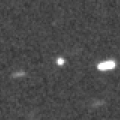
It is expected to brighten up to 4 mag in 2028 autumn. Now it is 17.3 mag (May 18, Alfons Diepvens). It stays 18 mag for a while. It will be getting lower gradually after this, and it will be unobservable in August in the Northern Hemisphere, or in September in the Southern Hemisphere. At the high light, it is observable in excellent condition in the Southern Hemisphere. In the Northern Hemisphere, it becomes observable after the perihelion passage. Date(TT) R.A. (2000) Decl. Delta r Elong. m1 Best Time(A, h) May 16 12 12.85 7 51.4 8.675 9.286 124 17.9 20:37 ( 0, 63) May 23 12 10.76 7 50.5 8.723 9.234 117 17.9 20:43 ( 19, 61) |
C/2024 G2 ( ATLAS )

|
Now it is 17.5 mag (Apr. 23, L. Grazzini). It stays 18 mag for a while. It will be getting lower gradually. Date(TT) R.A. (2000) Decl. Delta r Elong. m1 Best Time(A, h) May 16 10 50.43 11 26.2 5.552 5.892 104 17.9 20:35 ( 43, 60) May 23 10 49.02 12 6.3 5.696 5.913 97 18.0 20:43 ( 56, 55) |
489P/Denning
|
|
It had been lost for 113 years. It must have passed the perihelion on Dec. 4. It brightened up to 18 mag in outburst in 2007. Fading gradually. In the Northern Hemisphere, it will be getting lower gradually. In the Southern Hemisphere, it stays observable in good condition. Date(TT) R.A. (2000) Decl. Delta r Elong. m1 Best Time(A, h) May 16 12 43.57 -5 45.7 1.452 2.301 137 22.5 21:08 ( 0, 49) May 23 12 44.66 -6 3.5 1.556 2.349 131 22.8 20:43 ( 1, 49) |