Weekly Information about Bright Comets (2025 Nov. 22: South)
|
Japanese version Home page |
Updated on November 25, 2025 |
|||
|
||||
|
Best time and the azimuth, altitude (A,h) are at lat. 35 deg in the Southern Hemisphere. Azimuth indicates 0 for south, 90 for west, 180 for north, 270 for east. |

|
|
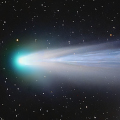
It brightened up to 3.7 mag in late October (Oct. 26, Juan Jose Gonzalez). Now it is 5.2 mag (Nov. 21, Marco Goiato). Fading rapidly. Now it is not observable. It will appear in December in the Southern Hemisphere. Date(TT) R.A. (2000) Decl. Delta r Elong. m1 Best Time(A, h) Nov. 22 17 11.52 -22 9.8 1.455 0.615 19 6.2 20:31 ( 60, -3) Nov. 29 17 12.59 -26 21.4 1.631 0.707 13 7.3 20:40 ( 51, -6) |
 210P/Christensen

|
Brightened rapidly. It is visible at 10-11 mag in SWAN images (Nov. 5, Vladimir Bezugly). It will fade out rapidly after this. In the Northern Hemisphere, it will be getting higher gradually. In the Southern Hemisphere, it is not observable now, but it will appear in December. Date(TT) R.A. (2000) Decl. Delta r Elong. m1 Best Time(A, h) Nov. 22 14 31.97 -18 4.6 0.515 0.525 18 8.4 3:02 (298, -6) Nov. 29 14 20.43 -12 45.8 0.621 0.542 29 9.0 2:56 (288, -3) |
C/2025 T1 ( ATLAS )
|
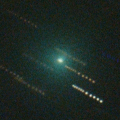
Now it is 9.4 mag (Nov. 23, Marek Biely). It will fade out rapidly after this. In the Northern Hemisphere, it will be getting lower gradually after this, and it will be unobservable in January. In the Southern Hemisphere, it is not observable now, but it will appear in March. Date(TT) R.A. (2000) Decl. Delta r Elong. m1 Best Time(A, h) Nov. 22 18 16.78 36 21.0 1.061 1.121 66 9.6 20:31 (119,-23) Nov. 29 19 0.69 26 41.1 1.152 1.110 61 9.7 20:40 (111,-17) |
24P/Schaumasse
|
It will brighten up to 8 mag in winter, and will be observable in good condition. Now it is 11.2 mag (Nov. 19, Martin Masek). Brightening gradually. In the Northern Hemisphere, it stays observable in good condition. It locates somewhat low in the Southern Hemisphere. But it will become high in winter. Date(TT) R.A. (2000) Decl. Delta r Elong. m1 Best Time(A, h) Nov. 22 9 35.50 19 54.2 0.747 1.337 99 11.0 3:02 (219, 25) Nov. 29 10 8.55 19 27.8 0.697 1.297 99 10.3 2:56 (222, 24) |
3I/2025 N1 ( ATLAS )
|
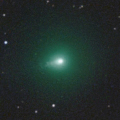
Third interstellar object in history following 1I/'Oumuamua and 2I/Borisov. The eccentricity is extremely big as 6. It approached to Sun down to 1.38 a.u. in late October. Now it is 9.7 mag (Nov. 22, Marco Goiato). It will fade out rapidly after this. It will be fainter than 18 mag in February. In the Northern Hemisphere, it stays observable in good condition. In the Southern Hemisphere, it will be getting higher gradually. Date(TT) R.A. (2000) Decl. Delta r Elong. m1 Best Time(A, h) Nov. 22 12 31.18 -2 7.5 2.020 1.605 51 10.3 3:02 (267, 8) Nov. 29 12 8.76 -0 9.5 1.934 1.754 64 10.8 2:56 (259, 16) |
C/2025 K1 ( ATLAS )
|
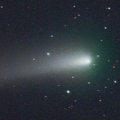
Now it is 9.6 mag (Nov. 23, Osamu Miyazaki). It will fade out rapidly after this. It will be fainter than 18 mag in February. In the Northern Hemisphere, it stays observable in good condition. In the Southern Hemisphere, it is not observable now, but it will appear in December. The nucleus is split into three components. Date(TT) R.A. (2000) Decl. Delta r Elong. m1 Best Time(A, h) Nov. 22 10 21.87 53 18.6 0.410 1.142 101 10.3 3:02 (208, -8) Nov. 29 6 25.67 74 54.3 0.425 1.273 123 10.9 2:15 (180,-20) |
C/2025 R2 ( SWAN )
|
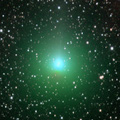
It brightened up to 5.2 mag in October (Oct. 11, Virgilio Gonano). Now it is 10.4 mag (Nov. 21, Carlos Labordena). Fading rapidly. In the Northern Hemisphere, it stays observable in good condition. In the Southern Hemisphere, it will be getting lower gradually. Date(TT) R.A. (2000) Decl. Delta r Elong. m1 Best Time(A, h) Nov. 22 23 44.17 6 29.1 0.771 1.520 119 10.7 20:31 (161, 47) Nov. 29 0 2.30 7 45.6 0.929 1.631 116 11.4 20:40 (156, 44) |
C/2025 V1 ( Borisov )
|
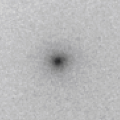
Bright new comet. It brightened up to 10.4 mag in early November (Nov. 4, Michael Jager and Gerald Rhemann). However, it faded out very rapidly afer that. Now it is 14.0 mag (Nov. 8, Michael Jager). It will fade out rapidly after this. It will be fainter than 18 mag in January. In the Northern Hemisphere, it will be unobservable in December. In the Southern Hemisphere, it will never be observable after this. Date(TT) R.A. (2000) Decl. Delta r Elong. m1 Best Time(A, h) Nov. 22 16 30.64 7 23.8 0.873 0.483 29 11.0 20:31 ( 78,-29) Nov. 29 17 23.32 4 35.0 1.100 0.558 30 12.2 20:40 ( 78,-24) |
C/2024 E1 ( Wierzchos )
|
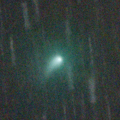
It was originally expected to brighten up to 5 mag in January. But actually, the brightness evolution is slower than originally expected. It will be 8 mag at best. Now it is 11.4 mag (Nov. 6, Thomas Lehmann). It will brighten rapidly after this. In the Northern Hemisphere, it will be unobservable in December. But it will be observable again in February. In the Southern Hemisphere, it is not observable now, but it will appear in January. Date(TT) R.A. (2000) Decl. Delta r Elong. m1 Best Time(A, h) Nov. 22 17 22.13 -2 20.9 2.123 1.343 28 11.6 20:31 ( 77,-13) Nov. 29 17 35.76 -6 3.1 2.064 1.231 24 11.2 20:40 ( 70,-16) |
240P/NEAT
|
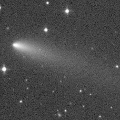
Now it is 11.9 mag (Nov. 19, Osamu Miyazaki). Fading slowly. It stays observable in good condition. The component B is brightening rapidly. Now it is bright as 14.8 mag (Nov. 15, Andrew Pearce). Date(TT) R.A. (2000) Decl. Delta r Elong. m1 Best Time(A, h) Nov. 22 3 47.97 6 6.0 1.161 2.133 166 12.1 23:41 (180, 49) Nov. 29 3 40.50 7 41.4 1.164 2.128 163 12.1 23:06 (180, 47) |
C/2022 N2 ( PanSTARRS )

|
Now it is 13.1 mag (Nov. 21, Osamu Miyazaki). Fading slowly. In the Northern Hemisphere, it stays observable in good condition. It locates somewhat low in the Southern Hemisphere. Date(TT) R.A. (2000) Decl. Delta r Elong. m1 Best Time(A, h) Nov. 22 3 20.86 25 57.5 2.974 3.953 171 13.3 23:14 (180, 29) Nov. 29 3 18.02 25 43.0 3.006 3.968 165 13.4 22:44 (180, 29) |
88P/Howell

|
It will brighten rapidly after this. Now it is not observable. It will appear in January in the Southern Hemisphere, or in December in the Northern Hemisphere. Date(TT) R.A. (2000) Decl. Delta r Elong. m1 Best Time(A, h) Nov. 22 14 56.38 -15 52.8 2.776 1.829 13 13.7 3:02 (300,-12) Nov. 29 15 14.62 -17 17.0 2.713 1.784 15 13.4 2:56 (300,-10) |
235P/LINEAR
|
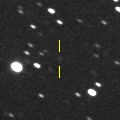
It became brighter than expected. Now it is 13.6 mag (Nov. 19, Martin Masek). It stays 13 mag for a while. It locates somewhat low in the Northern Hemisphere. But it will become high in spring. In the Southern Hemisphere, it will be getting higher gradually. Date(TT) R.A. (2000) Decl. Delta r Elong. m1 Best Time(A, h) Nov. 22 13 4.96 -9 44.8 2.631 1.993 40 13.6 3:02 (278, 6) Nov. 29 13 20.81 -10 59.8 2.576 1.987 43 13.5 2:56 (278, 8) |
29P/Schwassmann-Wachmann 1
|
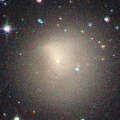
Now it is 15.7 mag (Oct. 28, Francois Kugel). In the Northern Hemisphere, it stays observable in good condition. In the Southern Hemisphere, it will be getting higher gradually. Date(TT) R.A. (2000) Decl. Delta r Elong. m1 Best Time(A, h) Nov. 22 11 25.47 -1 25.7 6.622 6.302 67 14.1 3:02 (256, 21) Nov. 29 11 28.02 -1 51.0 6.515 6.303 73 14.1 2:56 (254, 25) |
C/2022 QE78 ( ATLAS )

|
Now it is 14.6 mag (Nov. 15, Hiroshi Abe). It stays 14 mag for a while. In the Northern Hemisphere, it stays observable in good condition. It locates somewhat low in the Southern Hemisphere. Date(TT) R.A. (2000) Decl. Delta r Elong. m1 Best Time(A, h) Nov. 22 9 23.41 20 49.3 5.197 5.501 102 14.5 3:02 (216, 25) Nov. 29 9 25.19 21 18.5 5.097 5.507 109 14.4 2:56 (211, 27) |
C/2021 G2 ( ATLAS )

|
Now it is 14.4 mag (Oct. 11, Hiroshi Abe). It stays 15 mag for a while. Now it is not observable. It will appear in January in the Southern Hemisphere, or in December in the Northern Hemisphere. Date(TT) R.A. (2000) Decl. Delta r Elong. m1 Best Time(A, h) Nov. 22 16 18.13 -1 7.4 6.908 5.990 20 14.7 20:31 ( 67,-27) Nov. 29 16 23.87 -0 59.9 6.933 6.019 20 14.7 20:40 ( 62,-33) |
C/2024 J3 ( ATLAS )

|
It will brighten up to 13 mag in 2026. Now it is 14.9 mag (Nov. 17, Alfons Diepvens). It stays 15 mag for a while. It will be unobservable in December. But it will be observable again in January in the Northern Hemisphere, or in February in the Southern Hemisphere. Date(TT) R.A. (2000) Decl. Delta r Elong. m1 Best Time(A, h) Nov. 22 18 48.19 -7 57.5 5.635 4.984 44 14.9 20:31 ( 85, 7) Nov. 29 18 52.29 -7 25.1 5.669 4.948 39 14.9 20:40 ( 81, 0) |
C/2014 UN271 ( Bernardinelli-Bernstein )
|
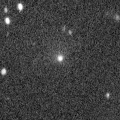
Very large comet. It is expected to brighten up to 13 mag in 2031. Now it is 14.7 mag (Nov. 14, Andrew Pearce). It stays 15 mag for a while. In the Northern Hemisphere, it is not observable now. In the Southern Hemisphere, it stays observable in good condition. In the Northern Hemisphere, it is not observable until 2030. Date(TT) R.A. (2000) Decl. Delta r Elong. m1 Best Time(A, h) Nov. 22 5 27.62 -74 33.2 14.593 14.525 84 14.9 1:23 ( 0, 50) Nov. 29 5 22.98 -74 45.1 14.585 14.503 83 14.9 0:51 ( 0, 50) |
C/2024 T5 ( ATLAS )

|
Now it is 14.8 mag (Nov. 10, ATLAS Chile). It stays 15 mag for a while. It stays extremely low in the Northern Hemisphere. But it will become high in autumn. In the Southern Hemisphere, it stays observable in good condition. It is expected to brighten up to 11 mag in winter between 2026 and 2027. Date(TT) R.A. (2000) Decl. Delta r Elong. m1 Best Time(A, h) Nov. 22 2 52.22 -45 33.3 5.423 5.881 113 15.0 22:45 ( 0, 80) Nov. 29 2 48.18 -45 4.1 5.423 5.840 110 15.0 22:14 ( 0, 80) |
C/2025 L1 ( ATLAS )

|
It is expected to brighten up to 13.5 mag and to be observable in good condition in 2026 spring. Brightening slowly. In the Northern Hemisphere, it is not observable now, but it will appear in December. It locates somewhat low in the Southern Hemisphere. But it will become high in winter. Date(TT) R.A. (2000) Decl. Delta r Elong. m1 Best Time(A, h) Nov. 22 14 58.47 -47 29.1 2.609 1.813 29 15.2 3:02 (323, 9) Nov. 29 15 8.41 -45 46.8 2.586 1.781 28 15.1 2:56 (320, 10) |
C/2023 R1 ( PanSTARRS )

|
Now it is 14.8 mag (Oct. 10, J. Tapioles). It stays 15 mag for a while. In the Northern Hemisphere, it will be unobservable temporarily in January. In the Southern Hemisphere, it will be unobservable in December. But it will be observable again in February. Date(TT) R.A. (2000) Decl. Delta r Elong. m1 Best Time(A, h) Nov. 22 19 12.74 1 46.9 4.286 3.796 54 15.2 20:31 ( 97, 6) Nov. 29 19 13.33 0 55.6 4.364 3.775 48 15.2 20:40 ( 91, 0) |
78P/Gehrels 2

|
It will brighten up to 12 mag in 2026 summer. Now it is 16.0 mag (Nov. 11, Ken-ichi Kadota). Brightening slowly. It will be getting lower gradually after this, and it will be unobservable in January in the Southern Hemisphere, or in February in the Northern Hemisphere. Date(TT) R.A. (2000) Decl. Delta r Elong. m1 Best Time(A, h) Nov. 22 20 36.51 -13 17.0 2.806 2.612 68 15.5 20:31 ( 96, 32) Nov. 29 20 45.93 -12 55.1 2.860 2.581 63 15.4 20:40 ( 93, 26) |
C/2022 E2 ( ATLAS )
|
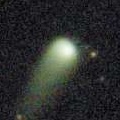
It was observed at 12-13 mag for a long time in 2024. Now it is 15.2 mag (Nov. 6, Thomas Lehmann). Fading slowly. In the Northern Hemisphere, it stays observable in good condition. In the Southern Hemisphere, it will be unobservable in December. Date(TT) R.A. (2000) Decl. Delta r Elong. m1 Best Time(A, h) Nov. 22 22 29.84 39 35.4 4.827 5.250 110 15.6 20:31 (156, 10) Nov. 29 22 28.02 37 56.1 4.955 5.291 104 15.7 20:40 (148, 8) |
C/2024 R4 ( PanSTARRS )
|
Brightening rapidly. It is expected to brighten up to 12 mag from 2027 to 2028. Now it is 16.0 mag (Nov. 1, Yukihiro Sugiyama). It stays 16 mag for a while. In the Northern Hemisphere, it will be getting lower gradually. But it will be getting higher again after February. In the Southern Hemisphere, it will be unobservable in December. Date(TT) R.A. (2000) Decl. Delta r Elong. m1 Best Time(A, h) Nov. 22 21 28.56 21 21.0 6.925 7.039 92 16.1 20:31 (134, 18) Nov. 29 21 28.36 21 10.0 6.989 7.000 86 16.1 20:40 (127, 12) |
C/2025 Q3 ( ATLAS )
|
Now it is 15.7 mag (Nov. 20, Hirohisa Sato). It stays 16 mag for a while. It stays observable in good condition. Date(TT) R.A. (2000) Decl. Delta r Elong. m1 Best Time(A, h) Nov. 22 3 1.97 19 41.6 1.413 2.390 168 16.2 22:54 (180, 36) Nov. 29 2 47.41 14 13.7 1.414 2.354 157 16.1 22:13 (180, 41) |
C/2023 C2 ( ATLAS )

|
It brightened up to 12.7 mag in 2024 summer (Aug. 7, 2024, Thomas Lehmann). Now it is 15.9 mag (Nov. 17, Alfons Diepvens). Fading slowly. In the Northern Hemisphere, it stays observable in good condition. In the Southern Hemisphere, it will never be observable after this. Date(TT) R.A. (2000) Decl. Delta r Elong. m1 Best Time(A, h) Nov. 22 22 21.46 51 54.9 4.061 4.503 110 16.1 20:31 (160, -2) Nov. 29 22 25.16 51 7.3 4.165 4.559 107 16.2 20:40 (155, -4) |
C/2022 R6 ( PanSTARRS )

|
Now it is 16.4 mag (Nov. 10, Ken-ichi Kadota). It stays 16 mag for a while. It stays observable in good condition. Date(TT) R.A. (2000) Decl. Delta r Elong. m1 Best Time(A, h) Nov. 22 8 58.36 -12 5.4 6.389 6.592 97 16.2 3:02 (235, 56) Nov. 29 8 58.65 -12 7.0 6.293 6.597 103 16.2 2:56 (228, 59) |
261P/Larson
|
Now it is 16.7 mag (Nov. 12, ATLAS-MLO, Mauna Loa). Fading slowly. In the Southern Hemisphere, it will be getting lower gradually after this, and it will be unobservable in February. Date(TT) R.A. (2000) Decl. Delta r Elong. m1 Best Time(A, h) Nov. 22 21 6.24 -11 32.3 2.032 2.033 76 16.4 20:31 (103, 37) Nov. 29 21 19.17 -10 32.6 2.095 2.027 72 16.4 20:40 (100, 32) |
40P/Vaisala 1

|
It stays 17 mag for a while. It locates somewhat low in the Northern Hemisphere. But it will become high in winter. In the Southern Hemisphere, it is not observable now, but it will appear in December. Date(TT) R.A. (2000) Decl. Delta r Elong. m1 Best Time(A, h) Nov. 22 13 39.63 -2 48.3 2.530 1.827 36 16.4 3:02 (277, -5) Nov. 29 13 57.48 -4 5.6 2.498 1.832 38 16.4 2:56 (278, -4) |
47P/Ashbrook-Jackson
|
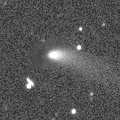
Now it is 16.7 mag (Nov. 18, Michael Jager). Fading slowly. In the Northern Hemisphere, it stays observable in good condition. In the Southern Hemisphere, it will be getting lower gradually after this, and it will be unobservable in February. Date(TT) R.A. (2000) Decl. Delta r Elong. m1 Best Time(A, h) Nov. 22 22 46.53 -6 41.0 2.451 2.811 100 16.5 20:31 (132, 52) Nov. 29 22 51.08 -5 48.6 2.546 2.814 95 16.5 20:40 (124, 46) |
C/2024 A1 ( ATLAS )

|
Now it is 16.4 mag (Nov. 9, ATLAS-MLO, Mauna Loa). It stays 17 mag for a while. In the Northern Hemisphere, it stays observable in good condition. In the Southern Hemisphere, it will be unobservable in December. Date(TT) R.A. (2000) Decl. Delta r Elong. m1 Best Time(A, h) Nov. 22 8 55.14 43 3.6 3.630 4.122 113 16.5 3:02 (200, 8) Nov. 29 8 52.92 45 17.1 3.560 4.142 120 16.5 2:56 (195, 8) |
65P/Gunn
|
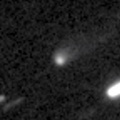
Now it is 16.2 mag (Oct. 27, J. Tapioles). It stays 17 mag for a while. It will be unobservable in January. But it will be observable again in March in the Southern Hemisphere. Date(TT) R.A. (2000) Decl. Delta r Elong. m1 Best Time(A, h) Nov. 22 19 48.96 -28 33.7 3.492 3.030 54 16.5 20:31 ( 74, 30) Nov. 29 19 59.83 -28 0.7 3.575 3.038 50 16.6 20:40 ( 72, 25) |
493P/2024 Q2 ( LONEOS )

|
Now it is 16.4 mag (Nov. 16, Alfons Diepvens). It stays 17 mag for a while. In the Northern Hemisphere, it stays observable in good condition. It stays extremely low in the Southern Hemisphere. Date(TT) R.A. (2000) Decl. Delta r Elong. m1 Best Time(A, h) Nov. 22 5 2.41 53 17.1 2.994 3.837 143 16.6 1:01 (180, 2) Nov. 29 4 56.53 53 37.1 2.968 3.834 147 16.5 0:27 (180, 1) |
C/2023 H5 ( Lemmon )

|
Now it is 16.4 mag (Nov. 17, Alfons Diepvens). It stays 17 mag for a while. It locates somewhat low in the Northern Hemisphere. But it will become high in winter. In the Southern Hemisphere, it will never be observable after this. Date(TT) R.A. (2000) Decl. Delta r Elong. m1 Best Time(A, h) Nov. 22 16 17.66 63 22.8 4.476 4.475 83 16.6 20:31 (148,-46) Nov. 29 16 40.41 63 17.2 4.471 4.491 84 16.6 20:40 (148,-48) |
145P/Shoemaker-Levy 5
|
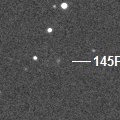
Now it is 16.8 mag (Nov. 17, Alfons Diepvens). It stays 17 mag for a while. In the Northern Hemisphere, it stays observable in good condition. In the Southern Hemisphere, it will be getting lower gradually after this, and it will be unobservable in March. Date(TT) R.A. (2000) Decl. Delta r Elong. m1 Best Time(A, h) Nov. 22 22 38.28 -14 5.7 1.632 1.998 96 16.7 20:31 (121, 56) Nov. 29 22 46.44 -12 22.0 1.686 1.978 91 16.6 20:40 (116, 50) |
48P/Johnson
|
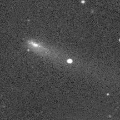
Now it is 16.7 mag (Nov. 11, ATLAS South Africa). It will fade out rapidly after this. It will be fainter than 18 mag in January. It stays observable in good condition. Date(TT) R.A. (2000) Decl. Delta r Elong. m1 Best Time(A, h) Nov. 22 3 27.13 2 36.2 1.826 2.781 161 16.7 23:20 (180, 52) Nov. 29 3 21.37 2 47.2 1.878 2.811 156 16.9 22:47 (180, 52) |
43P/Wolf-Harrington

|
Now it is 16.6 mag (Nov. 11, Ken-ichi Kadota). It stays 17 mag for a while. It stays observable in good condition. Date(TT) R.A. (2000) Decl. Delta r Elong. m1 Best Time(A, h) Nov. 22 10 42.33 -1 27.8 2.600 2.567 77 16.7 3:02 (249, 30) Nov. 29 10 49.71 -2 38.3 2.528 2.582 81 16.7 2:56 (247, 33) |
164P/Christensen

|
Now it is 16.9 mag (Nov. 10, ATLAS-HKO, Haleakala). It stays 17 mag for a while. In the Northern Hemisphere, it stays observable in good condition. It locates somewhat low in the Southern Hemisphere. Date(TT) R.A. (2000) Decl. Delta r Elong. m1 Best Time(A, h) Nov. 22 10 54.62 19 48.0 2.255 2.340 82 16.8 3:02 (234, 13) Nov. 29 11 2.85 19 57.4 2.207 2.380 87 16.7 2:56 (232, 15) |
C/2025 J1 ( Borisov )

|
Now it is 16.9 mag (Nov. 10, ATLAS-MLO, Mauna Loa). It stays 17 mag for a while. In the Northern Hemisphere, it stays observable in good condition. In the Southern Hemisphere, it is not observable now. Date(TT) R.A. (2000) Decl. Delta r Elong. m1 Best Time(A, h) Nov. 22 11 7.87 74 11.1 3.656 4.014 104 16.9 3:02 (196,-26) Nov. 29 10 56.05 75 29.6 3.563 3.986 108 16.8 2:56 (193,-25) |
302P/Lemmon-PanSTARRS
|
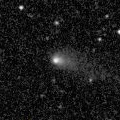
It brightened very rapidly, and it became brighter than expected. Now it is 16.6 mag (Nov. 17, Andrew Pearce). Fading slowly. It will be fainter than 18 mag in February. In the Northern Hemisphere, it stays observable in good condition. In the Southern Hemisphere, it will be getting lower gradually. Date(TT) R.A. (2000) Decl. Delta r Elong. m1 Best Time(A, h) Nov. 22 0 17.41 -5 49.4 2.859 3.482 121 16.8 20:31 (170, 60) Nov. 29 0 18.01 -5 33.6 2.958 3.492 115 16.9 20:40 (154, 58) |
C/2023 X2 ( Lemmon )

|
Now it is 16.9 mag (Oct. 3, ATLAS-MLO, Mauna Loa). It stays 17 mag for a while. In the Northern Hemisphere, it stays observable in good condition. In the Southern Hemisphere, it will never be observable after this. Date(TT) R.A. (2000) Decl. Delta r Elong. m1 Best Time(A, h) Nov. 22 12 7.96 85 6.9 4.716 5.096 107 16.9 3:02 (186,-34) Nov. 29 13 27.13 85 42.8 4.698 5.094 108 16.8 2:56 (185,-35) |
C/2023 F3 ( ATLAS )

|
Now it is 17.3 mag (Nov. 15, ATLAS-HKO, Haleakala). It stays 17 mag for a while. It locates somewhat low in the Northern Hemisphere. But it will become high in spring. In the Southern Hemisphere, it stays observable in good condition. Date(TT) R.A. (2000) Decl. Delta r Elong. m1 Best Time(A, h) Nov. 22 11 1.87 -24 8.5 5.965 5.636 66 16.9 3:02 (275, 38) Nov. 29 11 0.34 -24 22.8 5.875 5.656 72 16.9 2:56 (272, 43) |
195P/Hill
|
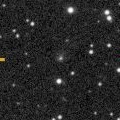
Now it is 17.0 mag (Nov. 14, W. Hasubick). It stays 17 mag for a while. It locates somewhat low in the Northern Hemisphere. In the Southern Hemisphere, it stays observable in good condition. Date(TT) R.A. (2000) Decl. Delta r Elong. m1 Best Time(A, h) Nov. 22 9 52.30 -25 24.8 4.516 4.468 80 17.0 3:02 (267, 53) Nov. 29 9 54.80 -26 36.1 4.436 4.472 85 16.9 2:56 (266, 57) |
C/2023 RS61 ( PanSTARRS )
|
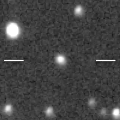
Although it is around 20 mag usually, now it is bright in outburst. Now it is 17.2 mag (Nov. 11, ATLAS-HKO, Haleakala). It stays 17 mag for a while. In the Northern Hemisphere, it stays observable in good condition. In the Southern Hemisphere, it will be unobservable in March. Date(TT) R.A. (2000) Decl. Delta r Elong. m1 Best Time(A, h) Nov. 22 2 54.06 38 12.3 7.906 8.831 158 17.0 22:48 (180, 17) Nov. 29 2 51.43 38 1.4 7.919 8.822 154 17.0 22:18 (180, 17) |
C/2019 E3 ( ATLAS )
|
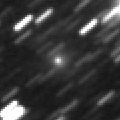
Very far object. Now it is 16.6 mag (Oct. 19, ATLAS Chile). It stays 17 mag for a while. In the Northern Hemisphere, it will be unobservable in December. In the Southern Hemisphere, it stays observable in good condition. Date(TT) R.A. (2000) Decl. Delta r Elong. m1 Best Time(A, h) Nov. 22 0 12.73 -54 57.1 10.955 11.034 91 17.1 20:31 ( 10, 70) Nov. 29 0 10.09 -54 19.4 11.047 11.047 87 17.1 20:40 ( 25, 68) |
217P/LINEAR

|
It brightened up to 12.1 mag in early summer (June 10, Taras Prystavski). Now it is 16.9 mag (Nov. 1, Ken-ichi Kadota). Fading gradually. It will be fainter than 18 mag in January. It stays observable in good condition. Date(TT) R.A. (2000) Decl. Delta r Elong. m1 Best Time(A, h) Nov. 22 9 17.06 12 31.5 1.988 2.393 101 17.3 3:02 (220, 33) Nov. 29 9 18.45 12 45.9 1.950 2.449 108 17.4 2:56 (214, 36) |
C/2025 R3 ( PanSTARRS )
|
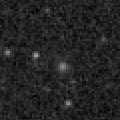
It is expected to brighten up to 7 mag in 2026 April. Now it is 17.2 mag (Nov. 1, Ken-ichi Kadota). It will brighten rapidly after this. It will be unobservable in February in the Northern Hemisphere, or in December in the Southern Hemisphere. But it will be observable again in March in the Northern Hemisphere. At the high light, it is observable in the low sky before the perihelion passage in the Northern Hemisphere, or after the perihelion in the Southern Hemisphere. Date(TT) R.A. (2000) Decl. Delta r Elong. m1 Best Time(A, h) Nov. 22 22 47.65 29 48.6 2.150 2.682 112 17.4 20:31 (155, 20) Nov. 29 22 37.35 27 49.2 2.171 2.587 103 17.3 20:40 (144, 17) |
C/2020 V2 ( ZTF )
|
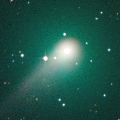
It was observed at 9-10 mag for a long time in 2023. It is fading very slowly. Now it is 16.9 mag (Sept. 29, ATLAS South Africa). It stays 18 mag for a while. In the Northern Hemisphere, it will never be observable after this. It locates somewhat low in the Southern Hemisphere. But it will become high in spring. Date(TT) R.A. (2000) Decl. Delta r Elong. m1 Best Time(A, h) Nov. 22 19 4.78 -66 39.5 9.300 8.785 55 17.4 20:31 ( 29, 35) Nov. 29 19 8.82 -66 15.6 9.403 8.835 52 17.4 20:40 ( 28, 31) |
C/2017 K2 ( PanSTARRS )
|
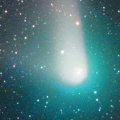
It brightened up to 8 mag from 2022 summer to 2023 spring. Now it is 17.0 mag (Nov. 19, Ken-ichi Kadota). It stays 18 mag for a while. In the Northern Hemisphere, it stays observable in good condition. It locates somewhat low in the Southern Hemisphere. Date(TT) R.A. (2000) Decl. Delta r Elong. m1 Best Time(A, h) Nov. 22 6 6.87 30 0.3 9.169 10.016 147 17.4 2:04 (180, 25) Nov. 29 6 3.72 30 11.4 9.162 10.065 154 17.4 1:34 (180, 25) |
C/2024 X2 ( ATLAS )

|
Now it is 18.8 mag (Nov. 18, ATLAS South Africa). It stays 18 mag for a while. It stays observable in good condition. Date(TT) R.A. (2000) Decl. Delta r Elong. m1 Best Time(A, h) Nov. 22 9 22.15 -4 1.8 3.647 3.861 95 17.5 3:02 (234, 46) Nov. 29 9 19.35 -3 9.2 3.541 3.879 102 17.4 2:56 (226, 49) |
C/2025 R1 ( ATLAS )

|
Now it is 16.9 mag (Nov. 10, Francois Kugel). Fading slowly. It will be fainter than 18 mag in December. In the Northern Hemisphere, it will be getting lower gradually. In the Southern Hemisphere, it will never be observable after this. Date(TT) R.A. (2000) Decl. Delta r Elong. m1 Best Time(A, h) Nov. 22 18 46.15 42 26.4 1.993 1.975 74 17.5 20:31 (127,-21) Nov. 29 18 49.76 38 30.9 2.092 1.976 69 17.6 20:40 (121,-25) |
C/2019 U5 ( PanSTARRS )
|
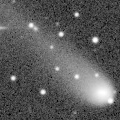
Now it is 17.2 mag (Nov. 15, Andrew Pearce). It stays 18 mag for a while. It stays extremely low in the Northern Hemisphere. In the Southern Hemisphere, it stays observable in good condition. Date(TT) R.A. (2000) Decl. Delta r Elong. m1 Best Time(A, h) Nov. 22 5 22.22 -47 42.2 8.225 8.599 109 17.5 1:19 ( 0, 77) Nov. 29 5 15.80 -47 52.9 8.263 8.643 109 17.6 0:45 ( 0, 77) |
93P/Lovas 1
|
Now it is 18.5 mag (Nov. 14, Martin Masek). Brightening slowly. In the Southern Hemisphere, it will be getting lower gradually after this, and it will be unobservable in January. It will brighten up to 15.5 mag in spring. But it is not observable around the perihelion passage. Date(TT) R.A. (2000) Decl. Delta r Elong. m1 Best Time(A, h) Nov. 22 21 15.65 -15 33.7 2.334 2.320 76 17.7 20:31 (101, 41) Nov. 29 21 24.03 -14 28.1 2.377 2.277 72 17.6 20:40 ( 97, 35) |
123P/West-Hartley
|
|
It will brighten up to 15 mag from autumn to winter in 2026. Now it is 18.1 mag (Nov. 19, Purple Mountain Observatory, XuYi Station). Brightening slowly. In the Northern Hemisphere, it stays observable in good condition. It locates somewhat low in the Southern Hemisphere. Date(TT) R.A. (2000) Decl. Delta r Elong. m1 Best Time(A, h) Nov. 22 3 56.43 26 47.6 2.079 3.062 173 17.8 23:50 (180, 28) Nov. 29 3 49.31 26 58.3 2.053 3.031 171 17.6 23:15 (180, 28) |
C/2023 U1 ( Fuls )

|
It continues brightening even after the perihelion passage. Now it is 17.5 mag (Nov. 19, ATLAS South Africa). It stays 18 mag for a while. In the Northern Hemisphere, it will never be observable after this. In the Southern Hemisphere, it stays observable in good condition. Date(TT) R.A. (2000) Decl. Delta r Elong. m1 Best Time(A, h) Nov. 22 23 32.55 -64 21.1 5.896 5.847 82 17.7 20:31 ( 14, 59) Nov. 29 23 25.07 -63 6.9 5.998 5.875 78 17.8 20:40 ( 23, 57) |
276P/Vorobjov

|
Now it is 17.7 mag (Nov. 20, ATLAS Chile). It stays 18 mag for a while. It stays observable in good condition. Date(TT) R.A. (2000) Decl. Delta r Elong. m1 Best Time(A, h) Nov. 22 7 9.02 5 59.8 3.490 4.190 129 17.7 3:02 (182, 49) Nov. 29 7 7.03 5 36.3 3.430 4.200 136 17.7 2:37 (180, 49) |
C/2020 K1 ( PanSTARRS )
|
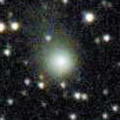
It brightened up to 12.1 mag in 2023 spring (May 20, 2023, Jose Guilherme de S. Aguiar). Now it is 17.4 mag (Mar. 25, ATLAS South Africa). It stays 18 mag for a while. It stays observable in good condition. Date(TT) R.A. (2000) Decl. Delta r Elong. m1 Best Time(A, h) Nov. 22 6 29.96 -20 41.7 7.868 8.452 123 17.7 2:27 (180, 76) Nov. 29 6 26.69 -20 43.4 7.861 8.499 127 17.8 1:56 (180, 76) |
C/2024 G2 ( ATLAS )

|
Now it is 17.8 mag (Nov. 14, W. Hasubick). It stays 18 mag for a while. It will be getting higher gradually. Date(TT) R.A. (2000) Decl. Delta r Elong. m1 Best Time(A, h) Nov. 22 12 9.15 -12 13.7 6.013 5.480 53 17.8 3:02 (272, 18) Nov. 29 12 10.71 -11 57.9 5.919 5.491 59 17.8 2:56 (269, 22) |
(3200) Phaethon

|
Fading slowly. It will be fainter than 18 mag in December. In the Northern Hemisphere, it stays observable in good condition. It locates somewhat low in the Southern Hemisphere. Date(TT) R.A. (2000) Decl. Delta r Elong. m1 Best Time(A, h) Nov. 22 1 51.02 36 1.5 1.487 2.391 149 17.8 21:44 (180, 19) Nov. 29 1 38.75 33 50.4 1.537 2.397 142 17.9 21:04 (180, 21) |
(306173) 2010 NK83
|
|
Peculiar asteroid moving along a cometary orbit. It stays 18 mag for a while. It stays observable in good condition. Date(TT) R.A. (2000) Decl. Delta r Elong. m1 Best Time(A, h) Nov. 22 8 3.93 19 16.1 1.840 2.491 120 17.9 3:02 (197, 34) Nov. 29 8 6.56 19 42.6 1.779 2.500 127 17.8 2:56 (191, 35) |
C/2023 H1 ( PanSTARRS )

|
Now it is 17.6 mag (Oct. 20, ATLAS-MLO, Mauna Loa). It stays 18 mag for a while. It locates somewhat low. Date(TT) R.A. (2000) Decl. Delta r Elong. m1 Best Time(A, h) Nov. 22 20 12.61 -12 39.9 5.664 5.292 63 17.8 20:31 ( 93, 27) Nov. 29 20 17.65 -12 15.6 5.787 5.322 57 17.9 20:40 ( 89, 20) |
C/2013 C2 ( Tenagra )
|
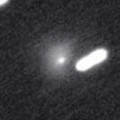
It brightened in major outburst of 5 mag. Now it is 17.8 mag (Oct. 14, E. Cortes, B. Lutkenhoner). It stays 19 mag for a while. In the Northern Hemisphere, it will be getting lower gradually. It stays extremely low in the Southern Hemisphere. Date(TT) R.A. (2000) Decl. Delta r Elong. m1 Best Time(A, h) Nov. 22 19 50.02 -3 34.8 15.515 15.058 60 18.2 20:31 ( 98, 17) Nov. 29 19 51.50 -3 35.6 15.623 15.071 54 18.3 20:40 ( 93, 10) |
489P/Denning
|
|
It had been lost for 113 years. It will pass the perihelion on Dec. 4. It brightened up to 18 mag in outburst in 2007. Brightening slowly. In the Northern Hemisphere, it stays observable in good condition. In the Southern Hemisphere, it will be getting higher gradually. Date(TT) R.A. (2000) Decl. Delta r Elong. m1 Best Time(A, h) Nov. 22 10 55.12 11 37.1 1.419 1.567 79 22.3 3:02 (241, 18) Nov. 29 11 13.56 9 46.3 1.372 1.562 81 22.2 2:56 (241, 20) |