Weekly Information about Bright Comets (2026 Mar. 21: North)
|
Japanese version Home page |
Updated on March 23, 2026 |
|||
|
||||
|
Best time and the azimuth, altitude (A,h) are at lat. 35 deg in the Northern Hemisphere. Azimuth indicates 0 for south, 90 for west, 180 for north, 270 for east. |

|
|
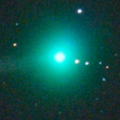
Kreutz sungrazer comet discovered furthest from Sun in history. It will approach to Sun down to 0.005 a.u. on Apr. 4. Now it is 10.1 mag (Mar. 21, Carlos Labordena). It is expected to brighten up to 0-1 mag when observable on the ground. Its brightness evolution is somewhat getting down recently. Date(TT) R.A. (2000) Decl. Delta r Elong. m1 Best Time(A, h) Mar. 21 2 9.80 -6 21.7 1.196 0.651 32 8.5 19:36 ( 80, 4) Mar. 28 1 48.80 -1 47.7 1.141 0.420 21 6.5 19:42 ( 91, -4) |
 C/2025 R3 ( PanSTARRS )
|
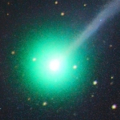
It became brighter than expected. It is expected to brighten up to 4 mag in April. Now it is 8.9 mag (Mar. 17, Carlos Labordena). It brightens up to 4 mag, but it will turn to fade out rapidly after that. In the Northern Hemisphere, it will be unobservable in April. In the Southern Hemisphere, it is not observable now, but it will appear in April. At the high light, it is observable in the low sky before the perihelion passage in the Northern Hemisphere, or after the perihelion in the Southern Hemisphere. Date(TT) R.A. (2000) Decl. Delta r Elong. m1 Best Time(A, h) Mar. 21 22 32.91 19 1.0 1.576 0.848 28 8.8 4:38 (254, 10) Mar. 28 22 38.57 19 28.9 1.376 0.732 31 7.8 4:28 (255, 13) |
88P/Howell
|
Now it is 9.9 mag (Mar. 17, Mike Olason). Fading gradually. It stays extremely low in the Northern Hemisphere. But it will become high in summer. It locates somewhat low in the Southern Hemisphere. But it will become high in summer. Date(TT) R.A. (2000) Decl. Delta r Elong. m1 Best Time(A, h) Mar. 21 21 38.73 -16 44.7 1.985 1.358 38 9.7 4:38 (291, 1) Mar. 28 22 2.53 -14 52.5 1.973 1.361 39 9.6 4:28 (289, 1) |
C/2024 E1 ( Wierzchos )
|
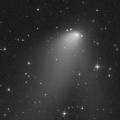
It brightened up to 6.6 mag in January (Jan. 28, Chris Wyatt). Now it is 10.6 mag (Mar. 15, Chris Wyatt). Fading rapidly. It will be unobservable in June. Date(TT) R.A. (2000) Decl. Delta r Elong. m1 Best Time(A, h) Mar. 21 4 6.41 5 12.7 1.477 1.334 61 9.9 19:36 ( 70, 35) Mar. 28 4 27.31 9 51.5 1.648 1.445 60 10.4 19:42 ( 77, 35) |
C/2025 A6 ( Lemmon )
|
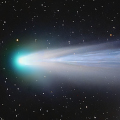
It brightened up to 3.7 mag in late October (Oct. 26, Juan Jose Gonzalez). Now it is 11.3 mag (Mar. 15, Chris Wyatt). It will fade out rapidly after this. In the Northern Hemisphere, it is not observable now, but it will appear in April. In the Southern Hemisphere, it stays observable in good condition. Date(TT) R.A. (2000) Decl. Delta r Elong. m1 Best Time(A, h) Mar. 21 14 15.54 -65 17.7 1.899 2.431 110 11.2 2:26 ( 0,-10) Mar. 28 13 28.41 -64 52.8 1.914 2.527 116 11.4 1:11 ( 0,-10) |
24P/Schaumasse

|
It brightened up to 8.4 mag in January (Jan. 14, Mitsunori Tsumura). Now it is 11.4 mag (Mar. 14, Ken Harikae). Fading rapidly. It will be fainter than 18 mag in June. It stays observable in good condition. Date(TT) R.A. (2000) Decl. Delta r Elong. m1 Best Time(A, h) Mar. 21 15 26.80 5 8.2 0.665 1.501 128 12.1 3:34 ( 0, 60) Mar. 28 15 22.21 4 45.1 0.678 1.554 135 12.6 3:02 ( 0, 60) |
235P/LINEAR
|
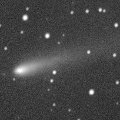
It became brighter than expected. Now it is 13.9 mag (Mar. 14, Ken Harikae). Fading gradually. It stays observable in good condition. Date(TT) R.A. (2000) Decl. Delta r Elong. m1 Best Time(A, h) Mar. 21 16 59.26 -16 40.5 1.612 2.097 104 13.3 4:38 (351, 38) Mar. 28 17 6.00 -16 2.0 1.557 2.115 109 13.4 4:28 (354, 39) |
78P/Gehrels 2

|
It will brighten up to 12 mag in summer. Now it is 14.5 mag (Jan. 16, Kunihiro Shima). Brightening slowly. Now it is not observable. It will appear in May in the Southern Hemisphere, or in June in the Northern Hemisphere. Date(TT) R.A. (2000) Decl. Delta r Elong. m1 Best Time(A, h) Mar. 21 0 9.53 3 3.0 3.145 2.152 3 13.5 19:36 (105,-14) Mar. 28 0 24.34 4 27.0 3.130 2.133 1 13.4 4:28 (252,-17) |
240P/NEAT

|
It brightened up to 11.1 mag in winter (Nov. 15, Masayoshi Yoshimi). The component B also brightened rapidly up to 13.8 mag (Ded. 8, Masayoshi Yoshimi). Now it is 13.8 mag (Mar. 5, Thomas Lehmann). Fading gradually. In the Northern Hemisphere, it will be getting lower gradually. In the Southern Hemisphere, it will be unobservable in June. Date(TT) R.A. (2000) Decl. Delta r Elong. m1 Best Time(A, h) Mar. 21 4 41.44 32 0.0 2.309 2.239 73 13.5 19:36 ( 98, 55) Mar. 28 4 54.99 32 52.3 2.402 2.256 69 13.7 19:42 (101, 51) |
29P/Schwassmann-Wachmann 1
|
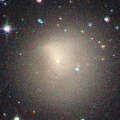
Now it is 11.5 mag (Mar. 15, Chris Wyatt). It stays observable in good condition. Date(TT) R.A. (2000) Decl. Delta r Elong. m1 Best Time(A, h) Mar. 21 11 12.00 -2 28.9 5.335 6.312 167 13.6 23:16 ( 0, 52) Mar. 28 11 9.14 -2 12.6 5.361 6.312 160 13.6 22:46 ( 0, 53) |
C/2024 J3 ( ATLAS )

|
Now it is 14.6 mag (Mar. 10, Ken-ichi Kadota). Brightening slowly. In the Northern Hemisphere, it stays observable in good condition. Date(TT) R.A. (2000) Decl. Delta r Elong. m1 Best Time(A, h) Mar. 21 20 10.07 8 46.0 4.873 4.426 57 14.1 4:38 (284, 34) Mar. 28 20 13.59 10 24.4 4.760 4.397 62 14.0 4:28 (285, 37) |
C/2024 T5 ( ATLAS )
|
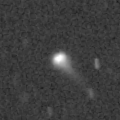
Now it is 14.5 mag (Mar. 14, Andrew Pearce). It stays 14 mag for a while. In the Northern Hemisphere, it will be unobservable soon. It locates somewhat low in the Southern Hemisphere. But it will become high in summer. It is expected to brighten up to 11 mag in next winter. Date(TT) R.A. (2000) Decl. Delta r Elong. m1 Best Time(A, h) Mar. 21 3 4.70 -26 39.2 5.758 5.201 51 14.3 19:36 ( 55, 2) Mar. 28 3 10.16 -25 26.7 5.765 5.163 48 14.3 19:42 ( 60, -2) |
C/2026 B2 ( Sun-Gao )
|
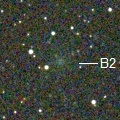
Bright new comet discovered near Sun. It became brighter furthermore after the discovery, brightened up to 12.7 mag (Feb. 14, Mike Olason). Now it is 14.2 mag (Mar. 10, Ken-ichi Kadota). It will fade out rapidly after this. It will be fainter than 18 mag in June. It stays extremely low in the Northern Hemisphere. In the Southern Hemisphere, it will never be observable after this. Date(TT) R.A. (2000) Decl. Delta r Elong. m1 Best Time(A, h) Mar. 21 22 39.25 31 2.6 2.328 1.638 36 14.3 4:38 (243, 16) Mar. 28 23 2.44 33 1.0 2.404 1.700 35 14.7 4:28 (240, 16) |
C/2022 QE78 ( ATLAS )
|
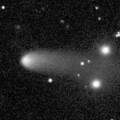
Now it is 14.5 mag (Mar. 12, Purple Mountain Observatory, XuYi Station). It stays 15 mag for a while. In the Northern Hemisphere, it stays observable in good condition. In the Southern Hemisphere, it will be unobservable in July. Date(TT) R.A. (2000) Decl. Delta r Elong. m1 Best Time(A, h) Mar. 21 9 1.95 31 26.8 4.989 5.651 127 14.5 21:07 ( 0, 86) Mar. 28 9 1.55 31 41.3 5.089 5.663 120 14.6 20:39 ( 0, 87) |
C/2022 N2 ( PanSTARRS )
|
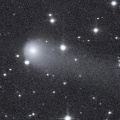
Now it is 14.7 mag (Mar. 12, Toru Yusa). It stays 15 mag for a while. It will be unobservable in May. But it will be observable again in July in the Northern Hemisphere. Date(TT) R.A. (2000) Decl. Delta r Elong. m1 Best Time(A, h) Mar. 21 4 0.49 25 17.7 4.684 4.327 63 14.7 19:36 ( 93, 44) Mar. 28 4 7.87 25 29.9 4.802 4.355 57 14.8 19:42 ( 96, 39) |
C/2023 R1 ( PanSTARRS )

|
Now it is 14.6 mag (Mar. 6, ATLAS-MLO, Mauna Loa). It stays 14 mag for a while. It stays observable in good condition. Date(TT) R.A. (2000) Decl. Delta r Elong. m1 Best Time(A, h) Mar. 21 19 33.20 -3 31.2 3.850 3.576 66 14.8 4:38 (302, 32) Mar. 28 19 30.96 -3 32.8 3.719 3.573 73 14.7 4:28 (306, 36) |
C/2014 UN271 ( Bernardinelli-Bernstein )

|
Very large comet. It is expected to brighten up to 13 mag in 2031. Now it is 14.9 mag (Mar. 12, Andrew Pearce). It stays 15 mag for a while. In the Northern Hemisphere, it is not observable now. In the Southern Hemisphere, it stays observable in good condition. In the Northern Hemisphere, it is not observable until 2030. Date(TT) R.A. (2000) Decl. Delta r Elong. m1 Best Time(A, h) Mar. 21 4 51.16 -71 2.0 14.214 14.153 84 14.8 19:36 ( 13,-20) Mar. 28 4 54.68 -70 38.4 14.179 14.131 85 14.8 19:42 ( 15,-21) |
C/2021 G2 ( ATLAS )

|
Now it is 15.1 mag (Mar. 16, Andrew Pearce). It stays 15 mag for a while. It stays observable in good condition. Date(TT) R.A. (2000) Decl. Delta r Elong. m1 Best Time(A, h) Mar. 21 17 29.63 7 24.4 6.304 6.510 97 14.8 4:38 (330, 59) Mar. 28 17 30.53 8 15.3 6.242 6.542 103 14.8 4:28 (337, 61) |
218P/LINEAR

|
Now it is 15.0 mag (Mar. 9, ATLAS-HKO, Haleakala). It will fade out rapidly after this. It will be fainter than 18 mag in June. It locates somewhat low in the Northern Hemisphere. In the Southern Hemisphere, it stays observable in good condition. Date(TT) R.A. (2000) Decl. Delta r Elong. m1 Best Time(A, h) Mar. 21 20 11.82 -17 32.9 1.288 1.150 58 15.1 4:38 (306, 16) Mar. 28 20 37.70 -15 59.7 1.303 1.169 59 15.2 4:28 (303, 15) |
10P/Tempel 2
|
It is expected to brighten up to 8 mag in summer. Now it is 17.6 mag (Mar. 13, Roland Fichtl). Brightening rapidly. It stays observable in good condition. Date(TT) R.A. (2000) Decl. Delta r Elong. m1 Best Time(A, h) Mar. 21 17 51.97 -10 49.6 1.638 1.946 91 15.8 4:38 (334, 40) Mar. 28 18 5.69 -10 35.7 1.530 1.904 95 15.3 4:28 (334, 41) |
C/2025 Q3 ( ATLAS )

|
It became brighter than expected. Now it is 14.9 mag (Mar. 8, Martin Masek). Fading gradually. It will be fainter than 18 mag in July. It stays extremely low in the Northern Hemisphere. It locates somewhat low in the Southern Hemisphere. Date(TT) R.A. (2000) Decl. Delta r Elong. m1 Best Time(A, h) Mar. 21 2 48.52 -22 34.7 2.685 2.130 46 15.4 19:36 ( 61, 2) Mar. 28 2 57.55 -23 29.3 2.723 2.143 45 15.4 19:42 ( 63, -3) |
93P/Lovas 1
|
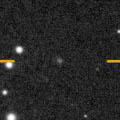
Now it is 16.0 mag (Jan. 18, Kunihiro Shima). It stays 16 mag for a while. In the Northern Hemisphere, it will be unobservable soon. In the Southern Hemisphere, it is not observable now. Date(TT) R.A. (2000) Decl. Delta r Elong. m1 Best Time(A, h) Mar. 21 1 0.78 13 13.7 2.648 1.746 20 15.8 19:36 (105, 2) Mar. 28 1 18.74 15 17.9 2.649 1.729 18 15.7 19:42 (109, 0) |
C/2025 T1 ( ATLAS )

|
It brightened up to 9.0 mag from late November to early December (Nov. 22, Thomas Lehmann). Fading rapidly. It will be fainter than 18 mag in May. In the Northern Hemisphere, it will never be observable after this. In the Southern Hemisphere, it will be getting higher gradually. Date(TT) R.A. (2000) Decl. Delta r Elong. m1 Best Time(A, h) Mar. 21 22 12.19 -22 32.8 2.732 1.994 34 15.8 4:38 (291, -9) Mar. 28 22 18.19 -24 9.8 2.721 2.075 41 16.2 4:28 (294, -8) |
C/2024 R4 ( PanSTARRS )
|
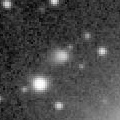
It brightened rapidly. It is expected to brighten up to 13.5 mag from 2027 to 2028. Now it is 16.1 mag (Mar. 16, D. Buczynski). It stays 16 mag for a while. In the Northern Hemisphere, it will be getting higher gradually. In the Southern Hemisphere, it is not observable now, but it will appear in April. Date(TT) R.A. (2000) Decl. Delta r Elong. m1 Best Time(A, h) Mar. 21 22 3.36 27 5.3 7.128 6.384 38 16.0 4:38 (250, 20) Mar. 28 22 5.88 28 1.3 7.056 6.347 41 16.0 4:28 (251, 24) |
141P/Machholz 2
|
|
The condition is very bad in this apparition. It is not observable at all. It brightens up to 13 mag, but it will turn to fade out rapidly after that. It will never be observable after this. Date(TT) R.A. (2000) Decl. Delta r Elong. m1 Best Time(A, h) Mar. 21 23 19.90 3 5.1 1.928 0.966 10 16.7 4:38 (260, -8) Mar. 28 23 51.48 5 54.7 1.883 0.911 9 16.1 4:28 (256, -9) |
C/2022 R6 ( PanSTARRS )
|
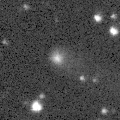
Now it is 16.3 mag (Mar. 14, ATLAS South Africa). It stays 17 mag for a while. In the Northern Hemisphere, it will be getting lower gradually after this, and it will be unobservable in June. In the Southern Hemisphere, it stays observable in good condition. Date(TT) R.A. (2000) Decl. Delta r Elong. m1 Best Time(A, h) Mar. 21 8 30.19 -3 10.7 6.058 6.710 127 16.2 20:35 ( 0, 52) Mar. 28 8 29.80 -2 19.0 6.150 6.720 121 16.2 20:07 ( 0, 53) |
63P/Wild 1
|
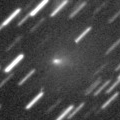
Now it is 15.8 mag (Mar. 6, Thomas Lehmann). Brightening slowly. In the Northern Hemisphere, it stays observable in good condition. It locates somewhat low in the Southern Hemisphere. Date(TT) R.A. (2000) Decl. Delta r Elong. m1 Best Time(A, h) Mar. 21 6 28.57 42 21.2 1.908 2.232 95 16.5 19:36 (126, 76) Mar. 28 6 38.55 40 57.4 1.952 2.202 90 16.4 19:42 (116, 72) |
C/2025 J1 ( Borisov )
|
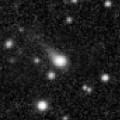
Now it is 16.6 mag (Mar. 1, Ken-ichi Kadota). It stays 17 mag for a while. In the Northern Hemisphere, it will be getting lower gradually after this, and it will be unobservable in June. In the Southern Hemisphere, it is not observable now. Date(TT) R.A. (2000) Decl. Delta r Elong. m1 Best Time(A, h) Mar. 21 4 57.53 52 36.5 3.687 3.658 80 16.5 19:36 (135, 58) Mar. 28 5 1.97 50 27.1 3.780 3.646 74 16.5 19:42 (129, 54) |
123P/West-Hartley
|
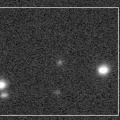
It will brighten up to 15 mag from autumn to winter. Now it is 17.4 mag (Mar. 9, ATLAS-MLO, Mauna Loa). Brightening slowly. It will be unobservable in May in the Southern Hemisphere, or in June in the Northern Hemisphere. Date(TT) R.A. (2000) Decl. Delta r Elong. m1 Best Time(A, h) Mar. 21 4 10.57 30 41.1 2.793 2.568 66 16.6 19:36 ( 99, 48) Mar. 28 4 21.44 31 8.9 2.848 2.541 62 16.5 19:42 (102, 44) |
C/2024 G6 ( ATLAS )

|
Now it is 16.9 mag (Mar. 9, ATLAS South Africa). It stays 17 mag for a while. It stays observable in good condition. Date(TT) R.A. (2000) Decl. Delta r Elong. m1 Best Time(A, h) Mar. 21 16 32.27 2 10.0 5.994 6.433 111 16.6 4:38 (359, 57) Mar. 28 16 29.56 3 16.9 5.895 6.434 118 16.5 4:10 ( 0, 58) |
145P/Shoemaker-Levy 5

|
Now it is 16.1 mag (Mar. 7, Catalina Sky Survey). Fading slowly. It will be fainter than 18 mag in June. In the Northern Hemisphere, it will be unobservable in May. In the Southern Hemisphere, it will never be observable after this. Date(TT) R.A. (2000) Decl. Delta r Elong. m1 Best Time(A, h) Mar. 21 2 23.09 19 0.0 2.597 1.941 39 16.6 19:36 ( 99, 22) Mar. 28 2 39.98 20 38.6 2.654 1.956 37 16.7 19:42 (103, 19) |
3I/2025 N1 ( ATLAS )

|
Third interstellar object in history following 1I/'Oumuamua and 2I/Borisov. The eccentricity is extremely big as 6. It approached to Sun down to 1.38 a.u. in late October. It brightened up to 8.9 mag in November (Nov. 12, Toshiyuki Takahashi). Now it is 16.5 mag (Mar. 12, Toru Yusa). Fading rapidly. It will be fainter than 18 mag in April. In the Northern Hemisphere, it will be getting lower gradually. It locates somewhat low in the Southern Hemisphere. Date(TT) R.A. (2000) Decl. Delta r Elong. m1 Best Time(A, h) Mar. 21 6 48.71 20 22.0 4.963 5.251 101 16.7 19:36 ( 35, 73) Mar. 28 6 46.67 20 25.1 5.326 5.486 93 17.0 19:42 ( 55, 67) |
(248590) 2006 CS
|
|
It seems to be a parent of the beta-Tucanids meteor shower. Fading gradually. It will be fainter than 18 mag in May. In the Northern Hemisphere, it stays observable in good condition. In the Southern Hemisphere, it will never be observable after this. Date(TT) R.A. (2000) Decl. Delta r Elong. m1 Best Time(A, h) Mar. 21 2 53.26 18 41.8 0.158 0.895 46 17.4 19:36 ( 98, 29) Mar. 28 2 41.01 58 26.9 0.210 0.917 61 16.7 19:42 (144, 34) |
C/2025 Y1 ( ATLAS )
|
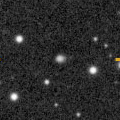
Now it is 15.7 mag (Mar. 14, Hidenori Nohara). It stays 17 mag for a while. It stays observable in good condition. Date(TT) R.A. (2000) Decl. Delta r Elong. m1 Best Time(A, h) Mar. 21 13 5.06 1 18.8 5.082 6.044 163 16.8 1:13 ( 0, 56) Mar. 28 13 2.29 1 46.9 5.007 5.992 169 16.8 0:43 ( 0, 57) |
493P/2024 Q2 ( LONEOS )
|
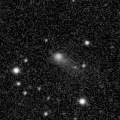
Now it is 16.3 mag (Mar. 14, Alfons Diepvens). It stays 17 mag for a while. It will be unobservable in April in the Southern Hemisphere, or in July in the Northern Hemisphere. Date(TT) R.A. (2000) Decl. Delta r Elong. m1 Best Time(A, h) Mar. 21 5 0.94 46 37.1 3.891 3.843 79 16.8 19:36 (124, 60) Mar. 28 5 9.65 46 10.4 3.985 3.848 74 16.9 19:42 (122, 56) |
C/2025 L1 ( ATLAS )

|
It was expected to brighten up to 13.5 mag. But actually, it is getting diffuse and fading very rapidly. Now it is 17.4 mag (Mar. 10, Toru Yusa). It will fade out rapidly after this. It will be fainter than 18 mag in April. In the Northern Hemisphere, it stays observable in good condition. In the Southern Hemisphere, it will be getting lower gradually. Date(TT) R.A. (2000) Decl. Delta r Elong. m1 Best Time(A, h) Mar. 21 15 13.79 17 28.6 1.104 1.898 129 16.8 3:22 ( 0, 72) Mar. 28 14 52.74 26 46.1 1.112 1.941 133 17.1 2:34 ( 0, 81) |
C/2023 F3 ( ATLAS )

|
Now it is 16.5 mag (Mar. 9, ATLAS-HKO, Haleakala). Fading slowly. It will be fainter than 18 mag in July. In the Northern Hemisphere, it will be getting lower gradually after this, and it will be unobservable in June. In the Southern Hemisphere, it stays observable in good condition. Date(TT) R.A. (2000) Decl. Delta r Elong. m1 Best Time(A, h) Mar. 21 9 24.53 -16 19.7 5.250 6.030 138 16.9 21:29 ( 0, 39) Mar. 28 9 19.01 -15 5.7 5.338 6.056 132 17.0 20:56 ( 0, 40) |
C/2024 A1 ( ATLAS )
|
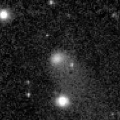
Now it is 17.2 mag (Mar. 7, Thomas Lehmann). Fading slowly. It will be fainter than 18 mag in June. In the Northern Hemisphere, it stays observable in good condition. In the Southern Hemisphere, it will never be observable after this. Date(TT) R.A. (2000) Decl. Delta r Elong. m1 Best Time(A, h) Mar. 21 6 15.40 63 47.4 4.428 4.567 91 17.0 19:36 (164, 59) Mar. 28 6 13.94 63 41.7 4.555 4.599 86 17.1 19:42 (158, 57) |
C/2023 X2 ( Lemmon )
|
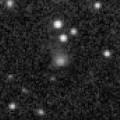
Now it is 18.0 mag (Mar. 3, Erik Bryssinck). It stays 17 mag for a while. In the Northern Hemisphere, it stays observable in good condition. In the Southern Hemisphere, it will never be observable after this. Date(TT) R.A. (2000) Decl. Delta r Elong. m1 Best Time(A, h) Mar. 21 21 36.37 82 51.3 5.131 5.127 84 17.1 4:38 (188, 36) Mar. 28 21 41.21 83 32.8 5.170 5.134 82 17.1 4:28 (188, 37) |
43P/Wolf-Harrington

|
Now it is 16.4 mag (Mar. 13, Andrew Pearce). Fading gradually. It will be fainter than 18 mag in May. It stays observable in good condition. Date(TT) R.A. (2000) Decl. Delta r Elong. m1 Best Time(A, h) Mar. 21 10 45.15 -6 34.0 1.961 2.918 160 17.1 22:49 ( 0, 48) Mar. 28 10 41.87 -5 51.0 2.013 2.943 153 17.2 22:19 ( 0, 49) |
C/2023 RS61 ( PanSTARRS )
|
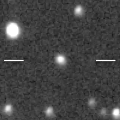
It is around 20 mag usually. However, it brightened in outburst in 2025 autumn up to 17.0 mag (Sept. 4, Taras Prystavski). Now it is 17.3 mag (Mar. 6, ATLAS-HKO, Haleakala). It stays 17 mag for a while. In the Northern Hemisphere, it will be getting lower gradually after this, and it will be unobservable in May. But it will be observable again in June. In the Southern Hemisphere, it is not observable now, but it will appear in July. Date(TT) R.A. (2000) Decl. Delta r Elong. m1 Best Time(A, h) Mar. 21 3 0.48 35 42.5 9.207 8.674 55 17.1 19:36 (112, 36) Mar. 28 3 4.19 35 47.5 9.283 8.665 49 17.1 19:42 (115, 30) |
40P/Vaisala 1
|
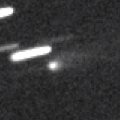
It became brighter than expected, brightened up to 14.3 mag (Jan. 21, Michael Jager). Now it is 17.2 mag (Mar. 13, Roland Fichtl). Fading slowly. It will be fainter than 18 mag in June. It stays observable in good condition. Date(TT) R.A. (2000) Decl. Delta r Elong. m1 Best Time(A, h) Mar. 21 17 43.66 -10 38.7 1.916 2.221 94 17.1 4:38 (336, 41) Mar. 28 17 50.22 -10 22.1 1.873 2.258 99 17.2 4:28 (339, 42) |
164P/Christensen
|
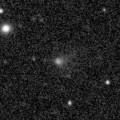
Now it is 16.9 mag (Mar. 6, Thomas Lehmann). Fading gradually. It will be fainter than 18 mag in April. In the Northern Hemisphere, it stays observable in good condition. It locates somewhat low in the Southern Hemisphere. Date(TT) R.A. (2000) Decl. Delta r Elong. m1 Best Time(A, h) Mar. 21 10 39.37 32 2.1 2.169 3.023 142 17.2 22:44 ( 0, 87) Mar. 28 10 35.01 31 55.0 2.259 3.062 136 17.4 22:12 ( 0, 87) |
195P/Hill

|
Now it is 17.3 mag (Mar. 11, ATLAS Chile). It stays 18 mag for a while. It locates somewhat low in the Northern Hemisphere. In the Southern Hemisphere, it stays observable in good condition. Date(TT) R.A. (2000) Decl. Delta r Elong. m1 Best Time(A, h) Mar. 21 9 21.34 -31 41.3 3.843 4.558 130 17.3 21:26 ( 0, 23) Mar. 28 9 19.77 -30 52.9 3.883 4.565 127 17.3 20:57 ( 0, 24) |
C/2023 H5 ( Lemmon )

|
Now it is 17.3 mag (Feb. 28, D. Buczynski). It stays 18 mag for a while. In the Northern Hemisphere, it stays observable in good condition. In the Southern Hemisphere, it will never be observable after this. Date(TT) R.A. (2000) Decl. Delta r Elong. m1 Best Time(A, h) Mar. 21 21 21.70 61 41.9 5.099 4.824 68 17.3 4:38 (215, 38) Mar. 28 21 31.72 61 57.3 5.144 4.850 67 17.3 4:28 (215, 39) |
C/2025 E1 ( PanSTARRS )

|
Now it is 17.2 mag (Mar. 19, ATLAS Chile). It stays 17 mag for a while. In the Northern Hemisphere, it will never be observable after this. In the Southern Hemisphere, it stays observable in good condition. Date(TT) R.A. (2000) Decl. Delta r Elong. m1 Best Time(A, h) Mar. 21 10 3.37 -68 52.2 3.885 4.304 108 17.5 22:06 ( 0,-14) Mar. 28 9 44.41 -68 54.7 3.859 4.283 108 17.4 21:19 ( 0,-14) |
C/2024 G2 ( ATLAS )

|
Now it is 17.2 mag (Mar. 12, ATLAS South Africa). It stays 18 mag for a while. It stays observable in good condition. Date(TT) R.A. (2000) Decl. Delta r Elong. m1 Best Time(A, h) Mar. 21 11 22.64 2 43.8 4.749 5.733 170 17.5 23:27 ( 0, 58) Mar. 28 11 16.96 4 5.8 4.796 5.752 161 17.5 22:53 ( 0, 59) |
C/2024 G4 ( PanSTARRS )

|
Now it is 17.5 mag (Feb. 18, Kunihiro Shima). It stays 17 mag for a while. It stays observable in good condition. Date(TT) R.A. (2000) Decl. Delta r Elong. m1 Best Time(A, h) Mar. 21 19 51.86 1 45.4 5.287 4.900 62 17.5 4:38 (294, 33) Mar. 28 19 57.14 2 5.1 5.203 4.901 67 17.5 4:28 (296, 35) |
210P/Christensen
|
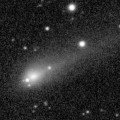
It brightened up to 9.5 mag in late November (Nov. 28, Michael Jager, Gerald Rhemann, E. Prosperi). Now it is 16.7 mag (Mar. 2, Thomas Lehmann). It will fade out rapidly after this. It will be fainter than 18 mag soon. It stays observable in good condition. Date(TT) R.A. (2000) Decl. Delta r Elong. m1 Best Time(A, h) Mar. 21 15 33.30 -3 22.0 1.223 1.985 126 17.8 3:41 ( 0, 52) Mar. 28 15 23.55 -2 24.3 1.230 2.065 135 18.0 3:04 ( 0, 52) |
C/2020 V2 ( ZTF )
|
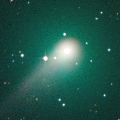
It was observed at 9-10 mag for a long time in 2023. It stays 18 mag for a while. In the Northern Hemisphere, it will never be observable after this. In the Southern Hemisphere, it stays observable in good condition. Date(TT) R.A. (2000) Decl. Delta r Elong. m1 Best Time(A, h) Mar. 21 20 18.25 -66 24.2 9.794 9.617 76 17.8 4:38 (339,-20) Mar. 28 20 19.94 -66 50.1 9.758 9.665 81 17.8 4:28 (340,-20) |
C/2024 L5 ( ATLAS )

|
Now it is 18.0 mag (Feb. 23, Catalina Sky Survey). Fading slowly. It will be fainter than 18 mag soon. It stays observable in good condition. Date(TT) R.A. (2000) Decl. Delta r Elong. m1 Best Time(A, h) Mar. 21 9 9.77 15 1.1 4.095 4.854 135 17.9 21:14 ( 0, 70) Mar. 28 9 2.59 15 47.2 4.237 4.897 126 18.0 20:39 ( 0, 71) |
C/2025 V2 ( Rankin )
|
It is expected to brighten up to 12.5 mag in 2027 spring. Now it is 17.1 mag (Mar. 11, Alfons Diepvens). It stays 17 mag for a while. It stays observable in good condition. Date(TT) R.A. (2000) Decl. Delta r Elong. m1 Best Time(A, h) Mar. 21 9 5.78 20 33.0 3.761 4.496 132 17.9 21:10 ( 0, 75) Mar. 28 9 3.39 21 8.6 3.786 4.436 125 17.9 20:41 ( 0, 76) |
C/2024 J4 ( Lemmon )

|
Now it is 17.5 mag (Mar. 14, ATLAS Chile). It stays 18 mag for a while. It stays observable in good condition. Date(TT) R.A. (2000) Decl. Delta r Elong. m1 Best Time(A, h) Mar. 21 14 36.08 6 25.1 5.361 6.162 140 17.9 2:44 ( 0, 61) Mar. 28 14 29.93 6 33.0 5.316 6.181 147 17.9 2:10 ( 0, 61) |
124P/Mrkos
|
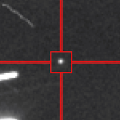
Now it is 17.6 mag (Feb. 25, Alfons Diepvens). It stays 18 mag for a while. In the Northern Hemisphere, it stays observable in good condition. It locates somewhat low in the Southern Hemisphere. Date(TT) R.A. (2000) Decl. Delta r Elong. m1 Best Time(A, h) Mar. 21 8 7.79 50 16.2 1.350 1.930 109 17.9 20:13 (180, 75) Mar. 28 8 10.86 47 6.9 1.378 1.904 105 17.9 19:49 (180, 78) |
242P/Spahr

|
Now it is 17.4 mag (Mar. 12, W. Hasubick). Fading slowly. It will be fainter than 18 mag soon. In the Northern Hemisphere, it will be getting lower gradually. In the Southern Hemisphere, it stays observable in good condition. Date(TT) R.A. (2000) Decl. Delta r Elong. m1 Best Time(A, h) Mar. 21 7 29.88 -8 23.8 3.974 4.447 112 17.9 19:36 ( 0, 47) Mar. 28 7 31.30 -7 27.8 4.071 4.460 106 18.0 19:42 ( 12, 47) |
C/2025 A1 ( Lemmon )
|
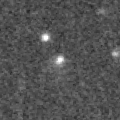
Now it is 17.2 mag (Mar. 14, Alfons Diepvens). It stays 18 mag for a while. In the Northern Hemisphere, it stays observable in good condition. It stays extremely low in the Southern Hemisphere. Date(TT) R.A. (2000) Decl. Delta r Elong. m1 Best Time(A, h) Mar. 21 8 22.38 37 52.4 5.434 5.957 117 17.9 20:28 (180, 87) Mar. 28 8 22.34 37 54.1 5.507 5.935 110 17.9 20:00 (180, 87) |
489P/Denning
|
|
It had been lost for 113 years. It must have passed the perihelion on Dec. 4. It brightened up to 18 mag in outburst in 2007. It will turn to fade out rapidly after the peak. It stays observable in good condition. Date(TT) R.A. (2000) Decl. Delta r Elong. m1 Best Time(A, h) Mar. 21 13 14.60 -6 14.5 0.970 1.937 160 21.0 1:23 ( 0, 49) Mar. 28 13 8.74 -6 4.6 0.991 1.980 168 20.9 0:50 ( 0, 49) |