Weekly Information about Bright Comets (2026 Apr. 11: North)
|
Japanese version Home page |
Updated on April 11, 2026 |
|||
|
||||
|
Best time and the azimuth, altitude (A,h) are at lat. 35 deg in the Northern Hemisphere. Azimuth indicates 0 for south, 90 for west, 180 for north, 270 for east. |

|
|
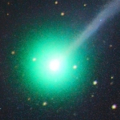
Now it is 5.6 mag (Apr. 8, Osamu Miyazaki). It brightens up to 4 mag, but it will turn to fade out rapidly after that. It will be unobservable soon. But it will be observable again in April in the Southern Hemisphere. Date(TT) R.A. (2000) Decl. Delta r Elong. m1 Best Time(A, h) Apr. 11 23 10.42 19 38.8 0.892 0.543 32 5.6 4:06 (255, 13) Apr. 18 0 3.81 17 44.4 0.643 0.501 24 4.5 3:55 (252, 6) |
 C/2026 A1 ( MAPS )
|
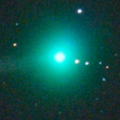
Kreutz sungrazer comet discovered furthest from Sun in history. It approached to Sun down to 0.005 a.u. on Apr. 4. It brightened up to 7.7 mag until it set down under the horizon before the perihelion passage (Mar. 29, Chris Wyatt). It brightened up to about -1 mag in the SOHO spacecraft images (Apr. 4, Robert Pickard). However, the comet has disappeared at the perihelion passage. It is appearing in the evening sky again in calculation, however, probably nothing remained. It will be unobservable in May in the Northern Hemisphere, or in July in the Southern Hemisphere. Date(TT) R.A. (2000) Decl. Delta r Elong. m1 Best Time(A, h) Apr. 11 2 39.78 3 20.9 1.024 0.373 21 6.8 19:56 ( 97, -4) Apr. 18 3 43.31 2 26.5 1.191 0.615 31 9.3 20:04 ( 92, 1) |
88P/Howell
|
Now it is 9.9 mag (Mar. 17, Mike Olason). Fading gradually. It stays extremely low in the Northern Hemisphere. But it will become high in summer. Date(TT) R.A. (2000) Decl. Delta r Elong. m1 Best Time(A, h) Apr. 11 22 47.69 -10 51.9 1.960 1.382 41 9.6 4:06 (284, 1) Apr. 18 23 9.03 -8 47.9 1.956 1.398 42 9.7 3:55 (281, 1) |
C/2025 A6 ( Lemmon )
|
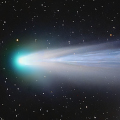
It brightened up to 3.7 mag in late October (Oct. 26, Juan Jose Gonzalez). Now it is 11.3 mag (Mar. 15, Chris Wyatt). It will fade out rapidly after this. In the Northern Hemisphere, it is not observable now, but it will be observable soon. In the Southern Hemisphere, it stays observable in good condition. Date(TT) R.A. (2000) Decl. Delta r Elong. m1 Best Time(A, h) Apr. 11 12 8.76 -60 42.9 2.002 2.713 125 12.0 22:48 ( 0, -6) Apr. 18 11 41.27 -57 34.7 2.077 2.805 127 12.3 21:54 ( 0, -2) |
C/2024 E1 ( Wierzchos )
|
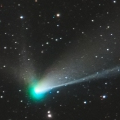
It brightened up to 6.6 mag in January (Jan. 28, Chris Wyatt). The nucleus was disintegrated in March and the comet is fading and getting diffused very rapidly. Now it is 13.0 mag (Mar. 24, Toru Yusa). Fading rapidly. It will be fainter than 18 mag in August. It will be unobservable in June. Date(TT) R.A. (2000) Decl. Delta r Elong. m1 Best Time(A, h) Apr. 11 5 2.29 16 32.3 2.010 1.663 55 12.8 19:56 ( 89, 32) Apr. 18 5 17.52 18 57.5 2.192 1.769 52 13.3 20:04 ( 94, 29) |
78P/Gehrels 2

|
It will brighten up to 12 mag in summer. Now it is 14.5 mag (Jan. 16, Kunihiro Shima). It stays 13 mag for a while. Now it is not observable. It will appear in May in the Southern Hemisphere, or in June in the Northern Hemisphere. Date(TT) R.A. (2000) Decl. Delta r Elong. m1 Best Time(A, h) Apr. 11 0 54.57 7 14.6 3.092 2.097 5 13.1 4:06 (250,-14) Apr. 18 1 10.02 8 37.3 3.070 2.081 8 13.0 3:55 (249,-13) |
235P/LINEAR
|
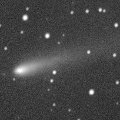
It became brighter than expected. Now it is 13.6 mag (Mar. 23, Ken Harikae). It will fade out rapidly after this. It stays observable in good condition. Date(TT) R.A. (2000) Decl. Delta r Elong. m1 Best Time(A, h) Apr. 11 17 14.94 -14 31.5 1.457 2.156 121 13.5 4:00 ( 0, 40) Apr. 18 17 16.96 -13 41.4 1.414 2.177 127 13.6 3:34 ( 0, 41) |
24P/Schaumasse

|
It brightened up to 8.4 mag in January (Jan. 14, Mitsunori Tsumura). Now it is 13.5 mag (Apr. 8, Osamu Miyazaki). Fading rapidly. It will be fainter than 18 mag in June. It stays observable in good condition. Date(TT) R.A. (2000) Decl. Delta r Elong. m1 Best Time(A, h) Apr. 11 15 6.94 3 42.2 0.721 1.666 150 13.6 1:52 ( 0, 59) Apr. 18 14 57.57 2 59.8 0.755 1.724 156 14.2 1:16 ( 0, 58) |
29P/Schwassmann-Wachmann 1
|
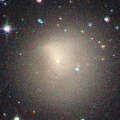
Now it is 12.3 mag (Mar. 27, Toru Yusa). In the Northern Hemisphere, it will be getting lower gradually after this, and it will be unobservable in August. In the Southern Hemisphere, it stays observable in good condition. Date(TT) R.A. (2000) Decl. Delta r Elong. m1 Best Time(A, h) Apr. 11 11 4.22 -1 41.5 5.454 6.313 146 13.7 21:46 ( 0, 53) Apr. 18 11 2.29 -1 27.8 5.520 6.313 139 13.7 21:16 ( 0, 53) |
C/2024 J3 ( ATLAS )

|
Now it is 13.9 mag (Mar. 20, Kunihiro Shima). It stays 13 mag for a while. In the Northern Hemisphere, it stays observable in good condition. Date(TT) R.A. (2000) Decl. Delta r Elong. m1 Best Time(A, h) Apr. 11 20 19.29 13 56.1 4.529 4.342 72 13.9 4:06 (286, 45) Apr. 18 20 21.34 15 49.4 4.413 4.315 77 13.8 3:55 (287, 49) |
10P/Tempel 2
|
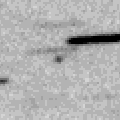
It is expected to brighten up to 8 mag in summer. Now it is 16.2 mag (Mar. 23, Ken-ichi Kadota). Brightening rapidly. It stays observable in good condition. Date(TT) R.A. (2000) Decl. Delta r Elong. m1 Best Time(A, h) Apr. 11 18 33.18 -9 58.8 1.326 1.821 102 14.3 4:06 (336, 42) Apr. 18 18 46.81 -9 36.5 1.229 1.781 105 13.8 3:55 (337, 43) |
240P/NEAT

|
It brightened up to 11.1 mag in winter (Nov. 15, Masayoshi Yoshimi). The component B also brightened rapidly up to 13.8 mag (Ded. 8, Masayoshi Yoshimi). Now it is 14.7 mag (Mar. 14, Alfons Diepvens). Fading gradually. It will be unobservable in June in the Southern Hemisphere, or in July in the Northern Hemisphere. Date(TT) R.A. (2000) Decl. Delta r Elong. m1 Best Time(A, h) Apr. 11 5 23.76 34 17.8 2.584 2.295 62 14.0 19:56 (107, 44) Apr. 18 5 38.82 34 50.7 2.673 2.316 58 14.2 20:04 (109, 40) |
C/2024 T5 ( ATLAS )
|
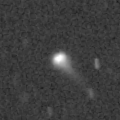
Now it is 13.9 mag (Mar. 12, ATLAS South Africa). Brightening slowly. In the Northern Hemisphere, it is not observable now, but it will appear in July. It locates somewhat low in the Southern Hemisphere. But it will become high in summer. It is expected to brighten up to 11 mag in next winter. Date(TT) R.A. (2000) Decl. Delta r Elong. m1 Best Time(A, h) Apr. 11 3 21.93 -23 9.4 5.764 5.087 43 14.2 19:56 ( 70,-11) Apr. 18 3 28.18 -22 5.0 5.755 5.050 41 14.1 20:04 ( 74,-16) |
141P/Machholz 2

|
The condition is very bad in this apparition. It is not observable at all. It brightens up to 13 mag, but it will turn to fade out rapidly after that. It will be fainter than 18 mag in July. It will never be observable after this. Date(TT) R.A. (2000) Decl. Delta r Elong. m1 Best Time(A, h) Apr. 11 0 59.95 11 26.3 1.824 0.831 5 14.8 4:06 (246,-13) Apr. 18 1 36.51 13 54.2 1.811 0.812 3 14.2 3:55 (241,-15) |
C/2023 R1 ( PanSTARRS )

|
Now it is 14.2 mag (Apr. 8, ATLAS South Africa). It stays 14 mag for a while. It stays observable in good condition. Date(TT) R.A. (2000) Decl. Delta r Elong. m1 Best Time(A, h) Apr. 11 19 23.21 -3 39.5 3.446 3.570 88 14.6 4:06 (317, 42) Apr. 18 19 17.39 -3 46.0 3.308 3.570 96 14.5 3:55 (324, 45) |
C/2022 QE78 ( ATLAS )
|
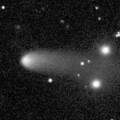
Now it is 14.7 mag (Mar. 23, Ken-ichi Kadota). It stays 15 mag for a while. In the Northern Hemisphere, it stays observable in good condition. In the Southern Hemisphere, it will be unobservable in July. Date(TT) R.A. (2000) Decl. Delta r Elong. m1 Best Time(A, h) Apr. 11 9 2.55 31 58.3 5.309 5.690 107 14.7 19:56 ( 37, 86) Apr. 18 9 3.95 32 1.4 5.426 5.704 101 14.7 20:04 ( 75, 80) |
C/2014 UN271 ( Bernardinelli-Bernstein )

|
Very large comet. It is expected to brighten up to 13 mag in 2031. Now it is 14.9 mag (Mar. 12, Andrew Pearce). It stays 15 mag for a while. In the Northern Hemisphere, it is not observable now. In the Southern Hemisphere, it stays observable in good condition. In the Northern Hemisphere, it is not observable until 2030. Date(TT) R.A. (2000) Decl. Delta r Elong. m1 Best Time(A, h) Apr. 11 5 3.24 -69 54.2 14.108 14.088 86 14.7 19:56 ( 20,-24) Apr. 18 5 8.19 -69 34.1 14.073 14.067 87 14.7 20:04 ( 22,-26) |
C/2021 G2 ( ATLAS )

|
Now it is 14.3 mag (Mar. 19, Francois Kugel). It stays 15 mag for a while. It stays observable in good condition. Date(TT) R.A. (2000) Decl. Delta r Elong. m1 Best Time(A, h) Apr. 11 17 30.81 9 57.1 6.134 6.608 114 14.8 4:06 (354, 65) Apr. 18 17 30.21 10 47.1 6.089 6.641 119 14.8 3:47 ( 0, 66) |
C/2022 N2 ( PanSTARRS )
|
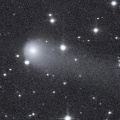
Now it is 14.7 mag (Mar. 12, Toru Yusa). It stays 15 mag for a while. It will be unobservable in May. But it will be observable again in July in the Northern Hemisphere, or in August in the Southern Hemisphere. Date(TT) R.A. (2000) Decl. Delta r Elong. m1 Best Time(A, h) Apr. 11 4 23.45 25 54.1 5.025 4.414 47 15.0 19:56 (103, 28) Apr. 18 4 31.57 26 5.5 5.128 4.443 42 15.0 20:04 (107, 23) |
218P/LINEAR
|
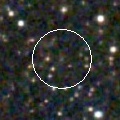
Now it is 16.1 mag (Apr. 1, ATLAS Chile). It will fade out rapidly after this. It will be fainter than 18 mag in June. It locates somewhat low in the Northern Hemisphere. In the Southern Hemisphere, it stays observable in good condition. Date(TT) R.A. (2000) Decl. Delta r Elong. m1 Best Time(A, h) Apr. 11 21 23.99 -12 39.5 1.334 1.227 61 15.5 4:06 (298, 16) Apr. 18 21 44.52 -10 58.1 1.348 1.263 62 15.7 3:55 (296, 16) |
C/2026 B2 ( Sun-Gao )
|
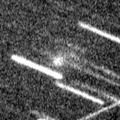
Bright new comet discovered near Sun. It became brighter furthermore after the discovery, brightened up to 12.7 mag (Feb. 14, Mike Olason). Now it is 16.2 mag (Mar. 16, D. Buczynski). It will fade out rapidly after this. It will be fainter than 18 mag in May. It locates somewhat low in the Northern Hemisphere. In the Southern Hemisphere, it will never be observable after this. Date(TT) R.A. (2000) Decl. Delta r Elong. m1 Best Time(A, h) Apr. 11 23 45.18 36 15.7 2.576 1.847 35 15.5 4:06 (236, 16) Apr. 18 0 5.20 37 34.8 2.655 1.917 34 15.9 3:55 (235, 16) |
93P/Lovas 1
|
Now it is 16.0 mag (Jan. 18, Kunihiro Shima). It stays 16 mag for a while. Now it is not observable. It will appear in August in the Northern Hemisphere. Date(TT) R.A. (2000) Decl. Delta r Elong. m1 Best Time(A, h) Apr. 11 1 56.39 19 17.5 2.654 1.704 14 15.6 19:56 (117, -3) Apr. 18 2 16.11 21 10.3 2.657 1.696 13 15.6 20:04 (121, -5) |
C/2025 Q3 ( ATLAS )

|
It became brighter than expected. Now it is 14.9 mag (Mar. 8, Martin Masek). Fading gradually. It will be fainter than 18 mag in July. In the Northern Hemisphere, it will never be observable after this. It locates somewhat low in the Southern Hemisphere. Date(TT) R.A. (2000) Decl. Delta r Elong. m1 Best Time(A, h) Apr. 11 3 17.52 -25 26.8 2.773 2.176 44 15.7 19:56 ( 68,-14) Apr. 18 3 28.47 -26 31.6 2.786 2.197 45 15.8 20:04 ( 70,-19) |
C/2024 R4 ( PanSTARRS )
|
Now it is 15.7 mag (Apr. 2, Ken-ichi Kadota). It stays 15 mag for a while. In the Northern Hemisphere, it stays observable in good condition. It stays extremely low in the Southern Hemisphere. Date(TT) R.A. (2000) Decl. Delta r Elong. m1 Best Time(A, h) Apr. 11 22 10.24 30 3.7 6.887 6.272 48 15.9 4:06 (252, 30) Apr. 18 22 11.99 31 9.7 6.792 6.235 52 15.8 3:55 (253, 34) |
63P/Wild 1
|
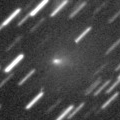
Now it is 15.8 mag (Mar. 6, Thomas Lehmann). Brightening slowly. In the Northern Hemisphere, it will be getting lower gradually after this, and it will be unobservable in July. It locates somewhat low in the Southern Hemisphere. Date(TT) R.A. (2000) Decl. Delta r Elong. m1 Best Time(A, h) Apr. 11 7 1.68 38 4.9 2.042 2.146 82 16.0 19:56 (106, 64) Apr. 18 7 14.49 36 35.1 2.087 2.121 78 15.9 20:04 (104, 59) |
123P/West-Hartley

|
It will brighten up to 15 mag from autumn to winter. Now it is 17.2 mag (Mar. 19, Erik Bryssinck). Brightening slowly. It will be unobservable in May in the Southern Hemisphere, or in June in the Northern Hemisphere. Date(TT) R.A. (2000) Decl. Delta r Elong. m1 Best Time(A, h) Apr. 11 4 45.50 32 0.8 2.945 2.490 53 16.4 19:56 (107, 35) Apr. 18 4 58.60 32 23.6 2.988 2.466 49 16.3 20:04 (110, 31) |
C/2022 R6 ( PanSTARRS )
|
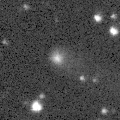
Now it is 16.4 mag (Apr. 6, ATLAS-MLO, Mauna Loa). It stays 17 mag for a while. It will be getting lower gradually after this, and it will be unobservable in June in the Northern Hemisphere, or in July in the Southern Hemisphere. Date(TT) R.A. (2000) Decl. Delta r Elong. m1 Best Time(A, h) Apr. 11 8 30.41 -0 41.6 6.358 6.741 108 16.3 19:56 ( 18, 53) Apr. 18 8 31.41 0 3.3 6.471 6.752 101 16.3 20:04 ( 32, 51) |
C/2024 G6 ( ATLAS )

|
Now it is 16.2 mag (Apr. 1, ATLAS Chile). It stays 17 mag for a while. It stays observable in good condition. Date(TT) R.A. (2000) Decl. Delta r Elong. m1 Best Time(A, h) Apr. 11 16 22.37 5 34.2 5.728 6.439 131 16.5 3:07 ( 0, 60) Apr. 18 16 17.96 6 43.1 5.664 6.441 137 16.4 2:35 ( 0, 62) |
C/2025 J1 ( Borisov )
|
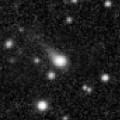
Now it is 16.9 mag (Apr. 6, ATLAS-HKO, Haleakala). It stays 17 mag for a while. In the Northern Hemisphere, it will be getting lower gradually after this, and it will be unobservable in June. But it will be observable again in July. In the Southern Hemisphere, it is not observable now, but it will appear in August. Date(TT) R.A. (2000) Decl. Delta r Elong. m1 Best Time(A, h) Apr. 11 5 12.54 46 33.6 3.966 3.624 63 16.6 19:56 (124, 44) Apr. 18 5 18.42 44 48.2 4.057 3.615 57 16.6 20:04 (123, 39) |
C/2025 Y1 ( ATLAS )
|
Now it is 16.1 mag (Apr. 6, ATLAS-MLO, Mauna Loa). It stays 16 mag for a while. It stays observable in good condition. Date(TT) R.A. (2000) Decl. Delta r Elong. m1 Best Time(A, h) Apr. 11 12 56.29 2 42.2 4.904 5.888 168 16.7 23:38 ( 0, 58) Apr. 18 12 53.25 3 8.0 4.875 5.836 161 16.6 23:07 ( 0, 58) |
C/2025 T1 ( ATLAS )

|
It brightened up to 9.0 mag from late November to early December (Nov. 22, Thomas Lehmann). Now it is 15.8 mag (Mar. 25, Michael Mattiazzo). It will fade out rapidly after this. It will be fainter than 18 mag in May. In the Northern Hemisphere, it will never be observable after this. In the Southern Hemisphere, it stays observable in good condition. Date(TT) R.A. (2000) Decl. Delta r Elong. m1 Best Time(A, h) Apr. 11 22 28.90 -27 45.8 2.671 2.236 54 16.8 4:06 (300, -6) Apr. 18 22 33.48 -29 48.3 2.634 2.317 60 17.1 3:55 (303, -5) |
493P/2024 Q2 ( LONEOS )
|
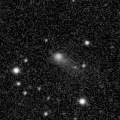
Now it is 16.8 mag (Mar. 30, Alfons Diepvens). It stays 17 mag for a while. In the Northern Hemisphere, it will be getting lower gradually after this, and it will be unobservable in July. But it will be observable again in August. It stays extremely low in the Southern Hemisphere. Date(TT) R.A. (2000) Decl. Delta r Elong. m1 Best Time(A, h) Apr. 11 5 28.64 45 19.7 4.166 3.858 65 16.9 19:56 (121, 47) Apr. 18 5 38.80 44 55.1 4.254 3.864 60 17.0 20:04 (122, 42) |
C/2023 F3 ( ATLAS )

|
Now it is 16.9 mag (Apr. 4, ATLAS Chile). It stays 18 mag for a while. In the Northern Hemisphere, it will be getting lower gradually after this, and it will be unobservable in June. In the Southern Hemisphere, it stays observable in good condition. Date(TT) R.A. (2000) Decl. Delta r Elong. m1 Best Time(A, h) Apr. 11 9 10.11 -12 41.7 5.556 6.109 119 17.1 19:56 ( 1, 42) Apr. 18 9 6.75 -11 33.9 5.681 6.136 112 17.2 20:04 ( 14, 42) |
C/2022 E2 ( ATLAS )
|
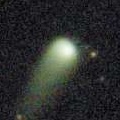
It was observed at 12-13 mag for a long time in 2024. Now it is 17.6 mag (Mar. 19, P.-J. Dekelver). It stays 17 mag for a while. In the Northern Hemisphere, it will be getting higher gradually. In the Southern Hemisphere, it is not observable now, but it will be observable soon. Date(TT) R.A. (2000) Decl. Delta r Elong. m1 Best Time(A, h) Apr. 11 23 8.83 29 2.3 6.873 6.098 36 17.1 4:06 (247, 19) Apr. 18 23 10.74 29 18.6 6.877 6.142 40 17.2 3:55 (248, 21) |
C/2023 X2 ( Lemmon )
|
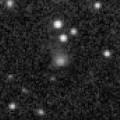
Now it is 17.5 mag (Mar. 29, Alfons Diepvens). It stays 17 mag for a while. In the Northern Hemisphere, it stays observable in good condition. In the Southern Hemisphere, it will never be observable after this. Date(TT) R.A. (2000) Decl. Delta r Elong. m1 Best Time(A, h) Apr. 11 21 39.88 85 13.9 5.243 5.149 79 17.1 4:06 (185, 37) Apr. 18 21 27.82 86 11.5 5.277 5.158 77 17.2 3:55 (184, 37) |
65P/Gunn
|
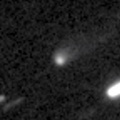
Now it is 16.9 mag (Nov. 20, Thomas Lehmann). It stays 17 mag for a while. In the Northern Hemisphere, it is not observable now, but it will appear in May. In the Southern Hemisphere, it will be getting higher gradually. Date(TT) R.A. (2000) Decl. Delta r Elong. m1 Best Time(A, h) Apr. 11 23 22.64 -12 3.4 4.031 3.259 34 17.2 4:06 (280, -7) Apr. 18 23 31.61 -11 12.6 3.989 3.273 39 17.2 3:55 (280, -5) |
(248590) 2006 CS
|
|
It seems to be a parent of the beta-Tucanids meteor shower. Now it is 18.3 mag (Jan. 12, ATLAS South Africa). Fading gradually. It will be fainter than 18 mag soon. In the Northern Hemisphere, it stays observable in good condition. In the Southern Hemisphere, it will never be observable after this. Date(TT) R.A. (2000) Decl. Delta r Elong. m1 Best Time(A, h) Apr. 11 0 31.18 84 32.8 0.425 0.993 76 17.2 4:06 (186, 33) Apr. 18 20 17.42 86 29.2 0.538 1.044 78 17.5 3:55 (183, 38) |
40P/Vaisala 1

|
It became brighter than expected, brightened up to 14.3 mag (Jan. 21, Michael Jager). Now it is 16.8 mag (Apr. 6, ATLAS-MLO, Mauna Loa). Fading gradually. It will be fainter than 18 mag in June. It stays observable in good condition. Date(TT) R.A. (2000) Decl. Delta r Elong. m1 Best Time(A, h) Apr. 11 17 59.18 -9 47.9 1.790 2.336 110 17.3 4:06 (347, 44) Apr. 18 18 1.45 -9 32.2 1.753 2.376 116 17.4 3:55 (352, 45) |
C/2025 E1 ( PanSTARRS )

|
Now it is 17.2 mag (Apr. 6, ATLAS Chile). It stays 17 mag for a while. In the Northern Hemisphere, it will never be observable after this. In the Southern Hemisphere, it stays observable in good condition. Date(TT) R.A. (2000) Decl. Delta r Elong. m1 Best Time(A, h) Apr. 11 9 11.55 -68 14.2 3.825 4.242 107 17.3 19:56 ( 0,-13) Apr. 18 8 58.77 -67 37.6 3.818 4.222 107 17.3 20:04 ( 5,-13) |
C/2024 A1 ( ATLAS )
|
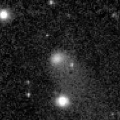
Now it is 17.0 mag (Apr. 1, ATLAS-MLO, Mauna Loa). It stays 18 mag for a while. In the Northern Hemisphere, it will be getting lower gradually. In the Southern Hemisphere, it will never be observable after this. Date(TT) R.A. (2000) Decl. Delta r Elong. m1 Best Time(A, h) Apr. 11 6 15.85 63 32.8 4.803 4.663 75 17.3 19:56 (151, 51) Apr. 18 6 18.89 63 30.6 4.921 4.695 71 17.4 20:04 (149, 48) |
C/2024 G4 ( PanSTARRS )

|
Now it is 17.2 mag (Mar. 12, ATLAS South Africa). It stays 17 mag for a while. It stays observable in good condition. Date(TT) R.A. (2000) Decl. Delta r Elong. m1 Best Time(A, h) Apr. 11 20 6.44 2 44.8 5.025 4.903 77 17.4 4:06 (301, 40) Apr. 18 20 10.39 3 4.0 4.932 4.905 82 17.4 3:55 (303, 42) |
195P/Hill

|
Now it is 17.0 mag (Apr. 5, ATLAS-MLO, Mauna Loa). It stays 18 mag for a while. In the Northern Hemisphere, it will be unobservable in June. In the Southern Hemisphere, it stays observable in good condition. Date(TT) R.A. (2000) Decl. Delta r Elong. m1 Best Time(A, h) Apr. 11 9 18.92 -29 8.9 3.988 4.580 120 17.4 20:01 ( 0, 26) Apr. 18 9 19.67 -28 16.3 4.053 4.587 116 17.4 20:04 ( 7, 26) |
C/2019 E3 ( ATLAS )
|
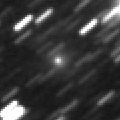
Very far object. It stays 17 mag for a while. In the Northern Hemisphere, it is not observable now, but it will appear in July. In the Southern Hemisphere, it will be getting higher gradually. Date(TT) R.A. (2000) Decl. Delta r Elong. m1 Best Time(A, h) Apr. 11 0 29.91 -43 6.2 11.901 11.316 52 17.4 4:06 (302,-35) Apr. 18 0 32.13 -42 51.4 11.864 11.331 55 17.4 3:55 (303,-32) |
C/2023 H5 ( Lemmon )

|
Now it is 17.2 mag (Mar. 29, Alfons Diepvens). It stays 18 mag for a while. In the Northern Hemisphere, it stays observable in good condition. In the Southern Hemisphere, it will never be observable after this. Date(TT) R.A. (2000) Decl. Delta r Elong. m1 Best Time(A, h) Apr. 11 21 48.98 62 37.5 5.223 4.902 66 17.4 4:06 (214, 41) Apr. 18 21 56.18 63 1.6 5.255 4.929 65 17.5 3:55 (213, 42) |
43P/Wolf-Harrington

|
Now it is 17.8 mag (Apr. 8, ATLAS-TDO). Fading gradually. It will be fainter than 18 mag in May. It stays observable in good condition. Date(TT) R.A. (2000) Decl. Delta r Elong. m1 Best Time(A, h) Apr. 11 10 37.99 -4 30.8 2.153 2.994 140 17.4 21:20 ( 0, 50) Apr. 18 10 37.54 -3 56.7 2.238 3.020 133 17.6 20:52 ( 0, 51) |
C/2024 G2 ( ATLAS )

|
Now it is 17.1 mag (Mar. 21, Masayoshi Yoshimi). It stays 18 mag for a while. It stays observable in good condition. Date(TT) R.A. (2000) Decl. Delta r Elong. m1 Best Time(A, h) Apr. 11 11 6.66 6 38.8 4.946 5.790 144 17.6 21:48 ( 0, 62) Apr. 18 11 2.23 7 48.0 5.045 5.810 136 17.7 21:16 ( 0, 63) |
3I/2025 N1 ( ATLAS )

|
Third interstellar object in history following 1I/'Oumuamua and 2I/Borisov. The eccentricity is extremely big as 6. It approached to Sun down to 1.38 a.u. in late October. It brightened up to 8.9 mag in November (Nov. 12, Toshiyuki Takahashi). Now it is 17.5 mag (Apr. 1, Alfons Diepvens). It will fade out rapidly after this. It will be fainter than 18 mag soon. In the Northern Hemisphere, it will be getting lower gradually. It locates somewhat low in the Southern Hemisphere. Date(TT) R.A. (2000) Decl. Delta r Elong. m1 Best Time(A, h) Apr. 11 6 45.04 20 28.2 6.054 5.958 79 17.7 19:56 ( 76, 54) Apr. 18 6 45.18 20 28.5 6.414 6.195 72 18.0 20:04 ( 83, 47) |
164P/Christensen
|
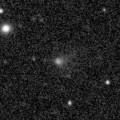
Now it is 17.1 mag (Apr. 1, Alfons Diepvens). Fading gradually. It will be fainter than 18 mag soon. In the Northern Hemisphere, it stays observable in good condition. It locates somewhat low in the Southern Hemisphere. Date(TT) R.A. (2000) Decl. Delta r Elong. m1 Best Time(A, h) Apr. 11 10 29.68 31 11.6 2.467 3.139 123 17.7 21:12 ( 0, 86) Apr. 18 10 28.74 30 38.5 2.582 3.177 117 17.9 20:43 ( 0, 85) |
C/2025 L1 ( ATLAS )

|
It was expected to brighten up to 13.5 mag. But actually, it is getting diffuse and fading very rapidly. Now it is 17.4 mag (Mar. 10, Toru Yusa). It will fade out rapidly after this. It will be fainter than 18 mag soon. In the Northern Hemisphere, it stays observable in good condition. It stays extremely low in the Southern Hemisphere. Date(TT) R.A. (2000) Decl. Delta r Elong. m1 Best Time(A, h) Apr. 11 13 59.57 41 49.7 1.250 2.036 129 17.7 0:46 (180, 84) Apr. 18 13 30.53 46 43.3 1.368 2.087 122 18.1 23:42 (180, 78) |
(15504) 1999 RG33
|
|
Peculiar asteroid moving along a cometary orbit. It stays 18 mag for a while. It stays observable in good condition. Date(TT) R.A. (2000) Decl. Delta r Elong. m1 Best Time(A, h) Apr. 11 13 24.13 -7 15.6 3.089 4.090 177 17.7 0:10 ( 0, 48) Apr. 18 13 18.08 -7 19.0 3.044 4.043 173 17.8 23:32 ( 0, 48) |
C/2025 V2 ( Rankin )
|
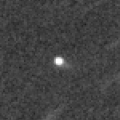
It is expected to brighten up to 12.5 mag in 2027 spring. Now it is 17.4 mag (Apr. 7, Erik Bryssinck). It stays 17 mag for a while. It will be getting lower gradually after this, and it will be unobservable in August. Date(TT) R.A. (2000) Decl. Delta r Elong. m1 Best Time(A, h) Apr. 11 9 0.88 22 7.4 3.860 4.314 110 17.8 19:56 ( 13, 77) Apr. 18 9 0.83 22 30.3 3.905 4.253 103 17.7 20:04 ( 43, 74) |
C/2020 V2 ( ZTF )
|
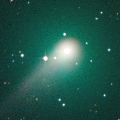
It was observed at 9-10 mag for a long time in 2023. It stays 18 mag for a while. In the Northern Hemisphere, it will never be observable after this. In the Southern Hemisphere, it stays observable in good condition. Date(TT) R.A. (2000) Decl. Delta r Elong. m1 Best Time(A, h) Apr. 11 20 21.11 -67 49.0 9.683 9.761 91 17.8 4:06 (344,-18) Apr. 18 20 20.44 -68 21.4 9.646 9.809 96 17.9 3:55 (345,-18) |
260P/McNaught
|
|
It will brighten up to 13 mag and will be observable in good condition from summer to autumn. Now it is 18.7 mag (Mar. 30, Taras Prystavski). It will brighten rapidly after this. It stays extremely low in the Northern Hemisphere. But it will become high in summer. In the Southern Hemisphere, it stays observable in good condition. Date(TT) R.A. (2000) Decl. Delta r Elong. m1 Best Time(A, h) Apr. 11 22 4.42 -22 16.7 2.255 1.888 56 18.2 4:06 (299, 2) Apr. 18 22 21.91 -20 26.4 2.160 1.843 58 17.9 3:55 (297, 3) |
C/2024 J4 ( Lemmon )

|
Now it is 17.6 mag (Mar. 23, Ken-ichi Kadota). It stays 18 mag for a while. It stays observable in good condition. Date(TT) R.A. (2000) Decl. Delta r Elong. m1 Best Time(A, h) Apr. 11 14 16.52 6 43.6 5.275 6.220 158 17.9 1:02 ( 0, 62) Apr. 18 14 9.49 6 45.1 5.281 6.240 161 17.9 0:28 ( 0, 62) |
C/2025 M2 ( PanSTARRS )
|
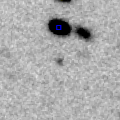
It is expected to brighten up to 12 mag from 2027 to 2028. Now it is 17.9 mag (Apr. 5, ATLAS-MLO, Mauna Loa). Brightening slowly. In the Northern Hemisphere, it will be getting higher gradually. In the Southern Hemisphere, it stays observable in good condition. Date(TT) R.A. (2000) Decl. Delta r Elong. m1 Best Time(A, h) Apr. 11 21 6.40 -16 35.6 6.508 6.179 66 18.0 4:06 (304, 16) Apr. 18 21 6.55 -16 31.9 6.338 6.128 73 17.9 3:55 (307, 19) |
C/2026 C1 ( Tsuchinshan )
|
|
It is expected to brighten up to 4 mag in 2028 autumn. Now it is 17.7 mag (Mar. 21, Hidenori Nohara). It stays 18 mag for a while. It stays observable in good condition. At the high light, it is observable in excellent condition in the Southern Hemisphere. In the Northern Hemisphere, it becomes observable after the perihelion passage. Date(TT) R.A. (2000) Decl. Delta r Elong. m1 Best Time(A, h) Apr. 11 12 26.96 7 22.9 8.598 9.546 160 18.0 23:08 ( 0, 62) Apr. 18 12 23.79 7 32.6 8.587 9.495 153 17.9 22:38 ( 0, 62) |
124P/Mrkos
|
Now it is 17.7 mag (Mar. 31, ATLAS-HKO, Haleakala). It stays 18 mag for a while. In the Northern Hemisphere, it will be getting lower gradually. In the Southern Hemisphere, it will be getting higher gradually. Date(TT) R.A. (2000) Decl. Delta r Elong. m1 Best Time(A, h) Apr. 11 8 22.73 40 40.4 1.446 1.857 96 17.9 19:56 (122, 79) Apr. 18 8 30.78 37 26.6 1.487 1.836 92 18.0 20:04 (103, 74) |
489P/Denning
|
|
It had been lost for 113 years. It must have passed the perihelion on Dec. 4. It brightened up to 18 mag in outburst in 2007. It will fade out rapidly after this. It stays observable in good condition. Date(TT) R.A. (2000) Decl. Delta r Elong. m1 Best Time(A, h) Apr. 11 12 56.89 -5 41.1 1.068 2.068 174 21.0 23:38 ( 0, 49) Apr. 18 12 51.85 -5 32.0 1.124 2.113 166 21.4 23:06 ( 0, 49) |