Weekly Information about Bright Comets (2026 May 2: North)
|
Japanese version Home page |
Updated on May 6, 2026 |
|||
|
||||
|
Best time and the azimuth, altitude (A,h) are at lat. 35 deg in the Northern Hemisphere. Azimuth indicates 0 for south, 90 for west, 180 for north, 270 for east. |

|
|
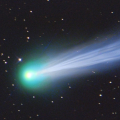
It brightened up to 1.3 mag due to the forward scattering in the SOHO LASCO images (Apr. 25, Mikolaj Kaszczyk). Now it is 4.3 mag (May 1, Marco Goiato). It will fade out rapidly after this. In the Northern Hemisphere, it is not observable now. It locates somewhat low in the Southern Hemisphere. But it will become high in autumn. Date(TT) R.A. (2000) Decl. Delta r Elong. m1 Best Time(A, h) May 2 4 8.11 -0 55.1 0.559 0.577 28 4.9 20:19 ( 95,-10) May 9 5 20.94 -6 45.2 0.764 0.673 41 6.2 20:27 ( 86, -6) |
 88P/Howell
|
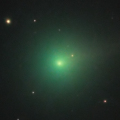
Now it is 9.6 mag (Apr. 14, Chris Wyatt). It will fade out rapidly after this. It locates somewhat low in the Northern Hemisphere. But it will become high in summer. Date(TT) R.A. (2000) Decl. Delta r Elong. m1 Best Time(A, h) May 2 23 49.20 -4 41.7 1.953 1.442 45 9.8 3:35 (277, 2) May 9 0 8.08 -2 42.7 1.951 1.469 47 10.0 3:25 (276, 3) |
10P/Tempel 2
|
It is expected to brighten up to 8 mag in summer. Now it is 14.8 mag (Apr. 24, B. Haeusler). Brightening rapidly. It stays observable in good condition. Date(TT) R.A. (2000) Decl. Delta r Elong. m1 Best Time(A, h) May 2 19 13.85 -8 51.2 1.049 1.703 111 12.8 3:35 (339, 44) May 9 19 27.25 -8 31.2 0.965 1.667 115 12.3 3:25 (340, 45) |
78P/Gehrels 2

|
It will brighten up to 12 mag in summer. It stays 13 mag for a while. Now it is not observable. It will appear soon in the Southern Hemisphere, or in June in the Northern Hemisphere. Date(TT) R.A. (2000) Decl. Delta r Elong. m1 Best Time(A, h) May 2 1 41.55 11 17.2 3.019 2.053 13 12.8 3:35 (248,-11) May 9 1 57.64 12 33.1 2.991 2.042 16 12.7 3:25 (247,-10) |
C/2025 A6 ( Lemmon )
|
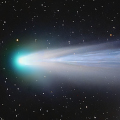
It brightened up to 3.7 mag in late October (Oct. 26, Juan Jose Gonzalez). Now it is 14.3 mag (Apr. 19, Andrew Pearce). It will fade out rapidly after this. In the Northern Hemisphere, it will be unobservable in June. In the Southern Hemisphere, it stays observable in good condition. Date(TT) R.A. (2000) Decl. Delta r Elong. m1 Best Time(A, h) May 2 11 7.44 -50 50.3 2.286 2.985 125 12.9 20:26 ( 0, 4) May 9 10 58.03 -47 39.0 2.416 3.073 121 13.2 20:27 ( 6, 7) |
141P/Machholz 2

|
The condition is very bad in this apparition. It is not observable at all. It will turn to fade out rapidly after the peak. It will be fainter than 18 mag in July. It will never be observable after this. Date(TT) R.A. (2000) Decl. Delta r Elong. m1 Best Time(A, h) May 2 2 52.19 17 40.6 1.821 0.821 4 13.2 20:19 (123,-13) May 9 3 30.09 18 50.8 1.842 0.848 6 12.9 20:27 (124,-12) |
24P/Schaumasse

|
It brightened up to 8.4 mag in January (Jan. 14, Mitsunori Tsumura). Now it is 13.1 mag (Apr. 27, Toru Yusa). Fading rapidly. It will be fainter than 18 mag in July. It stays observable in good condition. Date(TT) R.A. (2000) Decl. Delta r Elong. m1 Best Time(A, h) May 2 14 39.16 1 12.5 0.853 1.841 163 13.3 0:02 ( 0, 56) May 9 14 31.37 0 10.2 0.918 1.901 161 13.7 23:22 ( 0, 55) |
C/2024 J3 ( ATLAS )

|
Now it is 14.2 mag (Apr. 24, Kunihiro Shima). It stays 13 mag for a while. In the Northern Hemisphere, it stays observable in good condition. In the Southern Hemisphere, it will be getting lower gradually. Date(TT) R.A. (2000) Decl. Delta r Elong. m1 Best Time(A, h) May 2 20 23.52 19 49.1 4.186 4.264 87 13.6 3:35 (289, 57) May 9 20 23.51 21 54.4 4.078 4.239 92 13.5 3:25 (290, 62) |
29P/Schwassmann-Wachmann 1
|
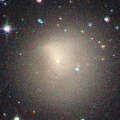
Now it is 12.1 mag (Apr. 22, Toru Yusa). In the Northern Hemisphere, it will be getting lower gradually after this, and it will be unobservable in August. In the Southern Hemisphere, it stays observable in good condition. Date(TT) R.A. (2000) Decl. Delta r Elong. m1 Best Time(A, h) May 2 10 59.72 -1 6.0 5.682 6.314 124 13.8 20:19 ( 0, 54) May 9 10 59.13 -0 58.6 5.776 6.314 118 13.8 20:27 ( 15, 53) |
235P/LINEAR
|
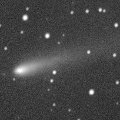
It became brighter than expected. Now it is 14.2 mag (Apr. 29, Alfons Diepvens). It will fade out rapidly after this. It will be fainter than 18 mag in August. It stays observable in good condition. Date(TT) R.A. (2000) Decl. Delta r Elong. m1 Best Time(A, h) May 2 17 16.11 -11 57.9 1.348 2.223 140 13.8 2:39 ( 0, 43) May 9 17 13.45 -11 7.6 1.328 2.247 147 13.9 2:08 ( 0, 44) |
C/2024 T5 ( ATLAS )
|
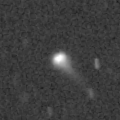
Now it is 13.9 mag (Mar. 12, ATLAS South Africa). Brightening slowly. In the Northern Hemisphere, it is not observable now, but it will appear in August. It locates somewhat low in the Southern Hemisphere. But it will become high in summer. It is expected to brighten up to 11 mag in next winter. Date(TT) R.A. (2000) Decl. Delta r Elong. m1 Best Time(A, h) May 2 3 41.25 -20 5.7 5.721 4.976 38 14.0 20:19 ( 84,-27) May 9 3 48.00 -19 11.1 5.695 4.940 38 14.0 20:27 ( 88,-32) |
C/2023 R1 ( PanSTARRS )

|
Now it is 13.9 mag (Apr. 27, Toru Yusa). It stays 15 mag for a while. It stays observable in good condition. Date(TT) R.A. (2000) Decl. Delta r Elong. m1 Best Time(A, h) May 2 19 1.15 -4 8.9 3.047 3.574 113 14.3 3:35 (341, 49) May 9 18 50.49 -4 26.7 2.929 3.578 122 14.2 3:25 (352, 50) |
C/2024 E1 ( Wierzchos )
|
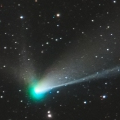
It brightened up to 6.6 mag in January (Jan. 28, Chris Wyatt). The nucleus was disintegrated in March and the comet is fading and getting diffused very rapidly. Now it is 13.5 mag (Apr. 8, Ken-ichi Kadota). Fading rapidly. It will be fainter than 18 mag in August. It will be unobservable in June. Date(TT) R.A. (2000) Decl. Delta r Elong. m1 Best Time(A, h) May 2 5 45.10 22 35.2 2.552 1.977 45 14.2 20:19 (103, 22) May 9 5 57.82 23 57.6 2.725 2.079 41 14.6 20:27 (107, 18) |
C/2014 UN271 ( Bernardinelli-Bernstein )

|
Very large comet. It is expected to brighten up to 13 mag in 2031. Now it is 14.5 mag (Apr. 25, Andrew Pearce). It stays 15 mag for a while. In the Northern Hemisphere, it is not observable now. In the Southern Hemisphere, it stays observable in good condition. In the Northern Hemisphere, it is not observable until 2030. Date(TT) R.A. (2000) Decl. Delta r Elong. m1 Best Time(A, h) May 2 5 19.21 -68 58.8 14.005 14.024 89 14.7 20:19 ( 25,-31) May 9 5 25.19 -68 43.9 13.972 14.003 89 14.7 20:27 ( 26,-33) |
C/2022 QE78 ( ATLAS )
|
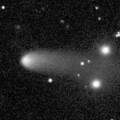
Now it is 14.7 mag (Apr. 22, Toru Yusa). It stays 15 mag for a while. It will be unobservable in July in the Southern Hemisphere, or in August in the Northern Hemisphere. Date(TT) R.A. (2000) Decl. Delta r Elong. m1 Best Time(A, h) May 2 9 8.48 31 58.2 5.666 5.734 88 14.9 20:19 ( 90, 67) May 9 9 11.55 31 52.5 5.786 5.749 82 14.9 20:27 ( 94, 60) |
C/2021 G2 ( ATLAS )

|
Now it is 15.1 mag (Apr. 25, Toru Yusa). It stays 16 mag for a while. It stays observable in good condition. Date(TT) R.A. (2000) Decl. Delta r Elong. m1 Best Time(A, h) May 2 17 27.64 12 21.3 6.025 6.708 129 15.1 2:50 ( 0, 67) May 9 17 25.75 13 4.2 6.007 6.741 133 15.2 2:20 ( 0, 68) |
C/2022 N2 ( PanSTARRS )
|
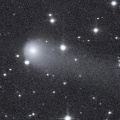
Now it is 15.3 mag (Apr. 8, Ken-ichi Kadota). It stays 16 mag for a while. It will be unobservable soon. But it will be observable again in July in the Northern Hemisphere, or in August in the Southern Hemisphere. Date(TT) R.A. (2000) Decl. Delta r Elong. m1 Best Time(A, h) May 2 4 48.30 26 26.2 5.317 4.505 32 15.2 20:19 (114, 13) May 9 4 56.83 26 35.0 5.402 4.536 28 15.2 20:27 (117, 8) |
63P/Wild 1
|
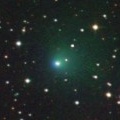
Now it is 14.7 mag (Apr. 11, Michael Jager, Gerald Rhemann). It stays 15 mag for a while. In the Northern Hemisphere, it will be getting lower gradually after this, and it will be unobservable in August. It locates somewhat low in the Southern Hemisphere. Date(TT) R.A. (2000) Decl. Delta r Elong. m1 Best Time(A, h) May 2 7 41.86 33 25.8 2.178 2.076 70 15.5 20:19 (102, 50) May 9 7 56.16 31 45.7 2.223 2.056 67 15.4 20:27 (102, 45) |
93P/Lovas 1
|
Now it is 16.0 mag (Jan. 18, Kunihiro Shima). Fading slowly. Now it is not observable. It will appear in August in the Northern Hemisphere. Date(TT) R.A. (2000) Decl. Delta r Elong. m1 Best Time(A, h) May 2 2 57.27 24 34.9 2.668 1.689 10 15.5 20:19 (128, -8) May 9 3 18.63 26 4.0 2.676 1.690 9 15.6 20:27 (131, -9) |
C/2024 R4 ( PanSTARRS )
|
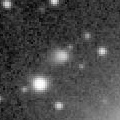
Now it is 15.7 mag (Apr. 23, ATLAS-HKO, Haleakala). It stays 15 mag for a while. In the Northern Hemisphere, it stays observable in good condition. It stays extremely low in the Southern Hemisphere. Date(TT) R.A. (2000) Decl. Delta r Elong. m1 Best Time(A, h) May 2 22 14.36 33 30.5 6.584 6.162 61 15.7 3:35 (253, 41) May 9 22 14.86 34 44.7 6.473 6.125 65 15.6 3:25 (253, 45) |
C/2025 Q3 ( ATLAS )

|
It became brighter than expected. Now it is 14.9 mag (Mar. 8, Martin Masek). It will fade out rapidly after this. It will be fainter than 18 mag in July. In the Northern Hemisphere, it will never be observable after this. It locates somewhat low in the Southern Hemisphere. Date(TT) R.A. (2000) Decl. Delta r Elong. m1 Best Time(A, h) May 2 3 52.40 -28 57.4 2.795 2.248 47 16.0 20:19 ( 73,-29) May 9 4 5.42 -30 19.4 2.792 2.277 49 16.2 20:27 ( 74,-34) |
123P/West-Hartley

|
It will brighten up to 15 mag from autumn to winter. Now it is 16.8 mag (Apr. 16, Erik Bryssinck). Brightening slowly. It will be unobservable soon in the Southern Hemisphere, or in June in the Northern Hemisphere. Date(TT) R.A. (2000) Decl. Delta r Elong. m1 Best Time(A, h) May 2 5 26.67 32 59.5 3.062 2.418 42 16.1 20:19 (115, 23) May 9 5 41.53 33 11.5 3.093 2.396 39 16.1 20:27 (117, 20) |
218P/LINEAR
|
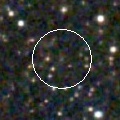
Now it is 16.3 mag (Apr. 5, ATLAS-MLO, Mauna Loa). It will fade out rapidly after this. It will be fainter than 18 mag in June. In the Northern Hemisphere, it will be getting higher gradually. In the Southern Hemisphere, it stays observable in good condition. Date(TT) R.A. (2000) Decl. Delta r Elong. m1 Best Time(A, h) May 2 22 20.67 -7 43.8 1.369 1.347 67 16.2 3:35 (293, 18) May 9 22 36.45 -6 13.8 1.374 1.394 69 16.5 3:25 (293, 19) |
240P/NEAT

|
It brightened up to 11.1 mag in winter (Nov. 15, Masayoshi Yoshimi). The component B also brightened rapidly up to 13.8 mag (Ded. 8, Masayoshi Yoshimi). Now it is 16.7 mag (Apr. 21, Kunihiro Shima). It will fade out rapidly after this. It will be fainter than 18 mag in July. It locates somewhat low in the Northern Hemisphere. In the Southern Hemisphere, it will be unobservable in June. Date(TT) R.A. (2000) Decl. Delta r Elong. m1 Best Time(A, h) May 2 6 9.90 35 36.2 2.845 2.359 51 16.2 20:19 (113, 33) May 9 6 25.75 35 48.8 2.928 2.383 48 16.4 20:27 (115, 29) |
C/2024 G6 ( ATLAS )

|
Now it is 16.2 mag (Apr. 1, ATLAS Chile). It stays 17 mag for a while. It stays observable in good condition. Date(TT) R.A. (2000) Decl. Delta r Elong. m1 Best Time(A, h) May 2 16 7.79 8 56.3 5.582 6.448 146 16.4 1:30 ( 0, 64) May 9 16 2.20 9 58.7 5.565 6.451 149 16.4 0:57 ( 0, 65) |
C/2022 R6 ( PanSTARRS )
|
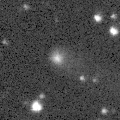
Now it is 15.9 mag (Apr. 24, Andrew Pearce). It stays 17 mag for a while. It will be getting lower gradually after this, and it will be unobservable in June in the Northern Hemisphere, or in August in the Southern Hemisphere. Date(TT) R.A. (2000) Decl. Delta r Elong. m1 Best Time(A, h) May 2 8 34.72 1 24.1 6.708 6.774 89 16.4 20:19 ( 53, 42) May 9 8 36.98 1 59.6 6.828 6.786 83 16.5 20:27 ( 62, 37) |
C/2025 Y1 ( ATLAS )
|
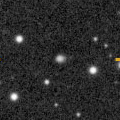
Now it is 16.3 mag (Apr. 26, ATLAS Chile). It stays 16 mag for a while. It stays observable in good condition. Date(TT) R.A. (2000) Decl. Delta r Elong. m1 Best Time(A, h) May 2 12 47.62 3 52.4 4.858 5.731 147 16.5 22:06 ( 0, 59) May 9 12 45.20 4 9.9 4.868 5.678 139 16.5 21:37 ( 0, 59) |
C/2025 J1 ( Borisov )
|
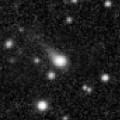
Now it is 16.9 mag (Apr. 6, ATLAS-HKO, Haleakala). It stays 17 mag for a while. In the Northern Hemisphere, it will be unobservable in June. But it will be observable again in July. In the Southern Hemisphere, it is not observable now, but it will appear in August. Date(TT) R.A. (2000) Decl. Delta r Elong. m1 Best Time(A, h) May 2 5 30.94 41 36.3 4.225 3.599 46 16.7 20:19 (123, 28) May 9 5 37.43 40 8.3 4.300 3.593 40 16.7 20:27 (124, 22) |
260P/McNaught
|
|
It will brighten up to 13 mag and will be observable in good condition from summer to autumn. Now it is 17.6 mag (Apr. 27, ATLAS Chile). It will brighten rapidly after this. It locates somewhat low in the Northern Hemisphere. But it will become high in summer. In the Southern Hemisphere, it stays observable in good condition. Date(TT) R.A. (2000) Decl. Delta r Elong. m1 Best Time(A, h) May 2 22 57.05 -16 18.9 1.978 1.755 62 17.2 3:35 (294, 5) May 9 23 14.73 -14 1.5 1.892 1.714 64 16.8 3:25 (293, 7) |
493P/2024 Q2 ( LONEOS )
|
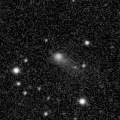
Now it is 16.8 mag (Apr. 7, Alfons Diepvens). It stays 17 mag for a while. In the Northern Hemisphere, it will be getting lower gradually after this, and it will be unobservable in July. But it will be observable again in August. In the Southern Hemisphere, it is not observable now. Date(TT) R.A. (2000) Decl. Delta r Elong. m1 Best Time(A, h) May 2 6 0.08 44 5.8 4.417 3.877 51 17.0 20:19 (124, 34) May 9 6 11.09 43 40.6 4.492 3.884 47 17.1 20:27 (125, 29) |
65P/Gunn
|
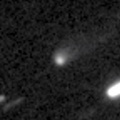
Now it is 16.9 mag (Nov. 20, Thomas Lehmann). It stays 17 mag for a while. In the Northern Hemisphere, it is not observable now, but it will be observable soon. In the Southern Hemisphere, it stays observable in good condition. Date(TT) R.A. (2000) Decl. Delta r Elong. m1 Best Time(A, h) May 2 23 48.67 -9 37.5 3.886 3.301 48 17.1 3:35 (281, -1) May 9 23 56.72 -8 53.7 3.827 3.315 52 17.1 3:25 (282, 2) |
C/2023 X2 ( Lemmon )
|
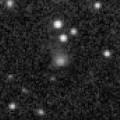
Now it is 17.5 mag (Apr. 29, Alfons Diepvens). It stays 17 mag for a while. In the Northern Hemisphere, it stays observable in good condition. In the Southern Hemisphere, it will never be observable after this. Date(TT) R.A. (2000) Decl. Delta r Elong. m1 Best Time(A, h) May 2 19 39.04 88 1.4 5.340 5.176 75 17.2 3:35 (181, 37) May 9 17 3.79 88 17.7 5.368 5.186 74 17.2 1:47 (180, 37) |
C/2025 E1 ( PanSTARRS )
|
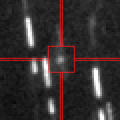
Now it is 17.0 mag (Apr. 28, ATLAS South Africa). It stays 17 mag for a while. In the Northern Hemisphere, it will never be observable after this. In the Southern Hemisphere, it stays observable in good condition. Date(TT) R.A. (2000) Decl. Delta r Elong. m1 Best Time(A, h) May 2 8 41.19 -66 9.7 3.819 4.186 104 17.2 20:19 ( 14,-15) May 9 8 36.09 -65 24.6 3.825 4.168 102 17.2 20:27 ( 18,-16) |
C/2022 E2 ( ATLAS )
|
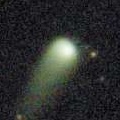
It was observed at 12-13 mag for a long time in 2024. Now it is 17.2 mag (Apr. 8, Alfons Diepvens). It stays 17 mag for a while. In the Northern Hemisphere, it will be getting higher gradually. It locates somewhat low in the Southern Hemisphere. Date(TT) R.A. (2000) Decl. Delta r Elong. m1 Best Time(A, h) May 2 23 13.56 29 55.4 6.852 6.229 48 17.2 3:35 (251, 28) May 9 23 14.40 30 14.9 6.825 6.273 53 17.2 3:25 (253, 31) |
C/2024 G4 ( PanSTARRS )

|
Now it is 17.2 mag (Mar. 12, ATLAS South Africa). It stays 17 mag for a while. It stays observable in good condition. Date(TT) R.A. (2000) Decl. Delta r Elong. m1 Best Time(A, h) May 2 20 16.73 3 38.4 4.745 4.911 93 17.3 3:35 (310, 48) May 9 20 19.09 3 52.7 4.653 4.915 99 17.3 3:25 (315, 50) |
C/2023 F3 ( ATLAS )

|
Now it is 17.0 mag (Apr. 25, Andrew Pearce). It stays 18 mag for a while. In the Northern Hemisphere, it will be getting lower gradually after this, and it will be unobservable in June. In the Southern Hemisphere, it stays observable in good condition. Date(TT) R.A. (2000) Decl. Delta r Elong. m1 Best Time(A, h) May 2 9 2.10 -9 30.4 5.954 6.191 98 17.3 20:19 ( 38, 37) May 9 9 0.72 -8 35.5 6.098 6.218 92 17.4 20:27 ( 48, 33) |
C/2019 E3 ( ATLAS )
|
Very far object. It stays 17 mag for a while. In the Northern Hemisphere, it is not observable now, but it will appear in July. In the Southern Hemisphere, it stays observable in good condition. Date(TT) R.A. (2000) Decl. Delta r Elong. m1 Best Time(A, h) May 2 0 36.22 -42 30.6 11.769 11.361 63 17.4 3:35 (305,-27) May 9 0 38.02 -42 24.7 11.712 11.377 68 17.4 3:25 (306,-24) |
A/2026 E1
|
|
Now it is 17.3 mag (Apr. 16, B. Lutkenhoner, E. Cortes). Fading slowly. It will be fainter than 18 mag soon. In the Southern Hemisphere, it stays observable in good condition. Date(TT) R.A. (2000) Decl. Delta r Elong. m1 Best Time(A, h) May 2 11 21.05 -22 24.5 2.116 2.905 133 17.5 20:40 ( 0, 33) May 9 11 16.00 -18 4.0 2.189 2.903 126 17.6 20:27 ( 6, 37) |
40P/Vaisala 1

|
It became brighter than expected, brightened up to 14.3 mag (Jan. 21, Michael Jager). Now it is 17.0 mag (Apr. 26, ATLAS Chile). Fading gradually. It will be fainter than 18 mag in June. It stays observable in good condition. Date(TT) R.A. (2000) Decl. Delta r Elong. m1 Best Time(A, h) May 2 18 1.48 -9 8.8 1.692 2.458 129 17.5 3:24 ( 0, 46) May 9 17 59.36 -9 2.8 1.671 2.500 136 17.6 2:54 ( 0, 46) |
C/2023 H5 ( Lemmon )

|
Now it is 17.3 mag (Apr. 8, Ken-ichi Kadota). It stays 18 mag for a while. In the Northern Hemisphere, it stays observable in good condition. In the Southern Hemisphere, it will never be observable after this. Date(TT) R.A. (2000) Decl. Delta r Elong. m1 Best Time(A, h) May 2 22 7.48 63 56.3 5.303 4.984 66 17.5 3:35 (212, 45) May 9 22 11.50 64 25.8 5.319 5.013 67 17.6 3:25 (210, 46) |
195P/Hill

|
Now it is 16.9 mag (Apr. 22, W. Hasubick). It stays 18 mag for a while. It locates somewhat low in the Northern Hemisphere. In the Southern Hemisphere, it stays observable in good condition. Date(TT) R.A. (2000) Decl. Delta r Elong. m1 Best Time(A, h) May 2 9 23.43 -26 36.4 4.202 4.603 107 17.5 20:19 ( 24, 24) May 9 9 26.35 -25 50.9 4.284 4.611 102 17.6 20:27 ( 31, 22) |
C/2024 A1 ( ATLAS )
|
Now it is 17.4 mag (Apr. 29, Alfons Diepvens). It stays 18 mag for a while. In the Northern Hemisphere, it will be getting lower gradually. In the Southern Hemisphere, it will never be observable after this. Date(TT) R.A. (2000) Decl. Delta r Elong. m1 Best Time(A, h) May 2 6 28.43 63 32.5 5.142 4.762 62 17.6 20:19 (147, 41) May 9 6 34.66 63 36.7 5.242 4.796 58 17.6 20:27 (147, 38) |
C/2025 M2 ( PanSTARRS )
|
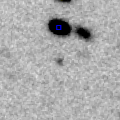
It is expected to brighten up to 12 mag from 2027 to 2028. Now it is 17.4 mag (Apr. 29, ATLAS Chile). Brightening slowly. In the Southern Hemisphere, it stays observable in good condition. Date(TT) R.A. (2000) Decl. Delta r Elong. m1 Best Time(A, h) May 2 21 5.29 -16 30.7 5.987 6.025 87 17.7 3:35 (314, 24) May 9 21 3.77 -16 33.7 5.809 5.974 94 17.6 3:25 (318, 27) |
C/2025 T1 ( ATLAS )

|
It brightened up to 9.0 mag from late November to early December (Nov. 22, Thomas Lehmann). Now it is 17.8 mag (Apr. 25, J. L. Virlichie, P. Traverse, H. Roy). It will fade out rapidly after this. It will be fainter than 18 mag soon. In the Northern Hemisphere, it will never be observable after this. In the Southern Hemisphere, it stays observable in good condition. Date(TT) R.A. (2000) Decl. Delta r Elong. m1 Best Time(A, h) May 2 22 40.55 -34 30.4 2.546 2.478 74 17.6 3:35 (310, -3) May 9 22 42.77 -37 12.2 2.501 2.558 81 17.9 3:25 (315, -3) |
C/2025 V2 ( Rankin )
|
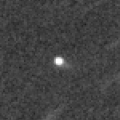
It is expected to brighten up to 12.5 mag in 2027 spring. Now it is 17.2 mag (Apr. 28, Alfons Diepvens). Brightening slowly. It will be getting lower gradually after this, and it will be unobservable in August. Date(TT) R.A. (2000) Decl. Delta r Elong. m1 Best Time(A, h) May 2 9 3.20 23 3.5 4.002 4.132 90 17.7 20:19 ( 72, 62) May 9 9 5.59 23 14.2 4.050 4.071 84 17.6 20:27 ( 80, 55) |
C/2026 A2 ( Bok )
|
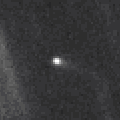
It will brighten up to 14 mag from autumn to winter. Now it is 17.5 mag (Apr. 28, ATLAS-MLO, Mauna Loa). Brightening gradually. In the Northern Hemisphere, it stays observable in good condition. In the Southern Hemisphere, it is not observable now. Date(TT) R.A. (2000) Decl. Delta r Elong. m1 Best Time(A, h) May 2 18 30.66 64 28.2 3.205 3.339 88 17.8 3:35 (184, 60) May 9 18 32.17 66 46.5 3.163 3.279 87 17.7 3:25 (180, 58) |
C/2024 G2 ( ATLAS )

|
Now it is 17.5 mag (Apr. 23, L. Grazzini). It stays 18 mag for a while. In the Northern Hemisphere, it will be getting lower gradually. In the Southern Hemisphere, it stays observable in good condition. Date(TT) R.A. (2000) Decl. Delta r Elong. m1 Best Time(A, h) May 2 10 55.10 9 49.0 5.281 5.850 119 17.8 20:19 ( 3, 65) May 9 10 52.46 10 40.5 5.413 5.871 112 17.9 20:27 ( 25, 64) |
C/2020 V2 ( ZTF )
|
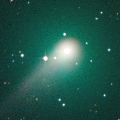
It was observed at 9-10 mag for a long time in 2023. It stays 18 mag for a while. In the Northern Hemisphere, it will never be observable after this. In the Southern Hemisphere, it stays observable in good condition. Date(TT) R.A. (2000) Decl. Delta r Elong. m1 Best Time(A, h) May 2 20 16.10 -69 29.5 9.581 9.905 105 17.9 3:35 (349,-17) May 9 20 12.29 -70 4.0 9.556 9.952 110 17.9 3:25 (351,-17) |
43P/Wolf-Harrington
|
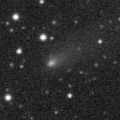
Now it is 17.5 mag (Apr. 24, ATLAS-MLO, Mauna Loa). Fading gradually. It will be fainter than 18 mag soon. In the Northern Hemisphere, it will be getting lower gradually. In the Southern Hemisphere, it stays observable in good condition. Date(TT) R.A. (2000) Decl. Delta r Elong. m1 Best Time(A, h) May 2 10 39.62 -3 5.3 2.432 3.072 120 17.9 20:19 ( 8, 51) May 9 10 42.04 -2 48.9 2.539 3.099 114 18.0 20:27 ( 21, 50) |
C/2026 C1 ( Tsuchinshan )
|
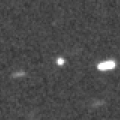
It is expected to brighten up to 4 mag in 2028 autumn. Now it is 17.5 mag (Apr. 19, Alfons Diepvens). It stays 18 mag for a while. In the Northern Hemisphere, it will be getting lower gradually after this, and it will be unobservable in August. In the Southern Hemisphere, it stays observable in good condition. At the high light, it is observable in excellent condition in the Southern Hemisphere. In the Northern Hemisphere, it becomes observable after the perihelion passage. Date(TT) R.A. (2000) Decl. Delta r Elong. m1 Best Time(A, h) May 2 12 17.88 7 46.3 8.608 9.391 138 17.9 21:37 ( 0, 63) May 9 12 15.23 7 50.0 8.636 9.339 131 17.9 21:07 ( 0, 63) |
P/2021 N1 ( ZTF )
|
|
First return of a new periodic comet which brightened up to 17 mag in 2021. It will approach to Earth down to 0.17 a.u. from June to July. It is expected to brighten up to 14 mag. Brightening rapidly. It stays extremely low in the Northern Hemisphere. But it will become high in summer. In the Southern Hemisphere, it stays observable in good condition. Date(TT) R.A. (2000) Decl. Delta r Elong. m1 Best Time(A, h) May 2 17 54.20 -47 8.5 0.666 1.512 128 18.4 3:16 ( 0, 8) May 9 18 15.33 -48 43.3 0.577 1.449 129 17.9 3:10 ( 0, 6) |
(15504) 1999 RG33
|
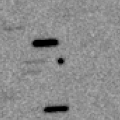
Peculiar asteroid moving along a cometary orbit. Now it is 17.8 mag (Apr. 12, John Maikner). It stays 18 mag for a while. It stays observable in good condition. Date(TT) R.A. (2000) Decl. Delta r Elong. m1 Best Time(A, h) May 2 13 6.09 -7 28.7 3.001 3.947 156 17.9 22:25 ( 0, 47) May 9 13 0.54 -7 36.3 3.001 3.899 148 18.0 21:52 ( 0, 47) |
C/2024 J4 ( Lemmon )

|
Now it is 17.6 mag (Apr. 27, Yasukazu Ikari). Fading slowly. It will be fainter than 18 mag soon. It stays observable in good condition. Date(TT) R.A. (2000) Decl. Delta r Elong. m1 Best Time(A, h) May 2 13 55.48 6 38.3 5.347 6.281 156 17.9 23:14 ( 0, 62) May 9 13 48.76 6 29.6 5.407 6.302 150 18.0 22:40 ( 0, 61) |
(248590) 2006 CS

|
It seems to be a parent of the beta-Tucanids meteor shower. Now it is 17.7 mag (Apr. 12, Guy Wells). Fading gradually. In the Northern Hemisphere, it stays observable in good condition. In the Southern Hemisphere, it is not observable now. Date(TT) R.A. (2000) Decl. Delta r Elong. m1 Best Time(A, h) May 2 16 49.09 82 23.2 0.750 1.160 81 18.1 2:09 (180, 43) May 9 16 22.49 80 13.0 0.846 1.224 82 18.4 1:15 (180, 45) |
C/2025 L1 ( ATLAS )

|
It was expected to brighten up to 13.5 mag. But actually, the nucleus was disintegrated and it is getting diffuse and fading very rapidly. Now it is 17.3 mag (Apr. 8, Toru Yusa). In the Northern Hemisphere, it stays observable in good condition. It stays extremely low in the Southern Hemisphere. Date(TT) R.A. (2000) Decl. Delta r Elong. m1 Best Time(A, h) May 2 12 38.25 51 54.4 1.661 2.196 108 18.9 21:55 (180, 73) May 9 12 17.85 52 56.6 1.824 2.252 101 19.3 21:08 (180, 72) |
489P/Denning
|
|
It had been lost for 113 years. It must have passed the perihelion on Dec. 4. It brightened up to 18 mag in outburst in 2007. Fading gradually. It stays observable in good condition. Date(TT) R.A. (2000) Decl. Delta r Elong. m1 Best Time(A, h) May 2 12 45.14 -5 27.5 1.269 2.206 151 22.0 22:04 ( 0, 49) May 9 12 43.71 -5 33.7 1.356 2.253 144 22.3 21:35 ( 0, 49) |
C/2026 A1 ( MAPS )
|
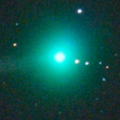
Kreutz sungrazer comet discovered furthest from Sun in history. It approached to Sun down to 0.005 a.u. on Apr. 4. It brightened up to 7.7 mag until it set down under the horizon before the perihelion passage (Mar. 29, Chris Wyatt). It brightened up to about -1 mag in the SOHO spacecraft images (Apr. 4, Robert Pickard). However, the comet has disappeared at the perihelion passage. It is appearing in the evening sky again in calculation, however, probably nothing remained. Date(TT) R.A. (2000) Decl. Delta r Elong. m1 Best Time(A, h) May 2 4 55.84 1 42.1 1.587 0.993 37 31.2 20:19 ( 92, 1) May 9 5 19.31 1 28.0 1.788 1.157 37 33.4 20:27 ( 93, -2) |