Weekly Information about Bright Comets (2026 Sept. 19: North)
|
Japanese version Home page |
Updated on September 22, 2026 |
|||
|
||||
|
Best time and the azimuth, altitude (A,h) are at lat. 35 deg in the Northern Hemisphere. Azimuth indicates 0 for south, 90 for west, 180 for north, 270 for east. |

|
|
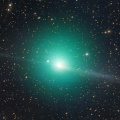
Now it is 8.9 mag (Sept. 17, Yoshimi Nagai). It will fade out rapidly after this. It locates somewhat low in the Northern Hemisphere. But it will become high in autumn. In the Southern Hemisphere, it stays observable in good condition. Date(TT) R.A. (2000) Decl. Delta r Elong. m1 Best Time(A, h) Sept.19 22 36.05 -35 3.2 0.574 1.504 143 9.2 22:44 ( 0, 20) Sept.26 22 42.51 -34 23.8 0.623 1.530 139 9.5 22:23 ( 0, 21) |
 169P/NEAT
|
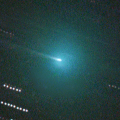
It approached to Earth down to 0.17 a.u. mid August. Now it is 11.0 mag (Sept. 9, Mike Olason). It will fade out rapidly after this. It will be fainter than 18 mag in November. It locates somewhat low in the Northern Hemisphere. It stays extremely low in the Southern Hemisphere. Date(TT) R.A. (2000) Decl. Delta r Elong. m1 Best Time(A, h) Sept.19 9 33.70 8 3.9 0.585 0.606 33 10.3 4:20 (269, 12) Sept.26 9 43.42 5 43.9 0.711 0.611 37 10.8 4:26 (274, 16) |
161P/Hartley-IRAS
|
Now it is 11.5 mag (Sept. 9, Michael Jager). Brightening slowly. In the Northern Hemisphere, it stays observable in good condition. In the Southern Hemisphere, it will be getting lower gradually after this, and it will be unobservable in November. Date(TT) R.A. (2000) Decl. Delta r Elong. m1 Best Time(A, h) Sept.19 1 26.37 -14 53.4 0.620 1.578 151 11.6 1:39 ( 0, 40) Sept.26 0 21.79 -10 50.5 0.530 1.525 167 10.9 0:09 ( 0, 44) |
220P/McNaught
|
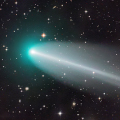
Major outburst of about 9 mag occured from May 31 to June 1, and it brightened up to 8.3 mag (June 3, Marco Goiato). Another major outburst occued on Aug. 5 and it brightened up to 6.4 mag (Aug. 6, Taras Prystavski). Now it is 11.6 mag (Sept. 21, Osamu Miyazaki). Fading rapidly. It will be fainter than 18 mag in November. It stays observable in good condition. Date(TT) R.A. (2000) Decl. Delta r Elong. m1 Best Time(A, h) Sept.19 3 31.57 7 21.1 1.058 1.809 122 11.6 3:42 ( 0, 62) Sept.26 3 33.08 6 32.6 1.039 1.842 128 12.2 3:16 ( 0, 62) |
C/2024 T5 ( ATLAS )
|
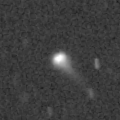
Now it is 12.9 mag (Sept. 3, Jean-Gabriel Bosch). It stays 13 mag for a while. It stays observable in good condition. Date(TT) R.A. (2000) Decl. Delta r Elong. m1 Best Time(A, h) Sept.19 5 41.04 -13 12.7 4.188 4.327 91 13.0 4:20 (332, 37) Sept.26 5 43.45 -13 20.4 4.076 4.299 96 12.9 4:26 (341, 40) |
260P/McNaught
|
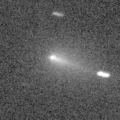
Now it is 13.4 mag (Sept. 8, M. Jaeger, G. Rhemann, E. Prosperi). It will fade out rapidly after this. In the Northern Hemisphere, it stays observable in good condition. It stays extremely low in the Southern Hemisphere. Date(TT) R.A. (2000) Decl. Delta r Elong. m1 Best Time(A, h) Sept.19 5 18.22 39 45.3 1.053 1.504 93 13.2 4:20 (246, 76) Sept.26 5 34.46 41 35.8 1.039 1.532 97 13.3 4:26 (233, 78) |
88P/Howell
|
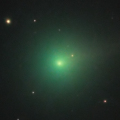
It brightened up to 9.6 mag in the very low sky in spring (Apr. 14, Chris Wyatt). Now it is 14.1 mag (Sept. 13, Ken-ichi Kadota). It will fade out rapidly after this. It stays observable in good condition. Date(TT) R.A. (2000) Decl. Delta r Elong. m1 Best Time(A, h) Sept.19 3 15.64 15 1.0 1.541 2.273 125 13.3 3:26 ( 0, 70) Sept.26 3 12.40 14 54.0 1.518 2.319 132 13.4 2:55 ( 0, 70) |
78P/Gehrels 2
|
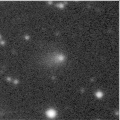
Now it is 13.6 mag (Sept. 8, M. Jaeger, G. Rhemann, E. Prosperi). It stays 14 mag for a while. In the Northern Hemisphere, it stays observable in good condition. Date(TT) R.A. (2000) Decl. Delta r Elong. m1 Best Time(A, h) Sept.19 7 1.00 18 16.2 2.222 2.124 71 13.3 4:20 (283, 49) Sept.26 7 12.88 17 36.2 2.167 2.143 75 13.3 4:26 (288, 53) |
C/2024 J3 ( ATLAS )
|
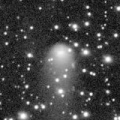
Now it is 14.0 mag (Sept. 17, Yoshimi Nagai). It stays 14 mag for a while. In the Northern Hemisphere, it stays observable in good condition. In the Southern Hemisphere, it will be unobservable in October. Date(TT) R.A. (2000) Decl. Delta r Elong. m1 Best Time(A, h) Sept.19 18 27.97 42 39.0 3.661 3.910 96 13.6 19:26 (131, 77) Sept.26 18 26.28 42 17.4 3.704 3.901 93 13.6 19:15 (123, 75) |
C/2026 A2 ( Bok )
|
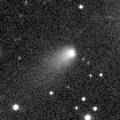
Now it is 14.3 mag (Sept. 17, Kunihiro Shima). Brightening slowly. In the Northern Hemisphere, it stays observable in good condition. In the Southern Hemisphere, it is not observable now, but it will appear in November. Date(TT) R.A. (2000) Decl. Delta r Elong. m1 Best Time(A, h) Sept.19 17 16.58 71 51.0 2.083 2.253 86 14.2 19:26 (166, 50) Sept.26 17 41.55 70 12.0 1.996 2.211 88 14.0 19:15 (165, 52) |
29P/Schwassmann-Wachmann 1
|
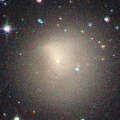
Now it is 13.6 mag (Aug. 2, Andrew Pearce). Now it is not observable. It will appear in October in the Northern Hemisphere, or in November in the Southern Hemisphere. Date(TT) R.A. (2000) Decl. Delta r Elong. m1 Best Time(A, h) Sept.19 11 56.06 -6 21.9 7.310 6.318 8 14.3 19:26 ( 97,-21) Sept.26 12 0.82 -6 55.1 7.314 6.318 6 14.3 4:26 (265,-20) |
C/2014 UN271 ( Bernardinelli-Bernstein )

|
Very large comet. Now it is 13.9 mag (Aug. 16, Thomas Lehmann). It stays 14 mag for a while. In the Northern Hemisphere, it is not observable now. In the Southern Hemisphere, it stays observable in good condition. In the Northern Hemisphere, it is not observable until 2030. Date(TT) R.A. (2000) Decl. Delta r Elong. m1 Best Time(A, h) Sept.19 7 27.77 -70 58.7 13.685 13.607 83 14.5 4:20 (345,-22) Sept.26 7 32.13 -71 24.6 13.680 13.587 82 14.5 4:26 (347,-20) |
252P/LINEAR

|
It has not been observed yet in this apparition. It has brightened up to 4 mag in 2016, and 10 mag in 2021. Brightening rapidly. It stays extremely low in the Northern Hemisphere. In the Southern Hemisphere, it will be unobservable in October. But it will be observable again in January. Date(TT) R.A. (2000) Decl. Delta r Elong. m1 Best Time(A, h) Sept.19 9 40.50 7 26.4 1.952 1.212 31 15.2 4:20 (268, 10) Sept.26 10 8.06 5 19.9 1.903 1.163 30 14.5 4:26 (271, 10) |
C/2024 R4 ( PanSTARRS )
|
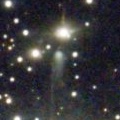
Now it is 14.4 mag (Sept. 5, Alfons Diepvens). It stays 14 mag for a while. In the Northern Hemisphere, it stays observable in good condition. In the Southern Hemisphere, it will be unobservable in November. Date(TT) R.A. (2000) Decl. Delta r Elong. m1 Best Time(A, h) Sept.19 20 11.28 48 29.3 5.014 5.470 111 14.6 20:18 (180, 76) Sept.26 20 3.64 47 50.7 5.020 5.438 109 14.6 19:42 (180, 77) |
C/2023 R1 ( PanSTARRS )
|
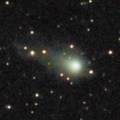
Now it is 14.7 mag (Sept. 7, Andrew Pearce). It stays 15 mag for a while. It will be unobservable in October in the Northern Hemisphere, or in November in the Southern Hemisphere. But it will be observable again in December. Date(TT) R.A. (2000) Decl. Delta r Elong. m1 Best Time(A, h) Sept.19 15 27.46 -16 40.2 4.285 3.848 58 14.6 19:26 ( 57, 15) Sept.26 15 27.17 -17 16.5 4.420 3.872 51 14.7 19:15 ( 59, 11) |
123P/West-Hartley

|
It stays 15 mag for a while. It locates somewhat low in the Northern Hemisphere. But it will become high in winter. In the Southern Hemisphere, it is not observable now, but it will appear in November. Date(TT) R.A. (2000) Decl. Delta r Elong. m1 Best Time(A, h) Sept.19 10 53.68 18 19.8 3.069 2.159 20 15.0 4:20 (249, 2) Sept.26 11 8.77 16 46.0 3.044 2.159 23 14.9 4:26 (253, 5) |
63P/Wild 1
|
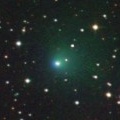
It brightened up to 13.0 mag in early summer (July 3, Thomas Lehmann). It will fade out rapidly after this. It will be fainter than 18 mag in December. Now it is not observable. It will appear in December. Date(TT) R.A. (2000) Decl. Delta r Elong. m1 Best Time(A, h) Sept.19 12 32.12 -8 44.8 3.055 2.106 15 15.1 19:26 ( 89,-14) Sept.26 12 46.21 -10 52.4 3.093 2.131 13 15.3 19:15 ( 88,-16) |
112P/Urata-Niijima
|
Now it is 16.8 mag (Sept. 19, Francois Kugel). Fading slowly. In the Northern Hemisphere, it stays observable in good condition. In the Southern Hemisphere, it will be unobservable in November. Date(TT) R.A. (2000) Decl. Delta r Elong. m1 Best Time(A, h) Sept.19 6 18.16 32 59.0 1.184 1.442 81 15.7 4:20 (265, 64) Sept.26 6 42.99 35 25.7 1.151 1.442 83 15.5 4:26 (261, 66) |
C/2022 QE78 ( ATLAS )
|
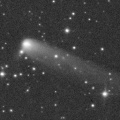
Now it is 15.5 mag (June 14, Alfons Diepvens). It stays 16 mag for a while. In the Northern Hemisphere, it will be getting higher gradually. In the Southern Hemisphere, it is not observable now, but it will appear in November. Date(TT) R.A. (2000) Decl. Delta r Elong. m1 Best Time(A, h) Sept.19 11 0.27 26 50.0 6.986 6.110 27 15.6 4:20 (241, 6) Sept.26 11 6.55 26 38.5 6.965 6.132 31 15.6 4:26 (245, 11) |
C/2025 Y1 ( ATLAS )
|
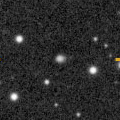
Now it is 16.1 mag (Aug. 5, Ken-ichi Kadota). Brightening slowly. It will be unobservable soon. But it will be observable again in November in the Northern Hemisphere, or in December in the Southern Hemisphere. Date(TT) R.A. (2000) Decl. Delta r Elong. m1 Best Time(A, h) Sept.19 13 29.66 -0 50.5 5.555 4.677 26 15.9 19:26 ( 88, 2) Sept.26 13 36.04 -1 25.6 5.541 4.624 21 15.9 19:15 ( 89, -1) |
C/2022 N2 ( PanSTARRS )
|
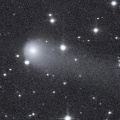
Now it is 15.9 mag (Sept. 1, ATLAS-HKO, Haleakala). It stays 16 mag for a while. In the Northern Hemisphere, it stays observable in good condition. It locates somewhat low in the Southern Hemisphere. Date(TT) R.A. (2000) Decl. Delta r Elong. m1 Best Time(A, h) Sept.19 7 18.43 25 46.2 5.501 5.211 68 15.9 4:20 (270, 49) Sept.26 7 22.71 25 39.5 5.437 5.249 73 15.9 4:26 (274, 55) |
C/2025 M2 ( PanSTARRS )
|
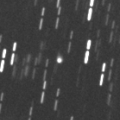
It is expected to brighten up to 12 mag from 2027 to 2028. Now it is 15.9 mag (Aug. 28, Jean-Claude Merlin). It stays 16 mag for a while. It will be getting lower gradually after this, and it will be unobservable in December. Date(TT) R.A. (2000) Decl. Delta r Elong. m1 Best Time(A, h) Sept.19 18 53.91 -21 20.0 4.609 4.993 106 16.0 19:26 ( 7, 33) Sept.26 18 49.15 -21 23.6 4.686 4.941 98 16.0 19:15 ( 13, 33) |
C/2021 G2 ( ATLAS )

|
Now it is 15.8 mag (Aug. 25, Toru Yusa). It stays 17 mag for a while. In the Northern Hemisphere, it will be getting lower gradually. But it will be getting higher again after December. In the Southern Hemisphere, it will be getting lower gradually after this, and it will be unobservable in November. Date(TT) R.A. (2000) Decl. Delta r Elong. m1 Best Time(A, h) Sept.19 17 3.49 13 27.4 7.515 7.402 79 16.1 19:26 ( 63, 53) Sept.26 17 5.79 13 7.9 7.638 7.437 74 16.2 19:15 ( 66, 50) |
114P/Wiseman-Skiff
|
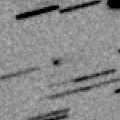
Now it is 16.8 mag (Sept. 20, Catalina Sky Survey). Fading slowly. In the Northern Hemisphere, it stays observable in good condition. It locates somewhat low in the Southern Hemisphere. But it will become high in autumn. Date(TT) R.A. (2000) Decl. Delta r Elong. m1 Best Time(A, h) Sept.19 8 5.40 21 34.0 1.878 1.571 56 16.3 4:20 (268, 37) Sept.26 8 24.32 19 23.6 1.840 1.575 58 16.3 4:26 (273, 39) |
C/2025 R3 ( PanSTARRS )
|
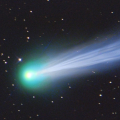
It brightened up to 4.0 mag in late April (Apr. 30, Chris Wyatt). It brightened up to 1.3 mag due to the forward scattering in the SOHO LASCO images (Apr. 25, Mikolaj Kaszczyk). It faded down to 13.4 mag until summer (Aug. 15, Thomas Lehmann). Fading gradually. It will be fainter than 18 mag in November. It locates somewhat low in the Northern Hemisphere. In the Southern Hemisphere, it stays observable in good condition. Date(TT) R.A. (2000) Decl. Delta r Elong. m1 Best Time(A, h) Sept.19 7 36.63 -23 19.5 2.990 2.724 65 16.5 4:20 (312, 14) Sept.26 7 34.57 -24 45.4 2.992 2.817 70 16.7 4:26 (320, 18) |
84P/Giclas
|
Now it is 16.7 mag (Sept. 9, Andrew Pearce). It stays 16 mag for a while. It locates somewhat low in the Northern Hemisphere. In the Southern Hemisphere, it stays observable in good condition. Date(TT) R.A. (2000) Decl. Delta r Elong. m1 Best Time(A, h) Sept.19 20 15.26 -26 27.9 1.439 2.169 124 16.6 20:23 ( 0, 29) Sept.26 20 16.71 -26 30.3 1.475 2.134 117 16.6 19:57 ( 0, 29) |
C/2025 J1 ( Borisov )
|
Now it is 17.9 mag (Sept. 17, Kunihiro Shima). It stays 17 mag for a while. In the Northern Hemisphere, it stays observable in good condition. In the Southern Hemisphere, it will be getting higher gradually. Date(TT) R.A. (2000) Decl. Delta r Elong. m1 Best Time(A, h) Sept.19 7 14.76 16 7.9 3.952 3.691 67 16.7 4:20 (283, 45) Sept.26 7 15.66 14 36.8 3.852 3.707 74 16.6 4:26 (291, 50) |
65P/Gunn
|
Now it is 17.7 mag (Sept. 10, Andrew Pearce). Fading slowly. It stays observable in good condition. Date(TT) R.A. (2000) Decl. Delta r Elong. m1 Best Time(A, h) Sept.19 0 37.53 -7 48.4 2.621 3.603 165 16.7 0:48 ( 0, 47) Sept.26 0 32.81 -8 12.5 2.629 3.618 169 16.7 0:16 ( 0, 47) |
C/2026 AZ17 ( Bok )
|
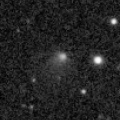
Now it is 16.7 mag (Sept. 5, Alfons Diepvens). It stays 17 mag for a while. It will be getting lower gradually after this, and it will be unobservable in January in the Northern Hemisphere, or in December in the Southern Hemisphere. Date(TT) R.A. (2000) Decl. Delta r Elong. m1 Best Time(A, h) Sept.19 17 4.75 6 49.6 2.546 2.569 79 16.7 19:26 ( 55, 48) Sept.26 17 14.50 4 52.5 2.592 2.550 76 16.7 19:15 ( 55, 46) |
2P/Encke
|
|
It will brighten up to 6-7 mag from January to February. Now it is 17.0 mag (Sept. 20, Alfons Diepvens). It will brighten rapidly after this. In the Northern Hemisphere, it stays observable in good condition. In the Southern Hemisphere, it will be getting lower gradually after this, and it will be unobservable in January. Date(TT) R.A. (2000) Decl. Delta r Elong. m1 Best Time(A, h) Sept.19 1 11.66 20 29.2 1.347 2.269 149 17.4 1:23 ( 0, 76) Sept.26 1 0.30 20 21.7 1.243 2.201 156 17.0 0:44 ( 0, 76) |
C/2025 E1 ( PanSTARRS )
|
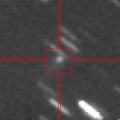
Now it is 17.6 mag (Sept. 12, ATLAS Chile). It stays 17 mag for a while. In the Northern Hemisphere, it will never be observable after this. In the Southern Hemisphere, it stays observable in good condition. Date(TT) R.A. (2000) Decl. Delta r Elong. m1 Best Time(A, h) Sept.19 11 14.57 -73 39.7 4.130 3.998 75 17.1 4:20 (340,-38) Sept.26 11 38.86 -75 11.6 4.151 3.998 74 17.1 4:26 (342,-37) |
493P/2024 Q2 ( LONEOS )
|
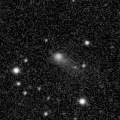
Now it is 17.6 mag (May 18, Kunihiro Shima). It stays 17 mag for a while. In the Northern Hemisphere, it will be getting higher gradually. In the Southern Hemisphere, it is not observable now, but it will appear in November. Date(TT) R.A. (2000) Decl. Delta r Elong. m1 Best Time(A, h) Sept.19 9 31.47 33 12.6 4.755 4.096 44 17.1 4:20 (246, 25) Sept.26 9 39.67 32 40.9 4.702 4.111 48 17.1 4:26 (249, 30) |
C/2024 G6 ( ATLAS )
|
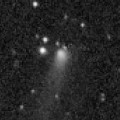
Now it is 17.3 mag (Sept. 1, ATLAS-HKO, Haleakala). It stays 17 mag for a while. It locates somewhat low in the Northern Hemisphere. But it will become high in winter. In the Southern Hemisphere, it will be unobservable in October. But it will be observable again in January. Date(TT) R.A. (2000) Decl. Delta r Elong. m1 Best Time(A, h) Sept.19 15 8.58 15 12.0 7.155 6.586 52 17.1 19:26 ( 87, 31) Sept.26 15 10.22 15 8.8 7.232 6.596 47 17.2 19:15 ( 89, 28) |
C/2022 E2 ( ATLAS )
|
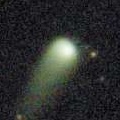
It was observed at 12-13 mag for a long time in 2024. Now it is 17.3 mag (Sept. 5, Toru Yusa). Fading slowly. It will be fainter than 18 mag in November. In the Northern Hemisphere, it stays observable in good condition. It locates somewhat low in the Southern Hemisphere. Date(TT) R.A. (2000) Decl. Delta r Elong. m1 Best Time(A, h) Sept.19 22 4.62 27 9.2 6.290 7.113 142 17.3 22:11 ( 0, 82) Sept.26 21 59.86 26 10.5 6.361 7.158 139 17.4 21:39 ( 0, 81) |
P/2018 VN2 = P/2026 M2 ( Leonard )
|
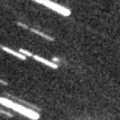
First return of a new periodic comet which was observed at 18 mag in 2018. Now it is 17.2 mag (Sept. 5, ATLAS-MLO, Mauna Loa). Fading slowly. It will be fainter than 18 mag in December. In the Northern Hemisphere, it stays observable in good condition. Date(TT) R.A. (2000) Decl. Delta r Elong. m1 Best Time(A, h) Sept.19 2 5.44 27 28.8 1.304 2.138 135 17.4 2:16 ( 0, 83) Sept.26 2 5.49 26 37.7 1.264 2.146 142 17.3 1:48 ( 0, 82) |
C/2024 G4 ( PanSTARRS )

|
Now it is 17.6 mag (Sept. 16, ATLAS Chile). It stays 18 mag for a while. It stays observable in good condition. Date(TT) R.A. (2000) Decl. Delta r Elong. m1 Best Time(A, h) Sept.19 20 0.54 -4 27.6 4.467 5.098 124 17.3 20:08 ( 0, 51) Sept.26 20 1.42 -5 13.0 4.568 5.113 117 17.4 19:41 ( 0, 50) |
C/2019 E3 ( ATLAS )
|
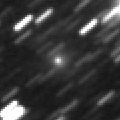
Very far object. It stays 18 mag for a while. It stays extremely low in the Northern Hemisphere. In the Southern Hemisphere, it stays observable in good condition. Date(TT) R.A. (2000) Decl. Delta r Elong. m1 Best Time(A, h) Sept.19 0 14.77 -45 23.8 10.944 11.686 135 17.4 0:26 ( 0, 10) Sept.26 0 10.94 -45 21.9 10.988 11.703 133 17.4 23:50 ( 0, 10) |
93P/Lovas 1
|
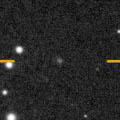
It stays 18 mag for a while. In the Northern Hemisphere, it will be getting higher gradually. In the Southern Hemisphere, it is not observable now, but it will appear in October. Date(TT) R.A. (2000) Decl. Delta r Elong. m1 Best Time(A, h) Sept.19 9 28.85 20 57.2 2.882 2.183 38 17.4 4:20 (258, 20) Sept.26 9 41.77 19 44.3 2.871 2.224 41 17.5 4:26 (262, 24) |
11P/Tempel-Swift-LINEAR
|
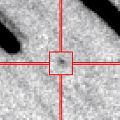
Now it is 17.5 mag (Sept. 20, Alfons Diepvens). It will brighten rapidly after this. In the Northern Hemisphere, it stays observable in good condition. It locates somewhat low in the Southern Hemisphere. But it will become high in autumn. Date(TT) R.A. (2000) Decl. Delta r Elong. m1 Best Time(A, h) Sept.19 1 37.73 38 58.3 0.631 1.500 131 17.8 1:48 (180, 86) Sept.26 1 48.44 39 33.5 0.580 1.473 135 17.5 1:31 (180, 85) |
188P/LINEAR-Mueller

|
Now it is 17.9 mag (Aug. 24, W. Hasubick). It stays 18 mag for a while. In the Northern Hemisphere, it stays observable in good condition. It stays extremely low in the Southern Hemisphere. Date(TT) R.A. (2000) Decl. Delta r Elong. m1 Best Time(A, h) Sept.19 6 1.31 33 44.5 2.658 2.767 85 17.5 4:20 (265, 67) Sept.26 6 8.94 34 11.7 2.587 2.786 90 17.5 4:26 (267, 72) |
235P/LINEAR
|
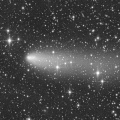
It became brighter than expected. It was observed at 13 mag from winter to spring. Now it is 17.2 mag (Aug. 30, ATLAS South Africa). Fading gradually. It will be fainter than 18 mag in October. It locates somewhat low in the Northern Hemisphere. In the Southern Hemisphere, it will be getting lower gradually. Date(TT) R.A. (2000) Decl. Delta r Elong. m1 Best Time(A, h) Sept.19 17 17.55 -13 5.3 2.713 2.791 83 17.6 19:26 ( 36, 34) Sept.26 17 25.76 -13 30.3 2.832 2.821 79 17.8 19:15 ( 38, 33) |
P/2021 N1 = P/2026 M1 ( ZTF )
|
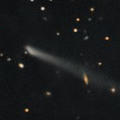
First return of a new periodic comet which brightened up to 17 mag in 2021. It approached to Earth down to 0.17 a.u. from June to July. It brightened up to 15.2 mag (July 14, Andrew Pearce). Now it is 17.4 mag (Sept. 7, Toru Yusa). It will fade out rapidly after this. It will be fainter than 18 mag in October. In the Northern Hemisphere, it stays observable in good condition. It stays extremely low in the Southern Hemisphere. Date(TT) R.A. (2000) Decl. Delta r Elong. m1 Best Time(A, h) Sept.19 5 3.67 46 57.3 0.586 1.212 95 17.6 4:20 (216, 74) Sept.26 5 6.21 47 37.4 0.605 1.269 101 17.9 4:26 (197, 77) |
C/2025 B2 ( Borisov )

|
Now it is 17.3 mag (Sept. 4, ATLAS-MLO, Mauna Loa). It stays 18 mag for a while. In the Northern Hemisphere, it stays observable in good condition. In the Southern Hemisphere, it will never be observable after this. Date(TT) R.A. (2000) Decl. Delta r Elong. m1 Best Time(A, h) Sept.19 16 42.87 76 53.4 8.267 8.239 84 17.6 19:26 (168, 45) Sept.26 16 48.61 75 42.5 8.246 8.239 86 17.6 19:15 (166, 45) |
C/2023 X2 ( Lemmon )
|
Now it is 17.8 mag (July 6, ATLAS-MLO, Mauna Loa). It stays 18 mag for a while. In the Northern Hemisphere, it will be getting lower gradually. But it will be getting higher again after November. In the Southern Hemisphere, it will never be observable after this. Date(TT) R.A. (2000) Decl. Delta r Elong. m1 Best Time(A, h) Sept.19 14 43.65 57 50.1 5.795 5.469 66 17.7 19:26 (139, 40) Sept.26 14 51.55 56 20.8 5.819 5.488 66 17.7 19:15 (138, 39) |
346P/Catalina
|
|
It stays 18 mag for a while. In the Northern Hemisphere, it stays observable in good condition. It locates somewhat low in the Southern Hemisphere. Date(TT) R.A. (2000) Decl. Delta r Elong. m1 Best Time(A, h) Sept.19 8 1.40 18 26.9 2.634 2.252 57 18.0 4:20 (272, 37) Sept.26 8 14.69 18 33.0 2.575 2.263 60 17.9 4:26 (275, 41) |
C/2026 P2 ( PanSTARRS )
|
|
It is expected to brighten up to 13.5 mag from late 2027 to early 2028. At the high light, it will be observable in good condition in the Northern Hemisphere. But it will not be observable in the Southern Hemisphere. Now it is 17.4 mag (Aug. 24, Hidenori Nohara). It stays 18 mag for a while. It stays observable in good condition. Date(TT) R.A. (2000) Decl. Delta r Elong. m1 Best Time(A, h) Sept.19 1 46.28 -2 2.2 4.072 4.964 149 18.0 1:57 ( 0, 53) Sept.26 1 41.19 -1 58.3 3.972 4.910 156 17.9 1:24 ( 0, 53) |