Weekly Information about Bright Comets (2026 Oct. 31: North)
|
Japanese version Home page |
Updated on November 2, 2026 |
|||
|
||||
|
Best time and the azimuth, altitude (A,h) are at lat. 35 deg in the Northern Hemisphere. Azimuth indicates 0 for south, 90 for west, 180 for north, 270 for east. |

|

|
Now it is 10.3 mag (Oct. 29, Chris Wyatt). It will fade out rapidly after this. In the Northern Hemisphere, it will be getting lower gradually. But it will be getting higher again after January. In the Southern Hemisphere, it will be unobservable soon. Date(TT) R.A. (2000) Decl. Delta r Elong. m1 Best Time(A, h) Oct. 31 19 57.65 13 27.4 0.905 1.321 88 10.7 18:32 ( 42, 63) Nov. 7 19 41.46 15 18.2 1.042 1.296 79 10.7 18:27 ( 59, 58) |
 10P/Tempel 2
|
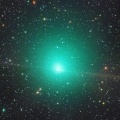
It brightened up to 6.9 mag in summer (Aug. 5, Juan Jose Gonzalez). Now it is 11.0 mag (Oct. 29, Chris Wyatt). It will fade out rapidly after this. It stays observable in good condition. Date(TT) R.A. (2000) Decl. Delta r Elong. m1 Best Time(A, h) Oct. 31 23 21.71 -26 43.8 0.953 1.692 120 11.2 20:44 ( 0, 29) Nov. 7 23 30.77 -24 45.3 1.036 1.729 117 11.6 20:26 ( 0, 31) |
252P/LINEAR

|
It has not been observed yet in this apparition. It has brightened up to 4 mag in 2016, and 10 mag in 2021. It will turn to fade out rapidly after the peak. It stays extremely low in the Northern Hemisphere. In the Southern Hemisphere, it is not observable now, but it will appear in January. Date(TT) R.A. (2000) Decl. Delta r Elong. m1 Best Time(A, h) Oct. 31 12 36.01 -6 41.2 1.797 1.009 26 11.9 4:54 (283, 7) Nov. 7 13 6.75 -8 58.1 1.804 1.004 25 11.6 5:00 (286, 6) |
C/2024 T5 ( ATLAS )
|
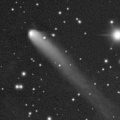
Now it is 12.6 mag (Oct. 22, Osamu Miyazaki). It stays 12 mag for a while. It stays observable in good condition. Date(TT) R.A. (2000) Decl. Delta r Elong. m1 Best Time(A, h) Oct. 31 5 44.09 -13 36.8 3.557 4.173 122 12.5 3:09 ( 0, 41) Nov. 7 5 41.77 -13 28.0 3.469 4.150 127 12.4 2:39 ( 0, 42) |
11P/Tempel-Swift-LINEAR

|
Now it is 14.7 mag (Oct. 17, Alfons Diepvens). It will fade out rapidly after this. It will be fainter than 18 mag in February. In the Northern Hemisphere, it stays observable in good condition. In the Southern Hemisphere, it will be getting higher gradually. Date(TT) R.A. (2000) Decl. Delta r Elong. m1 Best Time(A, h) Oct. 31 2 36.08 32 18.8 0.415 1.392 161 13.1 0:01 ( 0, 88) Nov. 7 2 44.15 28 36.2 0.403 1.388 167 12.9 23:39 ( 0, 83) |
C/2026 A2 ( Bok )
|
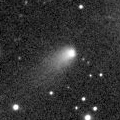
Now it is 13.1 mag (Oct. 28, Yoshimi Nagai). Fading slowly. In the Northern Hemisphere, it stays observable in good condition. In the Southern Hemisphere, it is not observable now, but it will be observable soon. Date(TT) R.A. (2000) Decl. Delta r Elong. m1 Best Time(A, h) Oct. 31 20 1.79 55 15.6 1.637 2.042 98 13.1 18:32 (155, 67) Nov. 7 20 28.06 50 41.2 1.601 2.017 99 13.0 18:27 (148, 71) |
C/2024 J3 ( ATLAS )

|
Now it is 13.7 mag (Oct. 27, Yoshimi Nagai). It stays 14 mag for a while. In the Northern Hemisphere, it will be getting lower gradually. But it will be getting higher again after January. In the Southern Hemisphere, it is not observable now. Date(TT) R.A. (2000) Decl. Delta r Elong. m1 Best Time(A, h) Oct. 31 18 34.85 40 54.9 3.911 3.872 80 13.7 18:32 (113, 59) Nov. 7 18 39.50 40 51.2 3.946 3.869 78 13.7 18:27 (113, 56) |
P/2026 R2 ( Leonard )
|
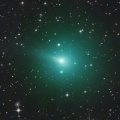
Bright new comet. It approached to Earth down to 0.3 a.u. in early October, and brightened up to 11.7 mag (Sept. 30, Thomas Lehmann). Now it is 14.2 mag (Oct. 29, Chris Wyatt). Fading rapidly. It will be fainter than 18 mag in January. In the Northern Hemisphere, it will never be observable after this. Date(TT) R.A. (2000) Decl. Delta r Elong. m1 Best Time(A, h) Oct. 31 16 8.51 -62 58.3 0.707 0.797 52 13.8 18:32 ( 29,-25) Nov. 7 15 51.71 -67 22.8 0.854 0.823 52 14.3 18:27 ( 26,-30) |
220P/McNaught
|
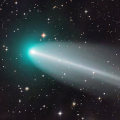
Major outburst of about 9 mag occured from May 31 to June 1, and it brightened up to 8.3 mag (June 3, Marco Goiato). Another major outburst occued on Aug. 5 and it brightened up to 6.4 mag (Aug. 6, Taras Prystavski). Now it is 12.3 mag (Oct. 28, Alfons Diepvens). It will fade out rapidly after this. It will be fainter than 18 mag in January. It stays observable in good condition. Date(TT) R.A. (2000) Decl. Delta r Elong. m1 Best Time(A, h) Oct. 31 3 13.95 2 27.3 1.051 2.020 162 13.8 0:39 ( 0, 58) Nov. 7 3 7.27 1 57.5 1.084 2.057 165 14.1 0:05 ( 0, 57) |
78P/Gehrels 2

|
Now it is 13.3 mag (Oct. 13, Thomas Lehmann). Fading slowly. It stays observable in good condition. Date(TT) R.A. (2000) Decl. Delta r Elong. m1 Best Time(A, h) Oct. 31 7 57.44 13 55.9 1.883 2.255 98 13.9 4:54 (342, 68) Nov. 7 8 2.79 13 14.1 1.827 2.280 104 13.9 4:59 ( 0, 68) |
260P/McNaught
|
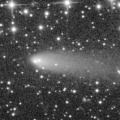
It brightened up to 13 mag from summer to autumn. Now it is 14.7 mag (Oct. 28, Alfons Diepvens). It will fade out rapidly after this. It will be fainter than 18 mag in January. In the Northern Hemisphere, it stays observable in good condition. It stays extremely low in the Southern Hemisphere. Date(TT) R.A. (2000) Decl. Delta r Elong. m1 Best Time(A, h) Oct. 31 6 22.02 49 10.0 0.984 1.708 119 14.2 3:47 (180, 76) Nov. 7 6 22.45 50 21.8 0.980 1.749 125 14.5 3:20 (180, 75) |
29P/Schwassmann-Wachmann 1
|
|
Now it is 13.6 mag (Aug. 2, Andrew Pearce). It will be getting higher gradually. Date(TT) R.A. (2000) Decl. Delta r Elong. m1 Best Time(A, h) Oct. 31 12 24.03 -9 45.6 7.172 6.318 28 14.3 4:54 (288, 7) Nov. 7 12 28.36 -10 19.4 7.113 6.318 34 14.3 5:00 (293, 13) |
88P/Howell
|
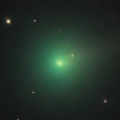
It brightened up to 9.6 mag in the very low sky in spring (Apr. 14, Chris Wyatt). Now it is 14.4 mag (Oct. 22, Toru Yusa). It will fade out rapidly after this. It will be fainter than 18 mag in February. It stays observable in good condition. Date(TT) R.A. (2000) Decl. Delta r Elong. m1 Best Time(A, h) Oct. 31 2 38.33 13 14.7 1.555 2.546 175 14.3 0:04 ( 0, 68) Nov. 7 2 30.54 12 50.5 1.601 2.590 174 14.5 23:24 ( 0, 68) |
P/2026 T1 ( ATLAS )

|
Bright new comet. It must be just in outburst. Now it is 14.4 mag (Oct. 18, Michael Jager). It stays 15 mag for a while. It will be getting lower gradually after this, and it will be unobservable in January in the Northern Hemisphere, or in December in the Southern Hemisphere. Date(TT) R.A. (2000) Decl. Delta r Elong. m1 Best Time(A, h) Oct. 31 19 30.79 -5 18.8 3.631 3.541 76 14.3 18:32 ( 35, 43) Nov. 7 19 37.64 -5 24.7 3.727 3.546 71 14.4 18:27 ( 39, 42) |
C/2014 UN271 ( Bernardinelli-Bernstein )

|
Very large comet. Now it is 14.2 mag (Oct. 4, Andrew Pearce). It stays 14 mag for a while. In the Northern Hemisphere, it is not observable now. In the Southern Hemisphere, it stays observable in good condition. In the Northern Hemisphere, it is not observable until 2030. Date(TT) R.A. (2000) Decl. Delta r Elong. m1 Best Time(A, h) Oct. 31 7 45.00 -73 41.3 13.639 13.485 79 14.5 4:54 (359,-19) Nov. 7 7 45.40 -74 7.9 13.625 13.465 78 14.5 4:40 ( 0,-19) |
C/2024 R4 ( PanSTARRS )

|
Now it is 14.3 mag (Oct. 17, Toru Yusa). It stays 14 mag for a while. In the Northern Hemisphere, it stays observable in good condition. In the Southern Hemisphere, it is not observable now. Date(TT) R.A. (2000) Decl. Delta r Elong. m1 Best Time(A, h) Oct. 31 19 41.67 44 0.5 5.136 5.283 93 14.5 18:32 (125, 71) Nov. 7 19 40.31 43 18.4 5.169 5.253 89 14.5 18:27 (120, 67) |
C/2023 R1 ( PanSTARRS )
|
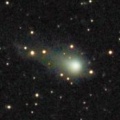
Now it is 14.7 mag (Sept. 19, Mike Olason). It stays 15 mag for a while. Now it is not observable. It will appear in December. Date(TT) R.A. (2000) Decl. Delta r Elong. m1 Best Time(A, h) Oct. 31 15 32.72 -20 15.4 4.931 4.003 18 15.1 18:32 ( 70, -7) Nov. 7 15 34.66 -20 50.8 4.994 4.031 12 15.1 18:27 ( 72,-11) |
C/2025 V2 ( Rankin )
|
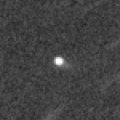
It is expected to brighten up to 12.5 mag in 2027 spring. Now it is 16.5 mag (Oct. 25, Martin Masek). Brightening gradually. In the Northern Hemisphere, it will be getting higher gradually. In the Southern Hemisphere, it is not observable now, but it will appear in January. Date(TT) R.A. (2000) Decl. Delta r Elong. m1 Best Time(A, h) Oct. 31 12 55.26 14 25.7 3.344 2.596 35 15.3 4:54 (263, 15) Nov. 7 13 9.69 13 54.4 3.244 2.544 38 15.1 5:00 (266, 19) |
(3200) Phaethon

|
Parent object of Geminids meteor shower. It approached to Sun down to 0.14 a.u. on Sept. 2. Now it is 14.5 mag (Oct. 12, Katsumi Yoshimoto). It will fade out rapidly after this. It will be fainter than 18 mag in December. In the Northern Hemisphere, it stays observable in good condition. It locates somewhat low in the Southern Hemisphere. Date(TT) R.A. (2000) Decl. Delta r Elong. m1 Best Time(A, h) Oct. 31 21 14.70 38 29.3 0.572 1.300 109 15.4 18:39 (180, 87) Nov. 7 21 45.61 32 52.0 0.684 1.389 110 15.8 18:41 ( 0, 88) |
123P/West-Hartley

|
Now it is 15.9 mag (Oct. 12, M. Jaeger, G. Rhemann, E. Prosperi). It stays 16 mag for a while. In the Northern Hemisphere, it will be getting higher gradually. In the Southern Hemisphere, it is not observable now, but it will appear in December. Date(TT) R.A. (2000) Decl. Delta r Elong. m1 Best Time(A, h) Oct. 31 12 20.28 8 48.4 2.885 2.180 37 15.4 4:54 (273, 19) Nov. 7 12 33.78 7 15.3 2.847 2.188 40 15.4 5:00 (277, 22) |
C/2025 Y1 ( ATLAS )
|
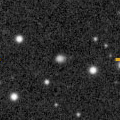
Now it is 16.1 mag (Aug. 5, Ken-ichi Kadota). Brightening slowly. Now it is not observable. It will appear soon in the Northern Hemisphere, or in December in the Southern Hemisphere. Date(TT) R.A. (2000) Decl. Delta r Elong. m1 Best Time(A, h) Oct. 31 14 11.54 -4 19.2 5.339 4.364 9 15.5 4:54 (268,-11) Nov. 7 14 19.23 -4 51.8 5.271 4.312 13 15.5 5:00 (272, -6) |
C/2022 QE78 ( ATLAS )
|
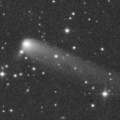
Now it is 16.7 mag (Oct. 19, D. Buczynski). It stays 16 mag for a while. In the Northern Hemisphere, it stays observable in good condition. In the Southern Hemisphere, it is not observable now, but it will appear in December. Date(TT) R.A. (2000) Decl. Delta r Elong. m1 Best Time(A, h) Oct. 31 11 35.68 26 17.3 6.740 6.249 56 15.6 4:54 (262, 37) Nov. 7 11 40.87 26 22.2 6.676 6.273 62 15.6 5:00 (265, 43) |
169P/NEAT

|
It approached to Earth down to 0.17 a.u. mid August, and brightened up to 10.8 mag (Aug. 11, Thomas Lehmann). Now it is 14.5 mag (Oct. 22, Toru Yusa). Fading gradually. It will be fainter than 18 mag soon. It will be getting higher gradually. Date(TT) R.A. (2000) Decl. Delta r Elong. m1 Best Time(A, h) Oct. 31 11 4.95 -2 29.2 1.210 0.940 49 15.7 4:54 (295, 27) Nov. 7 11 19.45 -3 43.5 1.269 1.029 52 16.6 5:00 (300, 30) |
2P/Encke
|
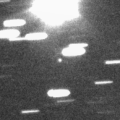
It will brighten up to 6-7 mag from January to February. Now it is 16.4 mag (Oct. 7, D. Buczynski). It will brighten rapidly after this. It will be getting lower gradually after this, and it will be unobservable in January in the Southern Hemisphere, or in February in the Northern Hemisphere. Date(TT) R.A. (2000) Decl. Delta r Elong. m1 Best Time(A, h) Oct. 31 23 37.07 14 56.5 0.947 1.827 140 16.2 20:57 ( 0, 70) Nov. 7 23 20.84 13 7.3 0.932 1.744 130 15.7 20:14 ( 0, 68) |
C/2025 M2 ( PanSTARRS )
|
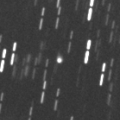
It is expected to brighten up to 12 mag from 2027 to 2028. Now it is 15.5 mag (Oct. 14, Jean-Gabriel Bosch). Brightening slowly. It will be unobservable in December. But it will be observable again in February. Date(TT) R.A. (2000) Decl. Delta r Elong. m1 Best Time(A, h) Oct. 31 18 37.81 -21 25.1 5.075 4.685 61 15.9 18:32 ( 39, 23) Nov. 7 18 37.68 -21 23.0 5.138 4.634 54 15.9 18:27 ( 43, 20) |
C/2022 N2 ( PanSTARRS )
|
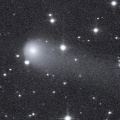
Now it is 16.1 mag (Oct. 9, Ken-ichi Kadota). It stays 16 mag for a while. In the Northern Hemisphere, it stays observable in good condition. It locates somewhat low in the Southern Hemisphere. Date(TT) R.A. (2000) Decl. Delta r Elong. m1 Best Time(A, h) Oct. 31 7 35.31 25 20.7 5.093 5.446 105 15.9 4:54 (352, 80) Nov. 7 7 35.89 25 20.7 5.029 5.486 112 15.9 4:33 ( 0, 80) |
112P/Urata-Niijima
|
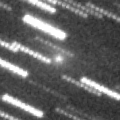
Now it is 16.0 mag (Oct. 17, Toru Yusa). It will fade out rapidly after this. It will be fainter than 18 mag in January. In the Northern Hemisphere, it stays observable in good condition. In the Southern Hemisphere, it will be unobservable soon. Date(TT) R.A. (2000) Decl. Delta r Elong. m1 Best Time(A, h) Oct. 31 8 48.48 45 12.1 1.048 1.503 94 16.1 4:54 (230, 72) Nov. 7 9 11.34 46 42.6 1.038 1.527 97 16.1 5:00 (223, 73) |
(6993) 1995 BJ4
|
|
The cometary activity was detected on Aug. 5 by Zwicky Transient Facility (ZTF). Fading slowly. It will be fainter than 18 mag in February. It stays observable in good condition. Date(TT) R.A. (2000) Decl. Delta r Elong. m1 Best Time(A, h) Oct. 31 3 26.59 15 5.2 1.893 2.860 163 16.5 0:52 ( 0, 70) Nov. 7 3 21.10 14 43.5 1.874 2.858 171 16.3 0:19 ( 0, 70) |
114P/Wiseman-Skiff

|
Now it is 16.8 mag (Oct. 22, Toru Yusa). Fading gradually. It will be fainter than 18 mag in February. In the Northern Hemisphere, it stays observable in good condition. In the Southern Hemisphere, it will be getting higher gradually. Date(TT) R.A. (2000) Decl. Delta r Elong. m1 Best Time(A, h) Oct. 31 9 44.63 6 53.6 1.661 1.639 71 16.4 4:54 (304, 48) Nov. 7 9 57.70 4 13.9 1.627 1.660 74 16.5 5:00 (313, 49) |
C/2025 J1 ( Borisov )
|
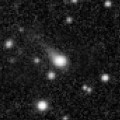
Now it is 16.7 mag (Oct. 17, Ken-ichi Kadota). It stays 17 mag for a while. It stays observable in good condition. Date(TT) R.A. (2000) Decl. Delta r Elong. m1 Best Time(A, h) Oct. 31 7 6.56 6 2.9 3.358 3.801 109 16.4 4:31 ( 0, 61) Nov. 7 7 1.59 4 9.7 3.276 3.822 116 16.4 3:59 ( 0, 59) |
C/2021 G2 ( ATLAS )

|
Now it is 16.1 mag (Oct. 15, Toru Yusa). It stays 17 mag for a while. It locates somewhat low in the Northern Hemisphere. But it will become high in winter. In the Southern Hemisphere, it is not observable now, but it will appear in February. Date(TT) R.A. (2000) Decl. Delta r Elong. m1 Best Time(A, h) Oct. 31 17 21.82 11 51.9 8.189 7.618 52 16.5 18:32 ( 81, 34) Nov. 7 17 25.74 11 42.9 8.281 7.654 48 16.5 18:27 ( 83, 30) |
C/2026 AZ17 ( Bok )
|
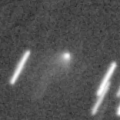
Now it is 16.7 mag (Oct. 18, ATLAS-HKO, Haleakala). It stays 17 mag for a while. It will be unobservable in January in the Northern Hemisphere, or in December in the Southern Hemisphere. Date(TT) R.A. (2000) Decl. Delta r Elong. m1 Best Time(A, h) Oct. 31 18 13.13 -3 32.6 2.855 2.485 58 16.7 18:32 ( 56, 33) Nov. 7 18 26.41 -4 53.1 2.912 2.479 54 16.7 18:27 ( 57, 31) |
84P/Giclas

|
Now it is 17.2 mag (Oct. 11, Ken-ichi Kadota). It stays 16 mag for a while. In the Northern Hemisphere, it stays observable in good condition. In the Southern Hemisphere, it will be getting lower gradually. Date(TT) R.A. (2000) Decl. Delta r Elong. m1 Best Time(A, h) Oct. 31 20 48.86 -24 50.7 1.691 1.971 90 16.8 18:32 ( 5, 30) Nov. 7 20 59.44 -24 8.5 1.736 1.941 86 16.8 18:27 ( 8, 31) |
346P/Catalina
|
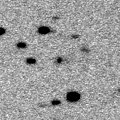
Now it is 17.3 mag (Oct. 21, ATLAS-HKO, Haleakala). It stays 17 mag for a while. In the Northern Hemisphere, it stays observable in good condition. It locates somewhat low in the Southern Hemisphere. Date(TT) R.A. (2000) Decl. Delta r Elong. m1 Best Time(A, h) Oct. 31 9 13.64 19 23.7 2.252 2.336 82 17.0 4:54 (298, 62) Nov. 7 9 23.51 19 45.2 2.185 2.354 87 16.9 5:00 (306, 67) |
C/2022 R6 ( PanSTARRS )
|
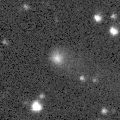
It was observed at 16 mag from 2025 to 2026. Now it is 17.2 mag (Oct. 24, ATLAS-HKO, Haleakala). It stays 17 mag for a while. In the Northern Hemisphere, it stays observable in good condition. In the Southern Hemisphere, it will be getting higher gradually. Date(TT) R.A. (2000) Decl. Delta r Elong. m1 Best Time(A, h) Oct. 31 10 17.62 5 9.2 7.564 7.167 62 16.9 4:54 (298, 41) Nov. 7 10 20.30 5 14.1 7.476 7.186 69 16.9 5:00 (305, 46) |
C/2026 P2 ( PanSTARRS )
|
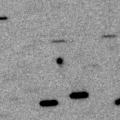
It is expected to brighten up to 13 mag from late 2027 to early 2028. At the high light, it will be observable in good condition in the Northern Hemisphere. But it will not be observable in the Southern Hemisphere. Now it is 17.0 mag (Oct. 22, ATLAS South Africa). It stays 17 mag for a while. In the Northern Hemisphere, it stays observable in good condition. In the Southern Hemisphere, it will be getting lower gradually after this, and it will be unobservable in February. Date(TT) R.A. (2000) Decl. Delta r Elong. m1 Best Time(A, h) Oct. 31 1 9.91 -1 13.4 3.710 4.640 157 17.0 22:31 ( 0, 54) Nov. 7 1 3.61 -0 55.4 3.706 4.586 149 17.0 21:57 ( 0, 54) |
C/2026 O1 ( PanSTARRS )
|
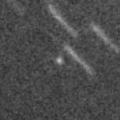
Now it is 17.1 mag (Oct. 17, Ken-ichi Kadota). Brightening slowly. It will be unobservable in January in the Northern Hemisphere, or in February in the Southern Hemisphere. At the high light, it will be observable in good condition in the Southern Hemisphere, but it will not be observable in the Northern Hemisphere. Date(TT) R.A. (2000) Decl. Delta r Elong. m1 Best Time(A, h) Oct. 31 22 8.96 -31 31.4 3.201 3.585 104 17.1 19:31 ( 0, 24) Nov. 7 22 2.08 -32 1.8 3.262 3.516 96 17.0 18:56 ( 0, 23) |
P/2018 VN2 = P/2026 M2 ( Leonard )
|
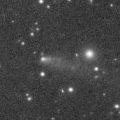
First return of a new periodic comet which was observed at 18 mag in 2018. Now it is 16.5 mag (Oct. 21, ATLAS-MLO, Mauna Loa). Fading gradually. It will be fainter than 18 mag in December. It stays observable in good condition. Date(TT) R.A. (2000) Decl. Delta r Elong. m1 Best Time(A, h) Oct. 31 1 52.39 18 55.0 1.221 2.208 171 17.1 23:14 ( 0, 74) Nov. 7 1 49.62 17 5.3 1.249 2.224 166 17.2 22:43 ( 0, 72) |
C/2025 A1 ( Lemmon )
|
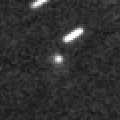
Now it is 16.8 mag (Oct. 8, Kunihiro Shima). It stays 17 mag for a while. In the Northern Hemisphere, it stays observable in good condition. In the Southern Hemisphere, it is not observable now, but it will appear in December. Date(TT) R.A. (2000) Decl. Delta r Elong. m1 Best Time(A, h) Oct. 31 11 25.12 30 15.0 5.846 5.433 60 17.2 4:54 (258, 41) Nov. 7 11 31.70 30 17.0 5.750 5.424 66 17.1 5:00 (261, 46) |
C/2025 E1 ( PanSTARRS )
|
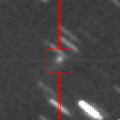
Now it is 17.6 mag (Sept. 12, ATLAS Chile). It stays 18 mag for a while. In the Northern Hemisphere, it will never be observable after this. In the Southern Hemisphere, it stays observable in good condition. Date(TT) R.A. (2000) Decl. Delta r Elong. m1 Best Time(A, h) Oct. 31 15 20.25 -80 56.3 4.287 4.011 67 17.2 18:32 ( 11,-34) Nov. 7 16 25.93 -80 57.8 4.320 4.016 65 17.2 18:27 ( 10,-32) |
P/2009 Y2 ( Kowalski )
|
Now it is 18.2 mag (Oct. 6, Toshiyuki Takahashi). It stays 18 mag for a while. In the Northern Hemisphere, it stays observable in good condition. It locates somewhat low in the Southern Hemisphere. But it will become high in winter. Date(TT) R.A. (2000) Decl. Delta r Elong. m1 Best Time(A, h) Oct. 31 5 27.86 37 4.0 1.604 2.387 132 17.6 2:53 (180, 88) Nov. 7 5 26.93 35 47.7 1.539 2.381 139 17.5 2:25 (180, 89) |
C/2019 E3 ( ATLAS )
|
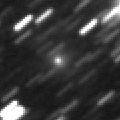
Very far object. It stays 18 mag for a while. In the Northern Hemisphere, it will be unobservable in February. In the Southern Hemisphere, it stays observable in good condition. Date(TT) R.A. (2000) Decl. Delta r Elong. m1 Best Time(A, h) Oct. 31 23 53.69 -44 17.5 11.366 11.789 113 17.5 21:15 ( 0, 11) Nov. 7 23 51.01 -43 54.5 11.466 11.807 107 17.5 20:45 ( 0, 11) |
C/2025 R3 ( PanSTARRS )
|
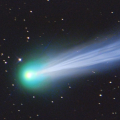
It brightened up to 4.0 mag in late April (Apr. 30, Chris Wyatt). It brightened up to 1.3 mag due to the forward scattering in the SOHO LASCO images (Apr. 25, Mikolaj Kaszczyk). It faded down to 13.4 mag until summer (Aug. 15, Thomas Lehmann). Fading gradually. It will be fainter than 18 mag soon. It locates somewhat low in the Northern Hemisphere. In the Southern Hemisphere, it stays observable in good condition. Date(TT) R.A. (2000) Decl. Delta r Elong. m1 Best Time(A, h) Oct. 31 7 5.21 -31 50.7 2.977 3.264 97 17.5 4:29 ( 0, 23) Nov. 7 6 55.10 -32 59.9 2.983 3.350 103 17.7 3:52 ( 0, 22) |
C/2025 B2 ( Borisov )

|
Now it is 17.5 mag (Oct. 20, ATLAS-HKO, Haleakala). It stays 18 mag for a while. In the Southern Hemisphere, it will never be observable after this. Date(TT) R.A. (2000) Decl. Delta r Elong. m1 Best Time(A, h) Oct. 31 17 23.65 70 13.1 8.186 8.244 89 17.6 18:32 (157, 44) Nov. 7 17 31.30 69 15.1 8.183 8.246 90 17.6 18:27 (155, 43) |
493P/2024 Q2 ( LONEOS )
|
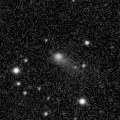
Now it is 17.7 mag (Sept. 25, P.-J. Dekelver). It stays 18 mag for a while. In the Northern Hemisphere, it stays observable in good condition. It locates somewhat low in the Southern Hemisphere. Date(TT) R.A. (2000) Decl. Delta r Elong. m1 Best Time(A, h) Oct. 31 10 14.00 30 38.8 4.355 4.189 73 17.7 4:54 (266, 55) Nov. 7 10 19.28 30 23.9 4.274 4.206 79 17.7 5:00 (270, 61) |
C/2022 E2 ( ATLAS )
|
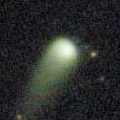
It was observed at 12-13 mag for a long time in 2024. Now it is 17.2 mag (Oct. 12, Thomas Lehmann). It stays 18 mag for a while. In the Northern Hemisphere, it stays observable in good condition. It locates somewhat low in the Southern Hemisphere. Date(TT) R.A. (2000) Decl. Delta r Elong. m1 Best Time(A, h) Oct. 31 21 44.18 21 10.9 6.913 7.380 114 17.7 19:06 ( 0, 76) Nov. 7 21 42.75 20 16.3 7.054 7.425 108 17.8 18:37 ( 0, 75) |
C/2026 S2 ( ATLAS )
|
|
Now it is 18.1 mag (Oct. 8, M. Jaeger, G. Rhemann, E. Prosperi). It stays 18 mag for a while. It stays observable in good condition. Date(TT) R.A. (2000) Decl. Delta r Elong. m1 Best Time(A, h) Oct. 31 5 55.96 -1 35.9 4.080 4.710 124 17.8 3:21 ( 0, 53) Nov. 7 5 47.14 -2 14.0 3.969 4.689 131 17.7 2:45 ( 0, 53) |
C/2024 G4 ( PanSTARRS )

|
Now it is 17.9 mag (Oct. 11, Ken-ichi Kadota). It stays 18 mag for a while. It will be getting lower gradually. Date(TT) R.A. (2000) Decl. Delta r Elong. m1 Best Time(A, h) Oct. 31 20 14.24 -8 13.5 5.156 5.196 86 17.7 18:32 ( 20, 45) Nov. 7 20 18.31 -8 38.9 5.281 5.214 80 17.8 18:27 ( 25, 43) |
373P/Rinner
|
|
It has not been observed yet in this apparition. It has brightened up to 4 mag in 2016, and 10 mag in 2021. It was not detected, fainter than 20 mag on Sept. 14 (Jean-Francois Soulier). It stays 18 mag for a while. It stays observable in good condition. Date(TT) R.A. (2000) Decl. Delta r Elong. m1 Best Time(A, h) Oct. 31 9 0.34 4 18.6 2.272 2.335 81 17.8 4:54 (321, 53) Nov. 7 9 8.55 2 54.7 2.201 2.344 85 17.8 5:00 (331, 54) |
69P/Taylor
|
|
It has not been observed yet in this apparition. It stays 18 mag for a while. It stays observable in good condition. Date(TT) R.A. (2000) Decl. Delta r Elong. m1 Best Time(A, h) Oct. 31 7 22.43 12 13.0 1.781 2.272 106 17.9 4:47 ( 0, 67) Nov. 7 7 27.81 12 43.6 1.702 2.271 112 17.8 4:25 ( 0, 68) |
C/2023 C2 ( ATLAS )

|
It brightened up to 12.7 mag in 2024 summer (Aug. 7, 2024, Thomas Lehmann). Now it is 17.5 mag (Oct. 4, ATLAS-MLO, Mauna Loa). It stays 18 mag for a while. In the Northern Hemisphere, it stays observable in good condition. In the Southern Hemisphere, it will never be observable after this. Date(TT) R.A. (2000) Decl. Delta r Elong. m1 Best Time(A, h) Oct. 31 2 5.88 68 50.6 6.536 7.152 125 17.8 23:27 (180, 56) Nov. 7 1 58.56 68 31.5 6.564 7.204 127 17.9 22:52 (180, 56) |
C/2026 B3 ( PanSTARRS )

|
Now it is 17.4 mag (Mar. 21, Hidenori Nohara). It stays 18 mag for a while. It will be getting higher gradually. Date(TT) R.A. (2000) Decl. Delta r Elong. m1 Best Time(A, h) Oct. 31 11 20.00 -2 28.0 6.614 5.964 45 18.0 4:54 (292, 24) Nov. 7 11 21.12 -3 19.8 6.510 5.953 52 17.9 5:00 (299, 30) |
SWAN26Q
|
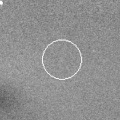
New comet discovered on Aug. 24 from SWAN images by Hanjie Tan. Although it was bright as 11 mag at the discovery, it faded down to 14 mag on Sept. 9. It was not detected, fainter than 16 mag, on Oct. 8. (Mike Olason). Fading rapidly. In the Southern Hemisphere, it will be getting higher gradually. Date(TT) R.A. (2000) Decl. Delta r Elong. m1 Best Time(A, h) Oct. 31 11 22.15 -6 56.9 1.910 1.381 44 20.9 4:54 (295, 21) Nov. 7 11 18.64 -9 39.5 1.916 1.506 51 21.3 5:00 (304, 26) |