Weekly Information about Bright Comets (2026 Nov. 28: South)
|
Japanese version Home page |
Updated on November 27, 2026 |
|||
|
||||
|
Best time and the azimuth, altitude (A,h) are at lat. 35 deg in the Southern Hemisphere. Azimuth indicates 0 for south, 90 for west, 180 for north, 270 for east. |

|

|
Now it is 11.3 mag (Nov. 22, Yoshimi Nagai). It will fade out rapidly after this. In the Northern Hemisphere, it will be getting lower gradually. But it will be getting higher again after January. In the Southern Hemisphere, it will never be observable after this. Date(TT) R.A. (2000) Decl. Delta r Elong. m1 Best Time(A, h) Nov. 28 19 17.06 19 23.7 1.416 1.265 60 10.8 20:38 (108, -9) Dec. 5 19 13.08 20 37.3 1.518 1.270 56 10.9 20:46 (103,-18) |
 252P/LINEAR

|
It has not been observed yet in this apparition. It has brightened up to 4 mag in 2016, and 10 mag in 2021. It will fade out rapidly after this. It will be fainter than 18 mag in March. It stays extremely low in the Northern Hemisphere. In the Southern Hemisphere, it is not observable now, but it will appear in January. Mike Olason reported it was not detected, fainter than 15.5 mag on Nov. 4. Date(TT) R.A. (2000) Decl. Delta r Elong. m1 Best Time(A, h) Nov. 28 14 37.89 -14 30.6 1.867 1.043 23 11.4 2:57 (293, -6) Dec. 5 15 7.20 -15 48.8 1.900 1.074 23 11.6 2:54 (294, -6) |
C/2024 T5 ( ATLAS )
|
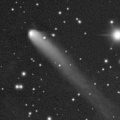
Now it is 12.3 mag (Nov. 21, Osamu Miyazaki). It stays 12 mag for a while. It stays observable in good condition. Date(TT) R.A. (2000) Decl. Delta r Elong. m1 Best Time(A, h) Nov. 28 5 30.46 -12 15.7 3.265 4.084 141 12.2 1:05 (180, 67) Dec. 5 5 25.62 -11 33.1 3.220 4.064 144 12.1 0:33 (180, 67) |
10P/Tempel 2
|
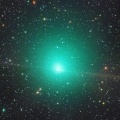
It brightened up to 6.9 mag in summer (Aug. 5, Juan Jose Gonzalez). Now it is 12.6 mag (Nov. 19, Yoshimi Nagai). It will fade out rapidly after this. In the Northern Hemisphere, it stays observable in good condition. In the Southern Hemisphere, it will be getting lower gradually. Date(TT) R.A. (2000) Decl. Delta r Elong. m1 Best Time(A, h) Nov. 28 23 59.65 -18 38.1 1.313 1.849 106 12.6 20:38 (134, 68) Dec. 5 0 9.69 -16 36.3 1.415 1.891 102 12.9 20:46 (126, 62) |
C/2026 A2 ( Bok )
|
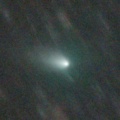
Now it is 12.6 mag (Nov. 23, Toru Yusa). Fading gradually. In the Northern Hemisphere, it will be getting lower gradually after this, and it will be unobservable in March. It stays extremely low in the Southern Hemisphere. But it will become high in summer. Date(TT) R.A. (2000) Decl. Delta r Elong. m1 Best Time(A, h) Nov. 28 21 37.58 35 17.9 1.609 1.961 95 12.8 20:38 (140, 5) Dec. 5 21 57.74 30 14.2 1.652 1.950 91 12.9 20:46 (134, 6) |
2P/Encke

|
It will brighten up to 6-7 mag from January to February. Now it is 13.5 mag (Nov. 4, Alfons Diepvens). Brightening rapidly. In the Southern Hemisphere, it will be unobservable in January. But it will be observable again in February. In the Northern Hemisphere, it will be unobservable temporarily in February. Date(TT) R.A. (2000) Decl. Delta r Elong. m1 Best Time(A, h) Nov. 28 22 46.55 8 5.9 0.933 1.476 100 13.9 20:38 (135, 36) Dec. 5 22 40.25 6 48.4 0.937 1.380 91 13.2 20:46 (125, 30) |
11P/Tempel-Swift-LINEAR

|
Now it is 12.9 mag (Nov. 10, Fumihiko Omori). It will fade out rapidly after this. It will be fainter than 18 mag in February. It stays observable in good condition. Date(TT) R.A. (2000) Decl. Delta r Elong. m1 Best Time(A, h) Nov. 28 3 7.58 16 10.7 0.427 1.402 163 13.3 22:39 (180, 39) Dec. 5 3 15.73 12 39.4 0.454 1.415 156 13.6 22:20 (180, 42) |
C/2024 J3 ( ATLAS )

|
Now it is 13.4 mag (Nov. 4, Alfons Diepvens). It stays 14 mag for a while. In the Northern Hemisphere, it will be getting lower gradually. But it will be getting higher again after January. In the Southern Hemisphere, it is not observable now. Date(TT) R.A. (2000) Decl. Delta r Elong. m1 Best Time(A, h) Nov. 28 18 58.14 41 18.1 4.034 3.866 73 13.7 20:38 (125,-24) Dec. 5 19 5.73 41 41.0 4.058 3.866 71 13.7 20:46 (123,-29) |
78P/Gehrels 2

|
Now it is 14.3 mag (Nov. 7, Kunihiro Shima). Fading gradually. It stays observable in good condition. Date(TT) R.A. (2000) Decl. Delta r Elong. m1 Best Time(A, h) Nov. 28 8 10.22 11 31.0 1.675 2.360 122 14.0 2:57 (196, 42) Dec. 5 8 9.68 11 7.2 1.635 2.388 129 14.0 2:54 (188, 44) |
29P/Schwassmann-Wachmann 1
|
|
Appearing in the morning sky. Now it is bright in outburst. Now it is 12.0 mag (Nov. 19, Yoshimi Nagai). In the Southern Hemisphere, it will be getting higher gradually. Date(TT) R.A. (2000) Decl. Delta r Elong. m1 Best Time(A, h) Nov. 28 12 40.20 -11 56.7 6.880 6.317 51 14.2 2:57 (274, 16) Dec. 5 12 43.66 -12 27.2 6.786 6.317 57 14.2 2:54 (272, 20) |
C/2024 R4 ( PanSTARRS )

|
Now it is 14.8 mag (Nov. 21, ATLAS-HKO, Haleakala). It stays 14 mag for a while. In the Northern Hemisphere, it will be getting lower gradually. But it will be getting higher again after January. In the Southern Hemisphere, it is not observable now. Date(TT) R.A. (2000) Decl. Delta r Elong. m1 Best Time(A, h) Nov. 28 19 41.03 41 41.1 5.261 5.165 79 14.4 20:38 (129,-17) Dec. 5 19 42.59 41 20.9 5.287 5.136 75 14.4 20:46 (126,-22) |
C/2014 UN271 ( Bernardinelli-Bernstein )

|
Very large comet. Now it is 14.4 mag (Nov. 6, Andrew Pearce). It stays 14 mag for a while. In the Northern Hemisphere, it is not observable now. In the Southern Hemisphere, it stays observable in good condition. In the Northern Hemisphere, it is not observable until 2030. Date(TT) R.A. (2000) Decl. Delta r Elong. m1 Best Time(A, h) Nov. 28 7 41.45 -75 19.0 13.572 13.405 78 14.4 2:57 (358, 50) Dec. 5 7 38.41 -75 38.4 13.549 13.385 78 14.4 2:43 ( 0, 49) |
P/2026 R2 ( Leonard )
|
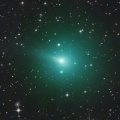
Bright new periodic comet. It approached to Earth down to 0.3 a.u. in early October, and brightened up to 11.7 mag (Sept. 30, Thomas Lehmann). Now it is 13.3 mag (Nov. 5, Chris Wyatt). Fading rapidly. It will be fainter than 18 mag in February. In the Northern Hemisphere, it will never be observable after this. In the Southern Hemisphere, it will be getting higher gradually. Date(TT) R.A. (2000) Decl. Delta r Elong. m1 Best Time(A, h) Nov. 28 15 0.66 -72 39.7 1.214 0.994 52 14.5 2:57 (343, 26) Dec. 5 14 45.36 -73 32.4 1.300 1.071 53 14.9 2:54 (342, 29) |
C/2025 V2 ( Rankin )
|
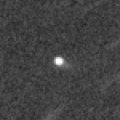
It is expected to brighten up to 12.5 mag in spring. Now it is 15.8 mag (Nov. 6, Ken-ichi Kadota). Brightening slowly. In the Northern Hemisphere, it stays observable in good condition. In the Southern Hemisphere, it is not observable now, but it will appear in January. Date(TT) R.A. (2000) Decl. Delta r Elong. m1 Best Time(A, h) Nov. 28 13 55.63 12 34.1 2.943 2.395 47 14.6 2:57 (264,-14) Dec. 5 14 11.85 12 13.3 2.844 2.349 50 14.5 2:54 (263,-12) |
C/2025 Y1 ( ATLAS )
|
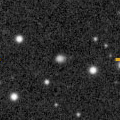
Now it is 16.1 mag (Aug. 5, Ken-ichi Kadota). Brightening gradually. In the Northern Hemisphere, it will be getting higher gradually. In the Southern Hemisphere, it is not observable now, but it will be observable soon. Date(TT) R.A. (2000) Decl. Delta r Elong. m1 Best Time(A, h) Nov. 28 14 43.10 -6 20.4 5.017 4.158 26 15.2 2:57 (287,-12) Dec. 5 14 51.26 -6 46.2 4.917 4.107 31 15.1 2:54 (285, -9) |
220P/McNaught
|
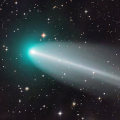
Major outburst of about 9 mag occured from May 31 to June 1, and it brightened up to 8.3 mag (June 3, Marco Goiato). Another major outburst occued on Aug. 5 and it brightened up to 6.4 mag (Aug. 6, Taras Prystavski). Now it is 14.5 mag (Nov. 20, Alfons Diepvens). It will fade out rapidly after this. It will be fainter than 18 mag in January. It stays observable in good condition. Date(TT) R.A. (2000) Decl. Delta r Elong. m1 Best Time(A, h) Nov. 28 2 50.43 1 40.1 1.252 2.173 151 15.1 22:21 (180, 53) Dec. 5 2 47.03 1 57.3 1.330 2.212 145 15.5 21:50 (180, 53) |
88P/Howell
|
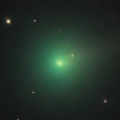
It brightened up to 9.6 mag in the very low sky in spring (Apr. 14, Chris Wyatt). Now it is 14.9 mag (Nov. 13, Toru Yusa). It will fade out rapidly after this. It will be fainter than 18 mag in February. In the Northern Hemisphere, it stays observable in good condition. In the Southern Hemisphere, it will be getting lower gradually. Date(TT) R.A. (2000) Decl. Delta r Elong. m1 Best Time(A, h) Nov. 28 2 12.31 11 58.3 1.824 2.720 149 15.2 21:43 (180, 43) Dec. 5 2 8.65 11 51.3 1.922 2.763 141 15.4 21:12 (180, 43) |
C/2023 R1 ( PanSTARRS )
|
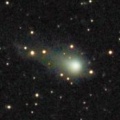
Now it is 14.7 mag (Sept. 19, Mike Olason). It stays 15 mag for a while. Now it is not observable. It will be observable soon. Date(TT) R.A. (2000) Decl. Delta r Elong. m1 Best Time(A, h) Nov. 28 15 40.91 -22 36.1 5.096 4.120 7 15.3 2:57 (309,-12) Dec. 5 15 42.90 -23 11.1 5.100 4.151 14 15.3 2:54 (306, -8) |
260P/McNaught
|
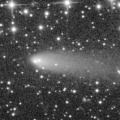
It brightened up to 13 mag from summer to autumn. Now it is 15.5 mag (Nov. 22, Toru Yusa). It will fade out rapidly after this. It will be fainter than 18 mag in January. In the Northern Hemisphere, it stays observable in good condition. It stays extremely low in the Southern Hemisphere. Date(TT) R.A. (2000) Decl. Delta r Elong. m1 Best Time(A, h) Nov. 28 6 3.99 52 34.7 1.002 1.881 142 15.3 1:40 (180, 2) Dec. 5 5 53.15 52 38.4 1.025 1.927 146 15.6 1:01 (180, 2) |
123P/West-Hartley

|
Now it is 15.8 mag (Nov. 4, Mike Olason). It stays 16 mag for a while. In the Northern Hemisphere, it stays observable in good condition. In the Southern Hemisphere, it will be getting higher gradually. Date(TT) R.A. (2000) Decl. Delta r Elong. m1 Best Time(A, h) Nov. 28 13 12.47 2 49.9 2.714 2.221 50 15.5 2:57 (266, 1) Dec. 5 13 24.70 1 27.4 2.665 2.234 54 15.5 2:54 (266, 4) |
C/2022 QE78 ( ATLAS )
|
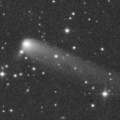
Now it is 16.3 mag (Nov. 22, ATLAS-MLO, Mauna Loa). It stays 16 mag for a while. In the Northern Hemisphere, it stays observable in good condition. It locates somewhat low in the Southern Hemisphere. Date(TT) R.A. (2000) Decl. Delta r Elong. m1 Best Time(A, h) Nov. 28 11 54.61 26 58.9 6.459 6.347 79 15.6 2:57 (236, 1) Dec. 5 11 58.47 27 18.9 6.383 6.372 84 15.6 2:54 (233, 4) |
C/2025 M2 ( PanSTARRS )
|
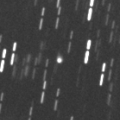
It is expected to brighten up to 12 mag from 2027 to 2028. Now it is 16.4 mag (Nov. 3, Jean-Gabriel Bosch). Brightening slowly. It will be unobservable soon. But it will be observable again in February. Date(TT) R.A. (2000) Decl. Delta r Elong. m1 Best Time(A, h) Nov. 28 18 40.41 -21 13.0 5.265 4.482 34 15.8 20:38 ( 69, 7) Dec. 5 18 42.14 -21 8.4 5.284 4.432 27 15.7 20:46 ( 64, 0) |
P/2026 T1 ( ATLAS )

|
Bright new periodic comet. After discovered in outburst, it is fading very rapidly. Now it is 15.6 mag (Nov. 12, Ken-ichi Kadota). It will fade out rapidly after this. It will be fainter than 18 mag in January. It locates somewhat low in the Northern Hemisphere. In the Southern Hemisphere, it will be unobservable soon. Date(TT) R.A. (2000) Decl. Delta r Elong. m1 Best Time(A, h) Nov. 28 20 0.75 -5 19.0 4.000 3.562 57 15.8 20:38 ( 94, 14) Dec. 5 20 9.12 -5 9.2 4.083 3.568 52 16.1 20:46 ( 90, 8) |
C/2022 N2 ( PanSTARRS )
|
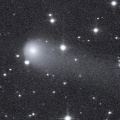
Now it is 16.0 mag (Nov. 18, Andrew Pearce). It stays 16 mag for a while. In the Northern Hemisphere, it stays observable in good condition. It locates somewhat low in the Southern Hemisphere. Date(TT) R.A. (2000) Decl. Delta r Elong. m1 Best Time(A, h) Nov. 28 7 33.69 25 27.7 4.875 5.607 134 15.9 2:57 (183, 30) Dec. 5 7 31.75 25 31.8 4.842 5.648 141 15.9 2:39 (180, 30) |
C/2025 J1 ( Borisov )
|
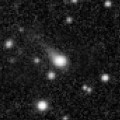
Now it is 16.5 mag (Nov. 2, Jean-Gabriel Bosch). Fading slowly. It stays observable in good condition. Date(TT) R.A. (2000) Decl. Delta r Elong. m1 Best Time(A, h) Nov. 28 6 40.28 -1 33.6 3.106 3.892 137 16.4 2:15 (180, 57) Dec. 5 6 31.40 -3 23.0 3.082 3.917 143 16.4 1:39 (180, 58) |
P/2026 U1 ( Gafton )
|
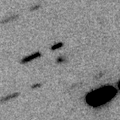
Bright new periodic comet. Now it is 16.5 mag (Nov. 22, Toru Yusa). Brightening gradually. In the Northern Hemisphere, it stays observable in good condition. In the Southern Hemisphere, it will be getting higher gradually. Date(TT) R.A. (2000) Decl. Delta r Elong. m1 Best Time(A, h) Nov. 28 11 14.99 -0 41.6 2.770 2.698 75 16.5 2:57 (251, 26) Dec. 5 11 23.04 -1 41.2 2.645 2.663 80 16.4 2:54 (249, 30) |
112P/Urata-Niijima

|
Now it is 16.0 mag (Nov. 13, Toru Yusa). It will fade out rapidly after this. It will be fainter than 18 mag in January. In the Northern Hemisphere, it stays observable in good condition. In the Southern Hemisphere, it will never be observable after this. Date(TT) R.A. (2000) Decl. Delta r Elong. m1 Best Time(A, h) Nov. 28 10 8.14 50 54.3 1.019 1.614 107 16.4 2:57 (205, -3) Dec. 5 10 21.93 52 18.1 1.017 1.648 110 16.6 2:54 (203, -3) |
84P/Giclas

|
Now it is 16.8 mag (Nov. 23, Toru Yusa). It stays 16 mag for a while. It locates somewhat low in the Northern Hemisphere. In the Southern Hemisphere, it will be getting lower gradually. Date(TT) R.A. (2000) Decl. Delta r Elong. m1 Best Time(A, h) Nov. 28 21 37.09 -21 16.1 1.867 1.862 74 16.6 20:38 ( 93, 42) Dec. 5 21 51.18 -20 3.3 1.909 1.838 70 16.5 20:46 ( 91, 37) |
(6993) 1995 BJ4
|
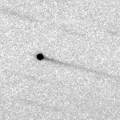
The cometary activity was detected on June 25 in the images of ATLAS. The long thin tail is visible. Now it is 16.5 mag (Nov. 3, Toru Yusa). Fading slowly. It will be fainter than 18 mag in February. It stays observable in good condition. Date(TT) R.A. (2000) Decl. Delta r Elong. m1 Best Time(A, h) Nov. 28 3 4.12 13 42.9 1.901 2.855 161 16.6 22:35 (180, 41) Dec. 5 2 59.38 13 28.5 1.938 2.854 153 16.7 22:03 (180, 41) |
346P/Catalina
|
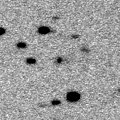
Now it is 16.7 mag (Nov. 8, ATLAS-MLO, Mauna Loa). It stays 17 mag for a while. In the Northern Hemisphere, it stays observable in good condition. It locates somewhat low in the Southern Hemisphere. Date(TT) R.A. (2000) Decl. Delta r Elong. m1 Best Time(A, h) Nov. 28 9 48.03 21 31.8 1.988 2.414 103 16.7 2:57 (217, 24) Dec. 5 9 54.09 22 24.6 1.927 2.437 109 16.7 2:54 (213, 25) |
114P/Wiseman-Skiff

|
Now it is 16.8 mag (Nov. 7, Kunihiro Shima). Fading gradually. It will be fainter than 18 mag in February. It stays observable in good condition. Date(TT) R.A. (2000) Decl. Delta r Elong. m1 Best Time(A, h) Nov. 28 10 30.36 -3 41.7 1.523 1.738 84 16.7 2:57 (245, 37) Dec. 5 10 38.87 -6 15.6 1.489 1.769 88 16.8 2:54 (244, 41) |
C/2026 P2 ( PanSTARRS )
|
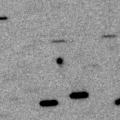
It is expected to brighten up to 13 mag from late 2027 to early 2028. At the high light, it will be observable in good condition in the Northern Hemisphere. But it will not be observable in the Southern Hemisphere. Now it is 17.0 mag (Nov. 9, ATLAS Chile). It stays 16 mag for a while. In the Northern Hemisphere, it stays observable in good condition. In the Southern Hemisphere, it will be getting lower gradually after this, and it will be unobservable in February. Date(TT) R.A. (2000) Decl. Delta r Elong. m1 Best Time(A, h) Nov. 28 0 47.62 0 22.9 3.777 4.425 125 16.8 20:38 (172, 54) Dec. 5 0 43.65 0 57.2 3.823 4.371 117 16.8 20:46 (156, 51) |
C/2026 O1 ( PanSTARRS )
|
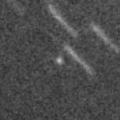
Now it is 16.8 mag (Nov. 12, Kunihiro Shima). Brightening gradually. It will be unobservable in January in the Northern Hemisphere, or in February in the Southern Hemisphere. But it will be observable again in March in the Southern Hemisphere. At the high light, it will be observable in good condition in the Southern Hemisphere, but it will not be observable in the Northern Hemisphere. Date(TT) R.A. (2000) Decl. Delta r Elong. m1 Best Time(A, h) Nov. 28 21 48.98 -32 49.6 3.448 3.309 73 16.9 20:38 ( 79, 49) Dec. 5 21 46.98 -32 55.7 3.503 3.240 66 16.8 20:46 ( 75, 42) |
C/2026 AZ17 ( Bok )
|
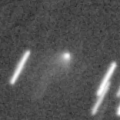
Now it is 16.6 mag (Nov. 12, Kunihiro Shima). Fading slowly. It will be fainter than 18 mag in March. It will be unobservable soon in the Southern Hemisphere, or in January in the Northern Hemisphere. Date(TT) R.A. (2000) Decl. Delta r Elong. m1 Best Time(A, h) Nov. 28 19 8.27 -8 7.4 3.086 2.473 43 16.8 20:38 ( 84, 5) Dec. 5 19 22.69 -8 56.3 3.144 2.476 40 16.9 20:46 ( 80, 1) |
C/2022 R6 ( PanSTARRS )
|
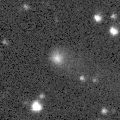
It was observed at 16 mag from 2025 to 2026. Now it is 16.7 mag (Nov. 2, ATLAS-HKO, Haleakala). It stays 17 mag for a while. It stays observable in good condition. Date(TT) R.A. (2000) Decl. Delta r Elong. m1 Best Time(A, h) Nov. 28 10 26.20 5 43.1 7.190 7.244 89 16.9 2:57 (236, 31) Dec. 5 10 27.40 5 58.4 7.092 7.263 96 16.9 2:54 (231, 34) |
C/2026 C1 ( Tsuchinshan )
|
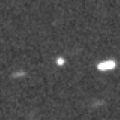
It is expected to brighten up to 4 mag in 2028 autumn. Now it is 16.0 mag (Nov. 11, Kunihiro Shima). Brightening slowly. In the Northern Hemisphere, it stays observable in good condition. In the Southern Hemisphere, it will be getting higher gradually. At the high light, it is observable in excellent condition in the Southern Hemisphere. In the Northern Hemisphere, it becomes observable after the perihelion passage. Date(TT) R.A. (2000) Decl. Delta r Elong. m1 Best Time(A, h) Nov. 28 12 43.55 -0 41.3 8.289 7.768 55 17.0 2:57 (265, 9) Dec. 5 12 45.03 -0 58.5 8.128 7.711 61 16.9 2:54 (262, 13) |
C/2025 A1 ( Lemmon )
|
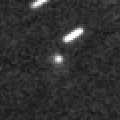
Now it is 16.7 mag (Nov. 22, ATLAS-MLO, Mauna Loa). It stays 17 mag for a while. In the Northern Hemisphere, it stays observable in good condition. It stays extremely low in the Southern Hemisphere. Date(TT) R.A. (2000) Decl. Delta r Elong. m1 Best Time(A, h) Nov. 28 11 49.70 30 47.1 5.448 5.399 81 17.0 2:57 (232, -1) Dec. 5 11 55.00 31 5.8 5.346 5.392 87 17.0 2:54 (229, 2) |
(3200) Phaethon

|
Parent object of Geminids meteor shower. It approached to Sun down to 0.14 a.u. on Sept. 2. It approached to Earth down to 0.36 a.u. in early October, and brightened up to 14.5 mag (Oct. 12, Katsumi Yoshimoto). Fading gradually. It will be fainter than 18 mag soon. In the Northern Hemisphere, it stays observable in good condition. It locates somewhat low in the Southern Hemisphere. Date(TT) R.A. (2000) Decl. Delta r Elong. m1 Best Time(A, h) Nov. 28 22 40.95 23 14.1 1.072 1.624 104 17.0 20:38 (144, 22) Dec. 5 22 54.47 21 32.2 1.211 1.692 100 17.3 20:46 (138, 21) |
P/2020 G1 ( Pimentel )
|
|
First return of a new periodic comet which brightened up to 14.5 mag in 2020. It will brighten rapidly after this. It will be unobservable soon in the Southern Hemisphere, or in January in the Northern Hemisphere. But it will be observable again in January in the Southern Hemisphere, or in March in the Northern Hemisphere. It is expected to brighten up to 13.5 mag from January to February. It is not observable around the high light in the Northern Hemisphere. Date(TT) R.A. (2000) Decl. Delta r Elong. m1 Best Time(A, h) Nov. 28 19 53.25 -5 48.7 1.367 1.141 55 17.5 20:38 ( 92, 13) Dec. 5 20 6.74 -6 23.2 1.309 1.036 51 17.2 20:46 ( 88, 9) |
P/2009 Y2 = P/2026 R4 ( Kowalski )
|
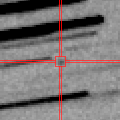
First return of a new periodic comet which was observed at 18 mag in 2009. Now it is 17.5 mag (Nov. 22, R. Naves, M. Campas). Fading slowly. It will be fainter than 18 mag in February. In the Northern Hemisphere, it stays observable in good condition. Date(TT) R.A. (2000) Decl. Delta r Elong. m1 Best Time(A, h) Nov. 28 5 15.45 30 42.4 1.409 2.370 163 17.2 0:51 (180, 24) Dec. 5 5 9.86 28 38.4 1.391 2.370 171 17.2 0:18 (180, 26) |
C/2025 E1 ( PanSTARRS )
|
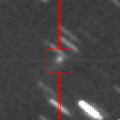
Now it is 17.6 mag (Nov. 16, ATLAS South Africa). It stays 18 mag for a while. In the Northern Hemisphere, it will never be observable after this. Date(TT) R.A. (2000) Decl. Delta r Elong. m1 Best Time(A, h) Nov. 28 19 9.75 -78 3.6 4.431 4.037 60 17.3 20:38 ( 15, 35) Dec. 5 19 46.88 -76 27.4 4.470 4.046 58 17.4 20:46 ( 17, 34) |
C/2026 S2 ( ATLAS )

|
Now it is 17.7 mag (Nov. 18, ATLAS South Africa). It stays 18 mag for a while. It stays observable in good condition. Date(TT) R.A. (2000) Decl. Delta r Elong. m1 Best Time(A, h) Nov. 28 5 14.82 -3 50.9 3.745 4.632 150 17.5 0:50 (180, 59) Dec. 5 5 2.73 -4 13.2 3.713 4.614 153 17.5 0:10 (180, 59) |
69P/Taylor
|
|
It has not been observed yet in this apparition. Fading slowly. It will be fainter than 18 mag in February. In the Northern Hemisphere, it stays observable in good condition. Date(TT) R.A. (2000) Decl. Delta r Elong. m1 Best Time(A, h) Nov. 28 7 36.08 15 10.2 1.493 2.273 131 17.6 2:57 (184, 40) Dec. 5 7 35.92 16 20.5 1.438 2.276 139 17.5 2:43 (180, 39) |
C/2019 E3 ( ATLAS )
|
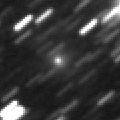
Very far object. It stays 18 mag for a while. In the Northern Hemisphere, it will be unobservable in February. In the Southern Hemisphere, it will be getting lower gradually. But it will be getting higher again after March. Date(TT) R.A. (2000) Decl. Delta r Elong. m1 Best Time(A, h) Nov. 28 23 45.17 -42 30.3 11.797 11.860 91 17.6 20:38 ( 59, 73) Dec. 5 23 43.99 -41 58.4 11.912 11.878 85 17.6 20:46 ( 65, 66) |
493P/2024 Q2 ( LONEOS )
|
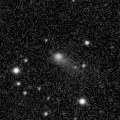
Now it is 17.3 mag (Nov. 22, ATLAS-MLO, Mauna Loa). It stays 18 mag for a while. In the Northern Hemisphere, it stays observable in good condition. It locates somewhat low in the Southern Hemisphere. Date(TT) R.A. (2000) Decl. Delta r Elong. m1 Best Time(A, h) Nov. 28 10 31.12 30 2.8 4.024 4.257 96 17.6 2:57 (220, 11) Dec. 5 10 33.57 30 3.9 3.942 4.274 103 17.6 2:54 (216, 14) |
P/2018 VN2 = P/2026 M2 ( Leonard )
|
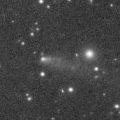
First return of a new periodic comet which was observed at 18 mag in 2018. Now it is 16.9 mag (Nov. 6, Kunihiro Shima). Fading gradually. It will be fainter than 18 mag soon. It stays observable in good condition. Date(TT) R.A. (2000) Decl. Delta r Elong. m1 Best Time(A, h) Nov. 28 1 46.86 12 24.2 1.408 2.280 143 17.6 21:18 (180, 43) Dec. 5 1 48.21 11 15.7 1.482 2.301 136 17.8 20:52 (180, 44) |
C/2025 B2 ( Borisov )

|
Now it is 17.3 mag (Nov. 15, D. Buczynski). It stays 18 mag for a while. In the Southern Hemisphere, it will never be observable after this. Date(TT) R.A. (2000) Decl. Delta r Elong. m1 Best Time(A, h) Nov. 28 17 54.51 66 43.4 8.194 8.252 89 17.6 20:38 (151,-39) Dec. 5 18 2.18 66 1.3 8.203 8.254 89 17.7 20:46 (150,-42) |
C/2026 B3 ( PanSTARRS )

|
Now it is 17.4 mag (Mar. 21, Hidenori Nohara). It stays 17 mag for a while. It stays observable in good condition. Date(TT) R.A. (2000) Decl. Delta r Elong. m1 Best Time(A, h) Nov. 28 11 22.13 -5 53.5 6.154 5.923 71 17.8 2:57 (257, 28) Dec. 5 11 21.51 -6 43.6 6.026 5.914 78 17.7 2:54 (253, 33) |
266P/Christensen
|
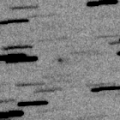
Now it is 17.6 mag (Nov. 11, Mike Olason). It stays 18 mag for a while. In the Northern Hemisphere, it stays observable in good condition. It locates somewhat low in the Southern Hemisphere. Date(TT) R.A. (2000) Decl. Delta r Elong. m1 Best Time(A, h) Nov. 28 8 13.68 24 56.9 1.613 2.325 125 17.9 2:57 (193, 29) Dec. 5 8 15.33 25 3.1 1.548 2.324 131 17.8 2:54 (187, 30) |
247P/LINEAR
|
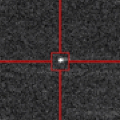
Now it is 17.7 mag (Nov. 20, Catalina Sky Survey). Fading gradually. It will be fainter than 18 mag soon. In the Northern Hemisphere, it stays observable in good condition. In the Southern Hemisphere, it will be getting higher gradually. Date(TT) R.A. (2000) Decl. Delta r Elong. m1 Best Time(A, h) Nov. 28 11 26.40 19 47.8 1.325 1.528 81 17.9 2:57 (237, 11) Dec. 5 11 44.04 18 54.0 1.301 1.549 84 17.9 2:54 (236, 12) |
450P/2022 Q3 ( LONEOS )

|
Now it is 18.0 mag (Oct. 29, Purple Mountain Observatory, XuYi Station). It stays 18 mag for a while. In the Northern Hemisphere, it stays observable in good condition. Date(TT) R.A. (2000) Decl. Delta r Elong. m1 Best Time(A, h) Nov. 28 10 21.56 14 5.9 5.229 5.376 93 17.9 2:57 (229, 25) Dec. 5 10 23.58 14 6.8 5.114 5.373 99 17.9 2:54 (224, 29) |
373P/Rinner
|
|
Now it is 19.6 mag (Nov. 11, John Maikner). It stays 19 mag for a while. It stays observable in good condition. Much fainter than originally predicted. Date(TT) R.A. (2000) Decl. Delta r Elong. m1 Best Time(A, h) Nov. 28 9 27.56 -1 10.7 1.992 2.376 100 19.0 2:57 (228, 46) Dec. 5 9 31.76 -2 27.0 1.926 2.389 105 19.0 2:54 (223, 49) |
P/2004 V5 = P/2025 T2 ( LINEAR-Hill )
|
|
Both the components A and B are visible. Now it is 20.8 mag (Nov. 6, Pan-STARRS 1, Haleakala). It stays 20 mag for a while. In the Northern Hemisphere, it stays observable in good condition. It stays extremely low in the Southern Hemisphere. Much fainter than originally predicted. Date(TT) R.A. (2000) Decl. Delta r Elong. m1 Best Time(A, h) Nov. 28 7 49.91 40 20.7 3.931 4.635 130 20.1 2:57 (185, 14) Dec. 5 7 48.61 40 56.7 3.853 4.624 137 20.1 2:54 (180, 14) |