Weekly Information about Bright Comets (2026 Aug. 29: South)
|
Japanese version Home page |
Updated on August 29, 2026 |
|||
|
||||
|
Best time and the azimuth, altitude (A,h) are at lat. 35 deg in the Southern Hemisphere. Azimuth indicates 0 for south, 90 for west, 180 for north, 270 for east. |

|
|
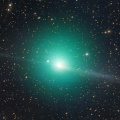
Now it is 8.2 mag (Aug. 28, Marco Goiato). It will fade out rapidly after this. It locates somewhat low in the Northern Hemisphere. But it will become high in autumn. In the Southern Hemisphere, it stays observable in good condition. Date(TT) R.A. (2000) Decl. Delta r Elong. m1 Best Time(A, h) Aug. 29 22 18.29 -33 50.2 0.465 1.446 155 8.4 23:49 (180, 89) Sept. 5 22 24.16 -34 50.5 0.495 1.462 151 8.6 23:27 (180, 90) |
 220P/McNaught
|
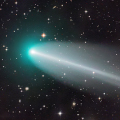
Major outburst of about 9 mag occured from May 31 to June 1, and it brightened up to 8.3 mag (June 3, Marco Goiato). Another major outburst occued on Aug. 5 and it brightened up to 6.4 mag (Aug. 6, Taras Prystavski). Now it is 10.4 mag (Aug. 24, Osamu Miyazaki). It will fade out rapidly after this. It will be fainter than 18 mag in November. It stays observable in good condition. Date(TT) R.A. (2000) Decl. Delta r Elong. m1 Best Time(A, h) Aug. 29 3 14.90 9 6.6 1.137 1.720 106 9.5 4:47 (180, 46) Sept. 5 3 22.39 8 39.4 1.108 1.748 111 10.2 4:27 (180, 46) |
169P/NEAT
|
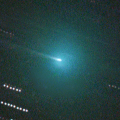
It approached to Earth down to 0.17 a.u. mid August. Now it is 11.4 mag (Aug. 9, Mike Olason). It will turn to fade out rapidly after the peak. It will be fainter than 18 mag in November. Now it is not observable. It will appear in September. Date(TT) R.A. (2000) Decl. Delta r Elong. m1 Best Time(A, h) Aug. 29 10 10.57 21 35.3 0.271 0.748 12 10.4 4:59 (258,-21) Sept. 5 9 42.55 15 19.5 0.358 0.681 19 10.2 4:50 (257, -8) |
(3200) Phaethon

|
Parent object of Geminids meteor shower. It approaches to Sun down to 0.14 a.u. on Sept. 2. In the Northern Hemisphere, it will be observable at 14-15 mag in good condition in October. Now it is not observable. It will appear in September in the Northern Hemisphere, or in October in the Southern Hemisphere. Date(TT) R.A. (2000) Decl. Delta r Elong. m1 Best Time(A, h) Aug. 29 10 19.33 6 36.4 1.218 0.220 3 12.4 4:59 (272,-14) Sept. 5 11 31.66 4 57.0 0.917 0.185 9 14.9 19:07 ( 90, -9) |
C/2024 T5 ( ATLAS )
|
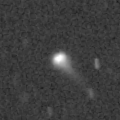
Now it is 13.5 mag (Aug. 6, Ken-ichi Kadota). Brightening slowly. In the Southern Hemisphere, it stays observable in good condition. It is expected to brighten up to 11 mag in winter. Date(TT) R.A. (2000) Decl. Delta r Elong. m1 Best Time(A, h) Aug. 29 5 30.17 -12 55.7 4.521 4.412 77 12.7 4:59 (239, 54) Sept. 5 5 34.34 -12 59.8 4.411 4.383 81 12.6 4:50 (235, 57) |
88P/Howell
|
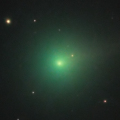
It brightened up to 9.6 mag in the very low sky in spring (Apr. 14, Chris Wyatt). Now it is 12.7 mag (Aug. 9, Osamu Miyazaki). It will fade out rapidly after this. It stays observable in good condition. Date(TT) R.A. (2000) Decl. Delta r Elong. m1 Best Time(A, h) Aug. 29 3 15.21 14 47.6 1.637 2.134 104 12.9 4:48 (180, 40) Sept. 5 3 17.05 14 57.9 1.602 2.180 111 13.0 4:22 (180, 40) |
161P/Hartley-IRAS
|
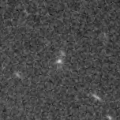
It is expected to brighten up 10 mag from autumn to winter, and it will be observable in good condition. Now it is 13.6 mag (Aug. 24, Toru Yusa). Brightening rapidly. In the Northern Hemisphere, it stays observable in good condition. In the Southern Hemisphere, it will be getting lower gradually after this, and it will be unobservable in November. Date(TT) R.A. (2000) Decl. Delta r Elong. m1 Best Time(A, h) Aug. 29 2 58.98 -18 31.0 1.080 1.755 114 13.7 4:32 (180, 73) Sept. 5 2 40.71 -18 4.5 0.913 1.695 123 13.0 3:47 (180, 73) |
260P/McNaught
|
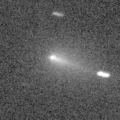
Now it is 13.7 mag (Aug. 8, Ken-ichi Kadota). It will fade out rapidly after this. In the Northern Hemisphere, it stays observable in good condition. It locates somewhat low in the Southern Hemisphere. Date(TT) R.A. (2000) Decl. Delta r Elong. m1 Best Time(A, h) Aug. 29 4 22.34 33 14.2 1.103 1.443 86 13.0 4:59 (192, 21) Sept. 5 4 41.88 35 35.4 1.085 1.460 88 13.1 4:50 (192, 18) |
78P/Gehrels 2
|
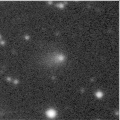
Now it is 14.1 mag (Aug. 24, Yoshimi Nagai). It stays 14 mag for a while. In the Northern Hemisphere, it stays observable in good condition. It locates somewhat low in the Southern Hemisphere. But it will become high in autumn. Date(TT) R.A. (2000) Decl. Delta r Elong. m1 Best Time(A, h) Aug. 29 6 20.73 19 53.2 2.376 2.074 60 13.2 4:59 (224, 21) Sept. 5 6 34.85 19 25.4 2.326 2.089 63 13.2 4:50 (223, 22) |
C/2024 J3 ( ATLAS )
|
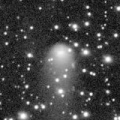
Now it is 13.6 mag (Aug. 6, Hiroshi Abe). It stays 14 mag for a while. In the Northern Hemisphere, it stays observable in good condition. In the Southern Hemisphere, it will be unobservable in October. Date(TT) R.A. (2000) Decl. Delta r Elong. m1 Best Time(A, h) Aug. 29 18 40.59 43 26.6 3.542 3.942 106 13.5 20:10 (180, 12) Sept. 5 18 35.13 43 15.8 3.579 3.930 103 13.5 19:37 (180, 12) |
29P/Schwassmann-Wachmann 1
|
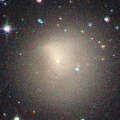
Now it is 13.6 mag (Aug. 2, Andrew Pearce). In the Northern Hemisphere, it is not observable now, but it will appear in October. In the Southern Hemisphere, it will be unobservable in September. But it will be observable again in November. Date(TT) R.A. (2000) Decl. Delta r Elong. m1 Best Time(A, h) Aug. 29 11 42.01 -4 47.2 7.233 6.318 23 14.3 19:02 ( 87, 5) Sept. 5 11 46.64 -5 17.8 7.269 6.318 18 14.3 19:07 ( 83, 0) |
C/2023 R1 ( PanSTARRS )
|
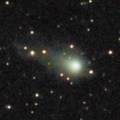
Now it is 13.7 mag (Aug. 20, Andrew Pearce). It stays 15 mag for a while. It will be unobservable in October in the Northern Hemisphere, or in November in the Southern Hemisphere. But it will be observable again in December. Date(TT) R.A. (2000) Decl. Delta r Elong. m1 Best Time(A, h) Aug. 29 15 32.91 -14 49.6 3.838 3.782 79 14.3 19:02 (119, 57) Sept. 5 15 30.20 -15 26.7 3.992 3.803 71 14.4 19:07 (109, 50) |
C/2014 UN271 ( Bernardinelli-Bernstein )

|
Very large comet. Now it is 13.8 mag (July 18, Thomas Lehmann). It stays 14 mag for a while. In the Northern Hemisphere, it is not observable now. In the Southern Hemisphere, it stays observable in good condition. In the Northern Hemisphere, it is not observable until 2030. Date(TT) R.A. (2000) Decl. Delta r Elong. m1 Best Time(A, h) Aug. 29 7 12.11 -69 48.6 13.699 13.668 86 14.5 4:59 (337, 44) Sept. 5 7 17.71 -70 10.5 13.694 13.648 85 14.5 4:50 (338, 45) |
C/2026 A2 ( Bok )
|
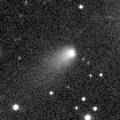
It will brighten up to 13 mag from autumn to winter. Now it is 14.5 mag (Aug. 22, Alfons Diepvens). Brightening slowly. In the Northern Hemisphere, it stays observable in good condition. In the Southern Hemisphere, it is not observable now, but it will appear in November. Date(TT) R.A. (2000) Decl. Delta r Elong. m1 Best Time(A, h) Aug. 29 16 20.72 75 25.7 2.342 2.388 80 14.8 19:02 (175,-21) Sept. 5 16 35.63 74 24.3 2.258 2.341 82 14.6 19:07 (174,-20) |
C/2024 R4 ( PanSTARRS )
|
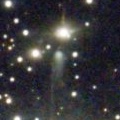
Now it is 14.8 mag (Aug. 12, Erik Bryssinck). It stays 15 mag for a while. In the Northern Hemisphere, it stays observable in good condition. In the Southern Hemisphere, it will be unobservable in November. Date(TT) R.A. (2000) Decl. Delta r Elong. m1 Best Time(A, h) Aug. 29 20 39.47 49 38.7 5.048 5.567 116 14.7 22:08 (180, 5) Sept. 5 20 29.37 49 25.1 5.027 5.534 115 14.6 21:30 (180, 6) |
63P/Wild 1
|
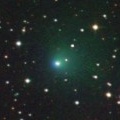
Now it is 13.8 mag (Aug. 2, Thomas Lehmann). It will fade out rapidly after this. It will be fainter than 18 mag in December. In the Northern Hemisphere, it is not observable now, but it will appear in December. In the Southern Hemisphere, it will be unobservable in September. But it will be observable again in December. Date(TT) R.A. (2000) Decl. Delta r Elong. m1 Best Time(A, h) Aug. 29 11 49.83 -2 7.4 2.932 2.045 23 14.8 19:02 ( 91, 5) Sept. 5 12 3.94 -4 21.9 2.974 2.063 20 14.9 19:07 ( 86, 3) |
123P/West-Hartley

|
Now it is 16.9 mag (May 17, Kunihiro Shima). It stays 15 mag for a while. Now it is not observable. It will appear in September in the Northern Hemisphere, or in November in the Southern Hemisphere. Date(TT) R.A. (2000) Decl. Delta r Elong. m1 Best Time(A, h) Aug. 29 10 6.90 22 47.4 3.132 2.167 14 15.0 4:59 (256,-21) Sept. 5 10 22.74 21 21.2 3.113 2.163 16 15.0 4:50 (257,-19) |
C/2022 QE78 ( ATLAS )
|
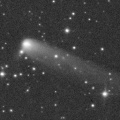
Now it is 15.5 mag (June 14, Alfons Diepvens). It stays 16 mag for a while. Now it is not observable. It will appear in September in the Northern Hemisphere, or in November in the Southern Hemisphere. Date(TT) R.A. (2000) Decl. Delta r Elong. m1 Best Time(A, h) Aug. 29 10 40.96 27 34.4 6.996 6.045 18 15.5 19:02 (107,-25) Sept. 5 10 47.45 27 18.2 7.002 6.066 20 15.6 4:50 (255,-27) |
C/2022 N2 ( PanSTARRS )
|
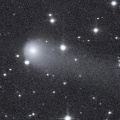
Now it is 16.2 mag (Aug. 8, Ken-ichi Kadota). It stays 16 mag for a while. In the Northern Hemisphere, it stays observable in good condition. It locates somewhat low in the Southern Hemisphere. Date(TT) R.A. (2000) Decl. Delta r Elong. m1 Best Time(A, h) Aug. 29 7 2.67 26 9.5 5.666 5.096 51 15.8 4:59 (228, 10) Sept. 5 7 8.38 26 1.5 5.616 5.134 56 15.9 4:50 (226, 12) |
C/2025 R3 ( PanSTARRS )
|
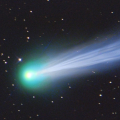
It brightened up to 4.0 mag in late April (Apr. 30, Chris Wyatt). It brightened up to 1.3 mag due to the forward scattering in the SOHO LASCO images (Apr. 25, Mikolaj Kaszczyk). Fading gradually. It will be fainter than 18 mag in November. In the Northern Hemisphere, it will be unobservable temporarily in September. In the Southern Hemisphere, it stays observable in good condition. Date(TT) R.A. (2000) Decl. Delta r Elong. m1 Best Time(A, h) Aug. 29 7 37.03 -19 22.5 2.941 2.438 51 15.9 4:59 (272, 33) Sept. 5 7 37.76 -20 37.3 2.965 2.535 55 16.1 4:50 (270, 37) |
C/2021 G2 ( ATLAS )

|
Now it is 15.6 mag (Aug. 15, Toru Yusa). It stays 16 mag for a while. In the Northern Hemisphere, it stays observable in good condition. In the Southern Hemisphere, it will be getting lower gradually after this, and it will be unobservable in November. Date(TT) R.A. (2000) Decl. Delta r Elong. m1 Best Time(A, h) Aug. 29 16 58.89 14 28.3 7.139 7.294 94 15.9 19:02 (169, 40) Sept. 5 17 0.02 14 8.1 7.265 7.330 89 16.0 19:07 (160, 39) |
C/2025 Y1 ( ATLAS )
|
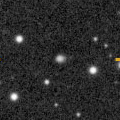
Now it is 16.1 mag (Aug. 2, ATLAS South Africa). Brightening slowly. It will be unobservable in September. But it will be observable again in November in the Northern Hemisphere, or in December in the Southern Hemisphere. Date(TT) R.A. (2000) Decl. Delta r Elong. m1 Best Time(A, h) Aug. 29 13 12.27 0 51.1 5.542 4.834 41 16.1 19:02 (106, 20) Sept. 5 13 17.75 0 18.1 5.555 4.782 36 16.0 19:07 (101, 15) |
112P/Urata-Niijima
|
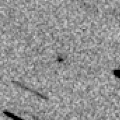
Now it is 17.6 mag (Aug. 13, W. Hasubick). Brightening slowly. In the Northern Hemisphere, it stays observable in good condition. In the Southern Hemisphere, it will be unobservable in November. Date(TT) R.A. (2000) Decl. Delta r Elong. m1 Best Time(A, h) Aug. 29 5 8.13 25 1.6 1.311 1.465 77 16.4 4:59 (205, 25) Sept. 5 5 30.64 27 45.0 1.264 1.453 78 16.1 4:50 (205, 23) |
C/2025 M2 ( PanSTARRS )
|
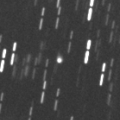
It is expected to brighten up to 12 mag from 2027 to 2028. Now it is 16.2 mag (Aug. 1, Taras Prystavski). It stays 16 mag for a while. It will be getting lower gradually after this, and it will be unobservable in December. Date(TT) R.A. (2000) Decl. Delta r Elong. m1 Best Time(A, h) Aug. 29 19 13.42 -20 58.5 4.419 5.148 131 16.3 20:43 (180, 76) Sept. 5 19 6.08 -21 7.8 4.472 5.096 123 16.3 20:08 (180, 76) |
114P/Wiseman-Skiff
|
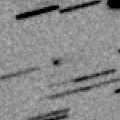
Now it is 16.6 mag (Aug. 11, Alfons Diepvens). It stays 17 mag for a while. In the Northern Hemisphere, it stays observable in good condition. It locates somewhat low in the Southern Hemisphere. But it will become high in autumn. Date(TT) R.A. (2000) Decl. Delta r Elong. m1 Best Time(A, h) Aug. 29 7 3.43 27 0.1 2.001 1.580 51 16.5 4:59 (227, 10) Sept. 5 7 24.86 25 24.0 1.958 1.574 53 16.4 4:50 (229, 10) |
65P/Gunn
|
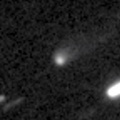
Now it is 17.9 mag (Aug. 13, Andrew Pearce). Fading slowly. It stays observable in good condition. Date(TT) R.A. (2000) Decl. Delta r Elong. m1 Best Time(A, h) Aug. 29 0 49.21 -6 29.1 2.680 3.556 145 16.7 2:22 (180, 61) Sept. 5 0 45.91 -6 55.3 2.648 3.571 152 16.6 1:52 (180, 62) |
C/2026 AZ17 ( Bok )
|
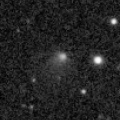
Now it is 16.6 mag (Aug. 20, Alfons Diepvens). It stays 17 mag for a while. In the Northern Hemisphere, it stays observable in good condition. In the Southern Hemisphere, it will be getting lower gradually after this, and it will be unobservable in December. Date(TT) R.A. (2000) Decl. Delta r Elong. m1 Best Time(A, h) Aug. 29 16 40.53 12 56.4 2.424 2.638 90 16.7 19:02 (163, 41) Sept. 5 16 47.70 10 52.7 2.462 2.613 87 16.7 19:07 (155, 41) |
C/2025 J1 ( Borisov )
|
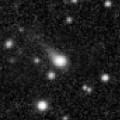
Now it is 17.3 mag (Aug. 14, P.-J. Dekelver). It stays 17 mag for a while. It will be getting higher gradually. Date(TT) R.A. (2000) Decl. Delta r Elong. m1 Best Time(A, h) Aug. 29 7 7.86 20 22.0 4.224 3.650 49 16.8 4:59 (233, 14) Sept. 5 7 10.78 19 0.5 4.139 3.663 55 16.7 4:50 (231, 17) |
C/2024 G6 ( ATLAS )
|
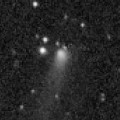
Now it is 17.1 mag (Aug. 12, Alfons Diepvens). It stays 17 mag for a while. In the Northern Hemisphere, it will be getting lower gradually. But it will be getting higher again after November. In the Southern Hemisphere, it will be unobservable in October. Date(TT) R.A. (2000) Decl. Delta r Elong. m1 Best Time(A, h) Aug. 29 15 5.79 15 26.0 6.874 6.557 67 17.0 19:02 (139, 29) Sept. 5 15 6.32 15 21.1 6.975 6.566 62 17.1 19:07 (132, 24) |
C/2025 E1 ( PanSTARRS )
|
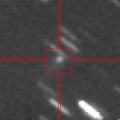
Now it is 17.2 mag (June 2, ATLAS Chile). It stays 17 mag for a while. In the Northern Hemisphere, it will never be observable after this. It locates somewhat low in the Southern Hemisphere. Date(TT) R.A. (2000) Decl. Delta r Elong. m1 Best Time(A, h) Aug. 29 10 19.60 -69 20.1 4.074 4.004 78 17.1 4:59 (337, 28) Sept. 5 10 35.64 -70 42.2 4.091 4.001 77 17.1 4:50 (338, 29) |
C/2023 RS61 ( PanSTARRS )
|
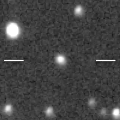
It is around 20 mag usually. However, it brightened in outburst in 2025 autumn up to 17.0 mag (Sept. 4, 2025, Taras Prystavski). Now it is 19.2 mag (Aug. 15, W. Hasubick). It stays 17 mag for a while. In the Northern Hemisphere, it stays observable in good condition. It stays extremely low in the Southern Hemisphere. Date(TT) R.A. (2000) Decl. Delta r Elong. m1 Best Time(A, h) Aug. 29 4 34.38 41 38.1 8.554 8.483 82 17.2 4:59 (193, 12) Sept. 5 4 36.12 41 57.8 8.440 8.476 88 17.1 4:50 (190, 12) |
C/2024 G4 ( PanSTARRS )

|
Now it is 17.2 mag (Aug. 12, W. Hasubick). It stays 18 mag for a while. It stays observable in good condition. Date(TT) R.A. (2000) Decl. Delta r Elong. m1 Best Time(A, h) Aug. 29 20 1.33 -2 0.6 4.216 5.056 142 17.2 21:31 (180, 57) Sept. 5 20 0.52 -2 50.6 4.289 5.069 136 17.2 21:03 (180, 58) |
C/2019 E3 ( ATLAS )
|
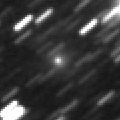
Very far object. It stays 18 mag for a while. It stays extremely low in the Northern Hemisphere. In the Southern Hemisphere, it stays observable in good condition. Date(TT) R.A. (2000) Decl. Delta r Elong. m1 Best Time(A, h) Aug. 29 0 25.81 -45 9.1 10.883 11.635 136 17.3 1:59 ( 0, 80) Sept. 5 0 22.28 -45 17.1 10.891 11.652 137 17.3 1:28 ( 0, 80) |
84P/Giclas
|
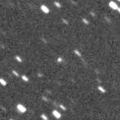
Now it is 16.3 mag (Aug. 21, Andrew Pearce). It stays 17 mag for a while. It locates somewhat low in the Northern Hemisphere. In the Southern Hemisphere, it stays observable in good condition. Date(TT) R.A. (2000) Decl. Delta r Elong. m1 Best Time(A, h) Aug. 29 20 21.27 -25 32.3 1.370 2.277 145 17.6 21:51 (180, 80) Sept. 5 20 17.67 -25 59.0 1.385 2.241 138 17.5 21:20 (180, 81) |
C/2022 E2 ( ATLAS )
|
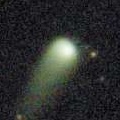
It was observed at 12-13 mag for a long time in 2024. Now it is 17.1 mag (Aug. 17, Mike Olason). Fading slowly. It will be fainter than 18 mag in October. In the Northern Hemisphere, it stays observable in good condition. It locates somewhat low in the Southern Hemisphere. Date(TT) R.A. (2000) Decl. Delta r Elong. m1 Best Time(A, h) Aug. 29 22 21.13 29 43.7 6.169 6.980 140 17.5 23:50 (180, 25) Sept. 5 22 15.35 28 56.9 6.194 7.024 142 17.6 23:17 (180, 26) |
188P/LINEAR-Mueller

|
Now it is 17.9 mag (Aug. 24, W. Hasubick). It stays 18 mag for a while. In the Northern Hemisphere, it stays observable in good condition. It stays extremely low in the Southern Hemisphere. Date(TT) R.A. (2000) Decl. Delta r Elong. m1 Best Time(A, h) Aug. 29 5 33.40 32 19.4 2.867 2.716 71 17.6 4:59 (208, 16) Sept. 5 5 43.43 32 48.7 2.799 2.733 75 17.6 4:50 (206, 17) |
C/2023 X2 ( Lemmon )
|
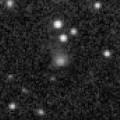
Now it is 17.8 mag (July 6, ATLAS-MLO, Mauna Loa). It stays 18 mag for a while. In the Northern Hemisphere, it stays observable in good condition. In the Southern Hemisphere, it will never be observable after this. Date(TT) R.A. (2000) Decl. Delta r Elong. m1 Best Time(A, h) Aug. 29 14 20.16 62 39.7 5.725 5.413 67 17.6 19:02 (159,-15) Sept. 5 14 27.93 61 0.0 5.748 5.431 66 17.6 19:07 (156,-15) |
C/2025 B2 ( Borisov )

|
Now it is 17.7 mag (Aug. 8, ATLAS-TDO). It stays 18 mag for a while. In the Northern Hemisphere, it stays observable in good condition. In the Southern Hemisphere, it will never be observable after this. Date(TT) R.A. (2000) Decl. Delta r Elong. m1 Best Time(A, h) Aug. 29 16 31.39 80 28.5 8.342 8.239 80 17.7 19:02 (177,-26) Sept. 5 16 33.95 79 16.9 8.316 8.239 82 17.7 19:07 (175,-25) |
P/2026 M1 ( ZTF )
|
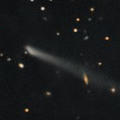
First return of a new periodic comet which brightened up to 17 mag in 2021. It approached to Earth down to 0.17 a.u. from June to July. It brightened up to 15.2 mag (July 14, Andrew Pearce). Now it is 16.8 mag (Aug. 22, Jean-Gabriel Bosch). It will fade out rapidly after this. It will be fainter than 18 mag in September. In the Northern Hemisphere, it stays observable in good condition. It stays extremely low in the Southern Hemisphere. Date(TT) R.A. (2000) Decl. Delta r Elong. m1 Best Time(A, h) Aug. 29 4 35.38 43 52.9 0.502 1.065 82 17.8 4:59 (193, 10) Sept. 5 4 47.92 45 7.4 0.535 1.109 86 18.1 4:50 (191, 9) |
162P/Siding Spring

|
Now it is 17.4 mag (Aug. 9, Alfons Diepvens). It stays 18 mag for a while. In the Northern Hemisphere, it will be getting higher gradually. In the Southern Hemisphere, it will never be observable after this. Date(TT) R.A. (2000) Decl. Delta r Elong. m1 Best Time(A, h) Aug. 29 8 24.68 38 0.5 2.367 1.717 39 17.8 4:59 (231,-10) Sept. 5 8 45.91 37 45.0 2.376 1.764 42 17.9 4:50 (231,-11) |
C/2023 H5 ( Lemmon )

|
Now it is 17.4 mag (Aug. 22, Alfons Diepvens). It stays 18 mag for a while. In the Northern Hemisphere, it stays observable in good condition. In the Southern Hemisphere, it will never be observable after this. Date(TT) R.A. (2000) Decl. Delta r Elong. m1 Best Time(A, h) Aug. 29 20 46.67 62 54.6 5.167 5.514 104 17.9 22:15 (180, -8) Sept. 5 20 40.68 61 32.1 5.173 5.548 106 18.0 21:42 (180, -7) |
235P/LINEAR
|
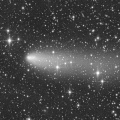
It became brighter than expected. It was observed at 13 mag from winter to spring. Now it is 17.1 mag (Aug. 15, Andrew Pearce). It will fade out rapidly after this. In the Southern Hemisphere, it stays observable in good condition. It may be brighter than this ephemeris still now. Date(TT) R.A. (2000) Decl. Delta r Elong. m1 Best Time(A, h) Aug. 29 16 56.23 -11 38.2 2.356 2.699 98 18.0 19:02 (159, 65) Sept. 5 17 2.71 -12 8.8 2.474 2.730 93 18.2 19:07 (145, 63) |
P/2026 L3 ( Gibbs )
|
|
It was observed at 17 mag in 2012. It was expected to brighten up to 17 mag again in this apparition. But actually, it is much fainter. Now it is 21.0 mag (Aug. 13, Pan-STARRS 1 telescope, Haleakala). Fading gradually. It locates somewhat low in the Northern Hemisphere. In the Southern Hemisphere, it stays observable in good condition. Date(TT) R.A. (2000) Decl. Delta r Elong. m1 Best Time(A, h) Aug. 29 20 2.15 -24 3.5 1.238 2.128 142 21.2 21:32 (180, 79) Sept. 5 20 3.66 -24 49.8 1.297 2.138 135 21.4 21:06 (180, 80) |