Weekly Information about Bright Comets (2026 Oct. 3: South)
|
Japanese version Home page |
Updated on October 4, 2026 |
|||
|
||||
|
Best time and the azimuth, altitude (A,h) are at lat. 35 deg in the Southern Hemisphere. Azimuth indicates 0 for south, 90 for west, 180 for north, 270 for east. |

|
|
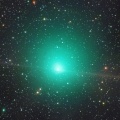
It brightened up to 6.9 mag in summer (Aug. 5, Juan Jose Gonzalez). Now it is 10.2 mag (Oct. 1, Yoshimi Nagai). It will fade out rapidly after this. In the Southern Hemisphere, it stays observable in good condition. Date(TT) R.A. (2000) Decl. Delta r Elong. m1 Best Time(A, h) Oct. 3 22 49.42 -33 21.1 0.678 1.558 135 9.8 22:02 (180, 88) Oct. 10 22 56.79 -31 59.7 0.738 1.588 131 10.2 21:42 (180, 87) |
 161P/Hartley-IRAS
|
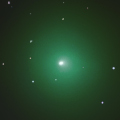
Now it is 10.7 mag (Sept. 27, Marco Goiato). Fading gradually. In the Northern Hemisphere, it stays observable in good condition. In the Southern Hemisphere, it will be getting lower gradually after this, and it will be unobservable in November. Date(TT) R.A. (2000) Decl. Delta r Elong. m1 Best Time(A, h) Oct. 3 23 4.00 -4 29.5 0.504 1.475 155 10.5 22:10 (180, 59) Oct. 10 21 51.83 2 15.5 0.548 1.429 132 10.4 20:32 (180, 52) |
169P/NEAT
|
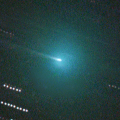
It approached to Earth down to 0.17 a.u. mid August. Now it is 11.1 mag (Sept. 19, Mike Olason). It will fade out rapidly after this. It will be fainter than 18 mag in November. In the Northern Hemisphere, it will be getting higher gradually. It locates somewhat low in the Southern Hemisphere. Date(TT) R.A. (2000) Decl. Delta r Elong. m1 Best Time(A, h) Oct. 3 9 58.09 3 45.5 0.834 0.644 39 11.6 4:08 (259, 9) Oct. 10 10 15.03 1 59.3 0.949 0.701 42 12.6 3:58 (260, 10) |
C46K1R1
|
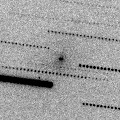
New comet discovered on Sept. 14 by Catalina Sky Survey. Now it is 12.5 mag (Oct. 2, Osamu Miyazaki). It will turn to fade out rapidly after the peak. It will be fainter than 18 mag in January. In the Northern Hemisphere, it will be unobservable soon. It locates somewhat low in the Southern Hemisphere. But it will become high in winter. Date(TT) R.A. (2000) Decl. Delta r Elong. m1 Best Time(A, h) Oct. 3 16 23.57 18 58.4 0.333 0.887 60 12.6 19:30 (123, 14) Oct. 10 16 28.88 -14 35.7 0.327 0.837 51 12.3 19:36 ( 89, 29) |
C/2024 T5 ( ATLAS )
|
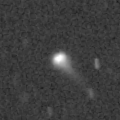
Now it is 12.9 mag (Sept. 3, Jean-Gabriel Bosch). It stays 12 mag for a while. It stays observable in good condition. Date(TT) R.A. (2000) Decl. Delta r Elong. m1 Best Time(A, h) Oct. 3 5 45.15 -13 27.8 3.965 4.273 101 12.8 4:08 (211, 66) Oct. 10 5 46.10 -13 34.3 3.857 4.247 106 12.7 3:58 (203, 67) |
220P/McNaught
|
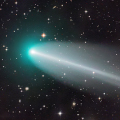
Major outburst of about 9 mag occured from May 31 to June 1, and it brightened up to 8.3 mag (June 3, Marco Goiato). Another major outburst occued on Aug. 5 and it brightened up to 6.4 mag (Aug. 6, Taras Prystavski). Now it is 11.8 mag (Sept. 24, Osamu Miyazaki). Fading rapidly. It will be fainter than 18 mag in November. It stays observable in good condition. Date(TT) R.A. (2000) Decl. Delta r Elong. m1 Best Time(A, h) Oct. 3 3 32.55 5 40.3 1.025 1.876 135 12.9 2:48 (180, 49) Oct. 10 3 30.05 4 46.6 1.018 1.910 142 13.6 2:18 (180, 50) |
252P/LINEAR

|
It has not been observed yet in this apparition. It has brightened up to 4 mag in 2016, and 10 mag in 2021. It brightens up to 11.5 mag, but it will turn to fade out rapidly after that. It stays extremely low in the Northern Hemisphere. In the Southern Hemisphere, it will be unobservable soon. But it will be observable again in January. Date(TT) R.A. (2000) Decl. Delta r Elong. m1 Best Time(A, h) Oct. 3 10 36.42 3 3.4 1.862 1.119 30 13.9 4:08 (265, 2) Oct. 10 11 5.52 0 39.5 1.831 1.080 29 13.4 3:58 (269, 1) |
260P/McNaught
|
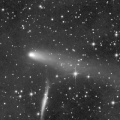
Now it is 13.4 mag (Sept. 8, M. Jaeger, G. Rhemann, E. Prosperi). It will fade out rapidly after this. It will be fainter than 18 mag in January. In the Northern Hemisphere, it stays observable in good condition. It stays extremely low in the Southern Hemisphere. Date(TT) R.A. (2000) Decl. Delta r Elong. m1 Best Time(A, h) Oct. 3 5 48.95 43 18.5 1.026 1.562 100 13.5 4:08 (190, 11) Oct. 10 6 1.32 44 54.7 1.013 1.595 104 13.6 3:58 (189, 9) |
88P/Howell
|
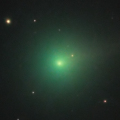
It brightened up to 9.6 mag in the very low sky in spring (Apr. 14, Chris Wyatt). Now it is 13.1 mag (Sept. 23, Thomas Lehmann). It will fade out rapidly after this. It stays observable in good condition. Date(TT) R.A. (2000) Decl. Delta r Elong. m1 Best Time(A, h) Oct. 3 3 7.60 14 41.7 1.503 2.365 140 13.6 2:23 (180, 40) Oct. 10 3 1.44 14 24.5 1.498 2.411 149 13.7 1:49 (180, 40) |
C/2026 A2 ( Bok )
|
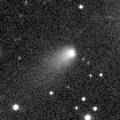
Now it is 13.3 mag (Oct. 1, Yoshimi Nagai). It stays 13 mag for a while. In the Northern Hemisphere, it stays observable in good condition. In the Southern Hemisphere, it is not observable now, but it will appear in November. Date(TT) R.A. (2000) Decl. Delta r Elong. m1 Best Time(A, h) Oct. 3 18 8.59 68 12.0 1.910 2.172 91 13.8 19:30 (168,-16) Oct. 10 18 36.92 65 45.9 1.828 2.136 93 13.6 19:36 (166,-14) |
C/2024 J3 ( ATLAS )
|
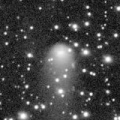
Now it is 12.9 mag (Oct. 1, Osamu Miyazaki). It stays 14 mag for a while. In the Northern Hemisphere, it stays observable in good condition. In the Southern Hemisphere, it will be unobservable soon. Date(TT) R.A. (2000) Decl. Delta r Elong. m1 Best Time(A, h) Oct. 3 18 25.81 41 55.7 3.748 3.894 90 13.6 19:30 (159, 9) Oct. 10 18 26.49 41 35.4 3.791 3.887 88 13.6 19:36 (153, 6) |
78P/Gehrels 2
|
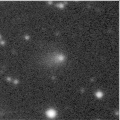
Now it is 13.9 mag (Sept. 21, Yoshimi Nagai). It stays 14 mag for a while. In the Northern Hemisphere, it stays observable in good condition. Date(TT) R.A. (2000) Decl. Delta r Elong. m1 Best Time(A, h) Oct. 3 7 23.89 16 53.8 2.111 2.163 79 13.8 4:08 (221, 27) Oct. 10 7 33.93 16 9.6 2.055 2.185 83 13.8 3:58 (220, 29) |
29P/Schwassmann-Wachmann 1
|
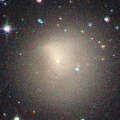
Now it is 13.6 mag (Aug. 2, Andrew Pearce). Now it is not observable. It will appear soon in the Northern Hemisphere, or in November in the Southern Hemisphere. Date(TT) R.A. (2000) Decl. Delta r Elong. m1 Best Time(A, h) Oct. 3 12 5.57 -7 28.9 7.307 6.318 8 14.3 4:08 (287,-10) Oct. 10 12 10.30 -8 3.0 7.289 6.318 12 14.3 3:58 (285, -7) |
C/2014 UN271 ( Bernardinelli-Bernstein )

|
Very large comet. Now it is 13.9 mag (Aug. 16, Thomas Lehmann). It stays 14 mag for a while. In the Northern Hemisphere, it is not observable now. In the Southern Hemisphere, it stays observable in good condition. In the Northern Hemisphere, it is not observable until 2030. Date(TT) R.A. (2000) Decl. Delta r Elong. m1 Best Time(A, h) Oct. 3 7 35.97 -71 51.3 13.674 13.566 81 14.5 4:08 (343, 48) Oct. 10 7 39.24 -72 18.6 13.668 13.546 80 14.5 3:58 (344, 48) |
C/2024 R4 ( PanSTARRS )
|
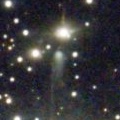
Now it is 14.5 mag (Sept. 22, Toru Yusa). It stays 14 mag for a while. In the Northern Hemisphere, it stays observable in good condition. In the Southern Hemisphere, it will be unobservable in November. Date(TT) R.A. (2000) Decl. Delta r Elong. m1 Best Time(A, h) Oct. 3 19 57.07 47 7.2 5.033 5.406 106 14.5 19:30 (176, 8) Oct. 10 19 51.61 46 20.7 5.053 5.375 103 14.5 19:36 (169, 7) |
C/2023 R1 ( PanSTARRS )
|
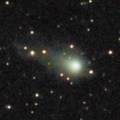
Now it is 14.7 mag (Sept. 19, Mike Olason). It stays 15 mag for a while. It will be unobservable soon in the Northern Hemisphere, or in November in the Southern Hemisphere. But it will be observable again in December. Date(TT) R.A. (2000) Decl. Delta r Elong. m1 Best Time(A, h) Oct. 3 15 27.46 -17 52.6 4.546 3.897 44 14.8 19:30 ( 84, 24) Oct. 10 15 28.25 -18 28.6 4.661 3.922 37 14.9 19:36 ( 79, 18) |
123P/West-Hartley

|
It stays 15 mag for a while. It locates somewhat low in the Northern Hemisphere. But it will become high in winter. In the Southern Hemisphere, it is not observable now, but it will appear in November. Date(TT) R.A. (2000) Decl. Delta r Elong. m1 Best Time(A, h) Oct. 3 11 23.59 15 10.8 3.017 2.160 25 14.9 4:08 (262,-15) Oct. 10 11 38.16 13 34.8 2.987 2.163 28 14.9 3:58 (263,-13) |
(3200) Phaethon

|
Parent object of Geminids meteor shower. It approached to Sun down to 0.14 a.u. on Sept. 2. It brightens up to 15 mag, but it will turn to fade out rapidly after that. It will be fainter than 18 mag in December. In the Northern Hemisphere, it stays observable in good condition. In the Southern Hemisphere, it is not observable now, but it will be observable soon. Date(TT) R.A. (2000) Decl. Delta r Elong. m1 Best Time(A, h) Oct. 3 14 32.65 47 57.3 0.376 0.861 57 15.5 19:30 (135,-22) Oct. 10 16 44.62 55 42.9 0.368 0.986 77 14.9 19:36 (150,-14) |
11P/Tempel-Swift-LINEAR
|
Now it is 16.5 mag (Sept. 25, Alfons Diepvens). It brightens up to 13 mag, but it will turn to fade out rapidly after that. In the Northern Hemisphere, it stays observable in good condition. In the Southern Hemisphere, it will be getting higher gradually. Date(TT) R.A. (2000) Decl. Delta r Elong. m1 Best Time(A, h) Oct. 3 1 58.91 39 35.5 0.535 1.449 139 16.3 1:14 (180, 15) Oct. 10 2 8.96 38 57.5 0.495 1.429 143 15.2 0:56 (180, 16) |
63P/Wild 1
|
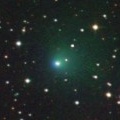
It brightened up to 13.0 mag in early summer (July 3, Thomas Lehmann). It will fade out rapidly after this. It will be fainter than 18 mag in December. Now it is not observable. It will appear in December. Date(TT) R.A. (2000) Decl. Delta r Elong. m1 Best Time(A, h) Oct. 3 13 0.32 -12 56.9 3.130 2.157 11 15.4 19:30 ( 68, -7) Oct. 10 13 14.44 -14 58.1 3.164 2.184 9 15.6 19:36 ( 63,-10) |
C/2022 QE78 ( ATLAS )
|
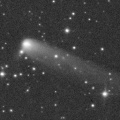
Now it is 15.5 mag (June 14, Alfons Diepvens). It stays 16 mag for a while. In the Northern Hemisphere, it will be getting higher gradually. In the Southern Hemisphere, it is not observable now, but it will appear in November. Date(TT) R.A. (2000) Decl. Delta r Elong. m1 Best Time(A, h) Oct. 3 11 12.71 26 29.0 6.935 6.155 36 15.6 4:08 (250,-18) Oct. 10 11 18.73 26 21.9 6.897 6.178 40 15.6 3:58 (249,-16) |
C/2025 V2 ( Rankin )
|
It is expected to brighten up to 12.5 mag in 2027 spring. Brightening gradually. It locates somewhat low in the Northern Hemisphere. But it will become high in winter. In the Southern Hemisphere, it is not observable now, but it will appear in January. Date(TT) R.A. (2000) Decl. Delta r Elong. m1 Best Time(A, h) Oct. 3 12 1.73 16 41.3 3.718 2.815 21 15.8 4:08 (265,-23) Oct. 10 12 14.52 16 6.6 3.629 2.759 25 15.7 3:58 (265,-22) |
C/2025 Y1 ( ATLAS )
|
Now it is 16.1 mag (Aug. 5, Ken-ichi Kadota). Brightening slowly. Now it is not observable. It will appear in November in the Northern Hemisphere, or in December in the Southern Hemisphere. Date(TT) R.A. (2000) Decl. Delta r Elong. m1 Best Time(A, h) Oct. 3 13 42.69 -2 0.9 5.519 4.572 17 15.8 19:30 ( 83, -6) Oct. 10 13 49.58 -2 36.2 5.488 4.520 12 15.7 19:36 ( 79,-11) |
C/2022 N2 ( PanSTARRS )
|
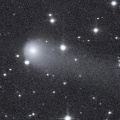
Now it is 15.9 mag (Sept. 23, Thomas Lehmann). It stays 16 mag for a while. In the Northern Hemisphere, it stays observable in good condition. It locates somewhat low in the Southern Hemisphere. Date(TT) R.A. (2000) Decl. Delta r Elong. m1 Best Time(A, h) Oct. 3 7 26.45 25 33.5 5.369 5.288 80 15.9 4:08 (216, 19) Oct. 10 7 29.60 25 28.5 5.300 5.327 86 15.9 3:58 (214, 21) |
C/2025 M2 ( PanSTARRS )
|
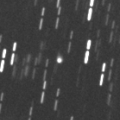
It is expected to brighten up to 12 mag from 2027 to 2028. Now it is 15.9 mag (Aug. 28, Jean-Claude Merlin). It stays 16 mag for a while. It will be getting lower gradually after this, and it will be unobservable in December. But it will be observable again in January. Date(TT) R.A. (2000) Decl. Delta r Elong. m1 Best Time(A, h) Oct. 3 18 45.27 -21 25.9 4.767 4.890 91 16.0 19:30 (118, 66) Oct. 10 18 42.24 -21 27.0 4.849 4.839 83 16.0 19:36 (107, 59) |
112P/Urata-Niijima
|
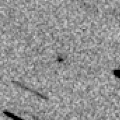
Now it is 16.5 mag (Sept. 19, Mike Olason). Fading gradually. It will be fainter than 18 mag in January. In the Northern Hemisphere, it stays observable in good condition. In the Southern Hemisphere, it will be unobservable in November. Date(TT) R.A. (2000) Decl. Delta r Elong. m1 Best Time(A, h) Oct. 3 7 8.32 37 43.4 1.123 1.446 85 16.3 4:08 (207, 11) Oct. 10 7 33.89 39 50.8 1.099 1.455 87 16.2 3:58 (207, 8) |
C/2021 G2 ( ATLAS )

|
Now it is 15.7 mag (Sept. 22, Toru Yusa). It stays 17 mag for a while. In the Northern Hemisphere, it will be getting lower gradually. But it will be getting higher again after December. In the Southern Hemisphere, it will be unobservable in November. Date(TT) R.A. (2000) Decl. Delta r Elong. m1 Best Time(A, h) Oct. 3 17 8.42 12 49.4 7.757 7.473 69 16.2 19:30 (128, 25) Oct. 10 17 11.37 12 32.3 7.873 7.509 65 16.3 19:36 (122, 19) |
114P/Wiseman-Skiff
|
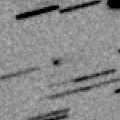
Now it is 16.4 mag (Sept. 19, Mike Olason). Fading slowly. In the Northern Hemisphere, it stays observable in good condition. In the Southern Hemisphere, it will be getting higher gradually. Date(TT) R.A. (2000) Decl. Delta r Elong. m1 Best Time(A, h) Oct. 3 8 42.32 17 4.6 1.803 1.581 60 16.3 4:08 (236, 15) Oct. 10 8 59.37 14 38.6 1.767 1.591 63 16.3 3:58 (238, 17) |
2P/Encke
|
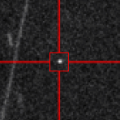
It will brighten up to 6-7 mag from January to February. Now it is 16.9 mag (Sept. 20, Katsumi Yoshimoto). It will brighten rapidly after this. It will be getting lower gradually after this, and it will be unobservable in January. Date(TT) R.A. (2000) Decl. Delta r Elong. m1 Best Time(A, h) Oct. 3 0 46.46 19 56.9 1.153 2.131 163 16.7 0:03 (180, 35) Oct. 10 0 30.43 19 11.6 1.077 2.059 165 16.5 23:13 (180, 36) |
84P/Giclas
|
Now it is 16.7 mag (Sept. 9, Andrew Pearce). It stays 16 mag for a while. It locates somewhat low in the Northern Hemisphere. In the Southern Hemisphere, it stays observable in good condition. Date(TT) R.A. (2000) Decl. Delta r Elong. m1 Best Time(A, h) Oct. 3 20 19.94 -26 25.2 1.514 2.099 111 16.5 19:33 (180, 81) Oct. 10 20 24.87 -26 12.6 1.556 2.066 105 16.5 19:36 (146, 79) |
C/2025 J1 ( Borisov )
|
Now it is 16.8 mag (Sept. 23, Alfons Diepvens). It stays 17 mag for a while. It stays observable in good condition. Date(TT) R.A. (2000) Decl. Delta r Elong. m1 Best Time(A, h) Oct. 3 7 15.76 13 1.8 3.749 3.724 80 16.6 4:08 (222, 31) Oct. 10 7 14.97 11 22.9 3.647 3.742 87 16.5 3:58 (218, 35) |
C/2026 AZ17 ( Bok )
|
Now it is 16.6 mag (Sept. 28, ATLAS Chile). It stays 17 mag for a while. It will be getting lower gradually after this, and it will be unobservable in January in the Northern Hemisphere, or in December in the Southern Hemisphere. Date(TT) R.A. (2000) Decl. Delta r Elong. m1 Best Time(A, h) Oct. 3 17 24.99 2 59.8 2.640 2.533 72 16.7 19:30 (124, 35) Oct. 10 17 36.16 1 12.2 2.691 2.518 69 16.7 19:36 (118, 32) |
C/2025 R3 ( PanSTARRS )
|
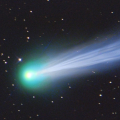
It brightened up to 4.0 mag in late April (Apr. 30, Chris Wyatt). It brightened up to 1.3 mag due to the forward scattering in the SOHO LASCO images (Apr. 25, Mikolaj Kaszczyk). It faded down to 13.4 mag until summer (Aug. 15, Thomas Lehmann). Fading gradually. It will be fainter than 18 mag in November. It locates somewhat low in the Northern Hemisphere. In the Southern Hemisphere, it stays observable in good condition. Date(TT) R.A. (2000) Decl. Delta r Elong. m1 Best Time(A, h) Oct. 3 7 31.37 -26 13.2 2.990 2.908 75 16.9 4:08 (266, 55) Oct. 10 7 26.92 -27 41.6 2.986 2.999 81 17.1 3:58 (265, 60) |
C/2022 R6 ( PanSTARRS )
|
It was observed at 16 mag from 2025 to 2026. Now it is 17.1 mag (June 17, Andrew Pearce). It stays 17 mag for a while. In the Northern Hemisphere, it will be getting higher gradually. It locates somewhat low in the Southern Hemisphere. But it will become high in winter. Date(TT) R.A. (2000) Decl. Delta r Elong. m1 Best Time(A, h) Oct. 3 10 4.05 5 5.8 7.849 7.095 38 17.0 4:08 (259, 7) Oct. 10 10 7.82 5 4.8 7.790 7.113 44 17.0 3:58 (257, 10) |
493P/2024 Q2 ( LONEOS )
|
Now it is 17.7 mag (Sept. 25, P.-J. Dekelver). It stays 17 mag for a while. In the Northern Hemisphere, it stays observable in good condition. In the Southern Hemisphere, it is not observable now, but it will appear in November. Date(TT) R.A. (2000) Decl. Delta r Elong. m1 Best Time(A, h) Oct. 3 9 47.46 32 11.2 4.642 4.126 53 17.1 4:08 (235, -6) Oct. 10 9 54.83 31 43.8 4.577 4.141 58 17.1 3:58 (234, -4) |
C/2025 E1 ( PanSTARRS )
|
Now it is 17.6 mag (Sept. 12, ATLAS Chile). It stays 17 mag for a while. In the Northern Hemisphere, it will never be observable after this. In the Southern Hemisphere, it stays observable in good condition. Date(TT) R.A. (2000) Decl. Delta r Elong. m1 Best Time(A, h) Oct. 3 12 7.82 -76 42.3 4.174 3.999 73 17.1 4:08 (346, 30) Oct. 10 12 43.03 -78 8.1 4.199 4.001 71 17.1 3:58 (348, 30) |
346P/Catalina
|
|
Now it is 17.4 mag (Sept. 24, ATLAS-HKO, Haleakala). It stays 17 mag for a while. In the Northern Hemisphere, it stays observable in good condition. It locates somewhat low in the Southern Hemisphere. Date(TT) R.A. (2000) Decl. Delta r Elong. m1 Best Time(A, h) Oct. 3 8 27.55 18 39.1 2.514 2.275 64 17.3 4:08 (232, 16) Oct. 10 8 39.94 18 46.2 2.450 2.288 68 17.2 3:58 (232, 17) |
P/2018 VN2 = P/2026 M2 ( Leonard )
|
First return of a new periodic comet which was observed at 18 mag in 2018. Now it is 17.2 mag (Sept. 5, ATLAS-MLO, Mauna Loa). Fading gradually. It will be fainter than 18 mag in December. In the Northern Hemisphere, it stays observable in good condition. Date(TT) R.A. (2000) Decl. Delta r Elong. m1 Best Time(A, h) Oct. 3 2 4.26 25 30.1 1.233 2.156 149 17.3 1:20 (180, 29) Oct. 10 2 1.97 24 7.1 1.212 2.167 156 17.3 0:50 (180, 31) |
C/2025 A1 ( Lemmon )
|
Now it is 17.5 mag (June 9, C. Demeautis). It stays 17 mag for a while. In the Northern Hemisphere, it will be getting higher gradually. In the Southern Hemisphere, it is not observable now, but it will appear in December. Date(TT) R.A. (2000) Decl. Delta r Elong. m1 Best Time(A, h) Oct. 3 10 56.84 30 39.6 6.183 5.475 41 17.3 4:08 (245,-18) Oct. 10 11 4.15 30 29.2 6.107 5.464 46 17.3 3:58 (244,-16) |
C/2019 E3 ( ATLAS )
|
Very far object. It stays 18 mag for a while. It stays extremely low in the Northern Hemisphere. In the Southern Hemisphere, it stays observable in good condition. Date(TT) R.A. (2000) Decl. Delta r Elong. m1 Best Time(A, h) Oct. 3 0 7.15 -45 16.4 11.044 11.720 130 17.4 23:18 ( 0, 80) Oct. 10 0 3.47 -45 7.0 11.110 11.737 126 17.4 22:47 ( 0, 80) |
C/2022 E2 ( ATLAS )
|
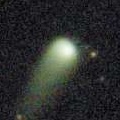
It was observed at 12-13 mag for a long time in 2024. Now it is 17.3 mag (Sept. 11, ATLAS-MLO, Mauna Loa). Fading slowly. It will be fainter than 18 mag in November. In the Northern Hemisphere, it stays observable in good condition. It locates somewhat low in the Southern Hemisphere. Date(TT) R.A. (2000) Decl. Delta r Elong. m1 Best Time(A, h) Oct. 3 21 55.60 25 10.0 6.446 7.202 136 17.4 21:07 (180, 30) Oct. 10 21 51.89 24 8.8 6.545 7.247 131 17.5 20:36 (180, 31) |
C/2024 G4 ( PanSTARRS )

|
Now it is 17.6 mag (Sept. 16, ATLAS Chile). It stays 18 mag for a while. In the Northern Hemisphere, it stays observable in good condition. In the Southern Hemisphere, it will be getting lower gradually. Date(TT) R.A. (2000) Decl. Delta r Elong. m1 Best Time(A, h) Oct. 3 20 2.88 -5 55.8 4.677 5.129 111 17.5 19:30 (173, 61) Oct. 10 20 4.91 -6 35.4 4.792 5.145 105 17.5 19:36 (157, 60) |
188P/LINEAR-Mueller

|
Now it is 17.9 mag (Aug. 24, W. Hasubick). It stays 18 mag for a while. In the Northern Hemisphere, it stays observable in good condition. It stays extremely low in the Southern Hemisphere. Date(TT) R.A. (2000) Decl. Delta r Elong. m1 Best Time(A, h) Oct. 3 6 15.58 34 39.1 2.517 2.804 96 17.5 4:08 (198, 18) Oct. 10 6 21.11 35 7.0 2.447 2.824 101 17.5 3:58 (195, 18) |
93P/Lovas 1
|
Now it is 17.7 mag (Sept. 22, P.-J. Dekelver). It stays 18 mag for a while. In the Northern Hemisphere, it will be getting higher gradually. It locates somewhat low in the Southern Hemisphere. Date(TT) R.A. (2000) Decl. Delta r Elong. m1 Best Time(A, h) Oct. 3 9 53.96 18 32.0 2.854 2.266 45 17.6 4:08 (246, 1) Oct. 10 10 5.42 17 20.7 2.833 2.309 49 17.7 3:58 (247, 3) |
C/2025 B2 ( Borisov )
|
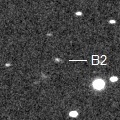
Now it is 17.5 mag (Sept. 30, ATLAS-MLO, Mauna Loa). It stays 18 mag for a while. In the Northern Hemisphere, it stays observable in good condition. In the Southern Hemisphere, it will never be observable after this. Date(TT) R.A. (2000) Decl. Delta r Elong. m1 Best Time(A, h) Oct. 3 16 54.91 74 32.7 8.228 8.240 87 17.6 19:30 (167,-24) Oct. 10 17 1.67 73 24.4 8.213 8.240 88 17.6 19:36 (164,-25) |
C/2026 P2 ( PanSTARRS )
|
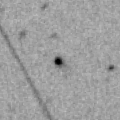
It is expected to brighten up to 13.5 mag from late 2027 to early 2028. At the high light, it will be observable in good condition in the Northern Hemisphere. But it will not be observable in the Southern Hemisphere. Now it is 17.4 mag (Sept. 14, Roland Fichtl). It stays 17 mag for a while. It stays observable in good condition. Date(TT) R.A. (2000) Decl. Delta r Elong. m1 Best Time(A, h) Oct. 3 1 35.53 -1 53.6 3.887 4.856 163 17.8 0:51 (180, 57) Oct. 10 1 29.42 -1 47.4 3.818 4.802 169 17.7 0:18 (180, 57) |
C/2023 X2 ( Lemmon )
|
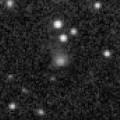
Now it is 17.8 mag (July 6, ATLAS-MLO, Mauna Loa). It stays 18 mag for a while. In the Northern Hemisphere, it will be getting lower gradually. But it will be getting higher again after November. In the Southern Hemisphere, it will never be observable after this. Date(TT) R.A. (2000) Decl. Delta r Elong. m1 Best Time(A, h) Oct. 3 14 59.43 54 55.6 5.842 5.508 65 17.7 19:30 (142,-22) Oct. 10 15 7.30 53 35.1 5.864 5.529 65 17.8 19:36 (139,-25) |
65P/Gunn
|
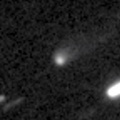
Now it is 17.6 mag (Sept. 16, Andrew Pearce). Fading slowly. It will be fainter than 18 mag soon. It stays observable in good condition. Date(TT) R.A. (2000) Decl. Delta r Elong. m1 Best Time(A, h) Oct. 3 0 28.01 -8 33.3 2.650 3.634 167 17.8 23:39 (180, 63) Oct. 10 0 23.33 -8 49.5 2.686 3.649 162 17.8 23:07 (180, 64) |
266P/Christensen
|
|
Brightening slowly. In the Northern Hemisphere, it stays observable in good condition. It locates somewhat low in the Southern Hemisphere. Date(TT) R.A. (2000) Decl. Delta r Elong. m1 Best Time(A, h) Oct. 3 7 14.21 25 50.8 2.273 2.366 82 18.0 4:08 (214, 21) Oct. 10 7 24.88 25 40.7 2.184 2.358 87 17.9 3:58 (212, 22) |
373P/Rinner
|
|
It has not been observed yet in this apparition. It has brightened up to 4 mag in 2016, and 10 mag in 2021. It was not detected, fainter than 20 mag on Sept. 14 (Jean-Francois Soulier). It stays 18 mag for a while. In the Northern Hemisphere, it stays observable in good condition. In the Southern Hemisphere, it will be getting higher gradually. Date(TT) R.A. (2000) Decl. Delta r Elong. m1 Best Time(A, h) Oct. 3 8 20.11 9 43.0 2.551 2.310 64 17.9 4:08 (238, 24) Oct. 10 8 31.16 8 24.9 2.482 2.314 68 17.9 3:58 (238, 26) |
P/2021 N1 = P/2026 M1 ( ZTF )
|
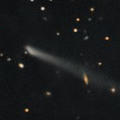
First return of a new periodic comet which brightened up to 17 mag in 2021. It approached to Earth down to 0.17 a.u. from June to July. It brightened up to 15.2 mag (July 14, Andrew Pearce). Now it is 18.2 mag (Sept. 19, Mike Olason). It will fade out rapidly after this. In the Northern Hemisphere, it stays observable in good condition. It stays extremely low in the Southern Hemisphere. Date(TT) R.A. (2000) Decl. Delta r Elong. m1 Best Time(A, h) Oct. 3 5 4.83 48 7.5 0.621 1.328 107 18.1 4:08 (182, 7) Oct. 10 4 59.36 48 24.9 0.637 1.390 114 18.4 3:48 (180, 7) |
SWAN26Q
|
New comet discovered on Aug. 24 from SWAN images by Hanjie Tan. Although it was bright as 11 mag at the discovery, it faded down to 14 mag on Sept. 9. Fading rapidly. It locates somewhat low in the Northern Hemisphere. In the Southern Hemisphere, it is not observable now. Date(TT) R.A. (2000) Decl. Delta r Elong. m1 Best Time(A, h) Oct. 3 11 31.69 5 4.5 1.732 0.839 18 18.4 4:08 (271,-11) Oct. 10 11 29.36 1 48.2 1.805 0.982 24 19.2 3:58 (271, -5) |